
 Buy at Amazon
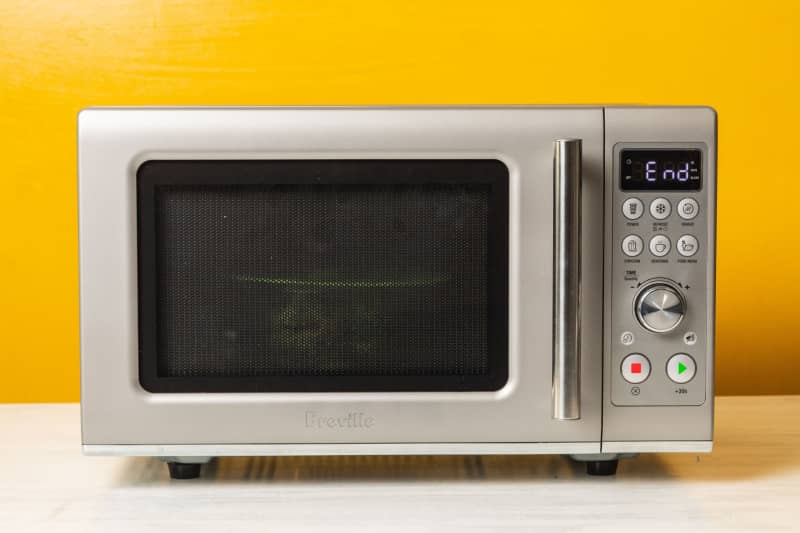
The best microwave ovens are easy to use and work reliably without overheating food. Our favorite, Breville The Compact Wave Soft Close Microwave, won top marks for its excellent cooking results, supersimple controls, user-friendly design details, and brushed finish that didn’t show fingerprints.

Microwave ovens have a solid place in our kitchens today. Sure, they’re great for reheating leftovers, but increasingly we’ve been calling for them in recipes to take over jobs that they can do easier and faster than traditional methods, including frying shallots; blooming spices; removing excess moisture from raw mushrooms or eggplant; par-cooking potatoes or squash before grilling; cooking polenta; helping shuck and/or steam corn on the cob; drying herbs; toasting nuts, bread crumbs, coconut, and seeds; and melting butter and chocolate. And with microwave mug cake recipes going viral and new microwave cookware on the market that can be used to make everything from chicken wings to pasta Alfredo, we’re starting to change the way we think about these ovens, exploring their potential usefulness well beyond “zapping” a tepid mug of coffee.


In the test kitchen, we use microwaves in a variety of newer ways, such as (from left) drying herbs, toasting nuts, and making mug cakes.
While microwave ovens can be installed, freestanding countertop microwaves remain the top sellers. Prices can range upwards of $1,000, but we focused on more affordable versions, buying countertop models priced from about $77 to nearly $250 and then putting them through a series of core tests. We also assessed extra features to see if they were worth seeking out. Our goal was to find the best performers that would also be easy to use and maintain.

How Microwaves Work
Microwave ovens are powered by a vacuum tube called a magnetron that uses electric current and magnets to generate electromagnetic waves called microwaves. The waves can pass right through glass, paper, plastic, and similar materials—but they’re absorbed by food. They make the food’s water molecules (and to a lesser extent, the fat molecules) vibrate, which produces heat that cooks the food.
Microwaves don’t penetrate very deeply; they only reach the outer layer of the item you are cooking. The rest of the food warms by conduction as the heat spreads inward from the hot surface. Microwave ovens typically cycle power on and off as they work. (You’ll hear a fan whirring continuously, while a slightly louder hum switches on and off; that’s the magnetron kicking in.) A turntable rotates to help even out the heating by moving food around in the waves.
Microwave oven cooking is notably uneven. For tips on improving your microwave’s performance see the FAQ: “How Can I Get More Even Results in the Microwave?"
But as anyone who’s ever used a microwave knows, the level of heating is still not very even throughout the food. This is 1940s technology, still being used today because it’s easy and relatively cheap to manufacture. Recently, companies have added a variety of newer features to help improve performance and user-friendliness. These options include inverter technology, where the power doesn’t cycle on and off like a typical microwave, but stays on, even at lower settings, for what manufacturers claim to be more precise cooking; sensor modes where the microwave measures steam emitted from foods and adjusts cooking power and time accordingly; voice control using Google Assistant or Alexa; Wi-Fi connections with apps to operate the oven or even scan food barcodes to send cooking instructions automatically; and multistage cooking, which lets you set up stages of cooking to happen sequentially, for example, 10 minutes of defrosting followed by 3 minutes of heating. As we tested our oven lineup, we learned which of these features mattered—and how to choose the best model.
What to Look For
- Moderate Wattage: You might assume the higher the wattage the better, but this was not the case. Our lineup’s power levels ranged from 700 to 1,200 watts. With high-wattage ovens you’ll only get good results if you nearly always run them on lower power settings (such as 50 percent); otherwise you risk overcooked, shriveled food and exploding butter. Low-wattage ovens were slower to complete tasks, and we usually had to keep adding cooking time. The ovens with moderate power levels of 900 to 1,000 watts worked efficiently with fewer adjustments and just-right results.

- Simple, Intuitive Controls: Look for clearly marked, easy-to-decipher controls. Less is more: Who needs buttons for “Kids’ Meals” or “Healthy Cooking” or “Snack”? We also liked models that prompted us with the next steps as we used them.
- Moderate Size: Unless you routinely microwave and/or defrost very large amounts of food, an oven with about 0.9 to 1.0 cubic feet of interior space was perfectly adequate. Bigger models hogged counter space and didn’t offer much additional usable interior room than our top models. The smallest oven we tested, with 0.7 interior cubic feet, could be adequate for small households. Turntables ranged from 9⅝ inches to 14⅜ inches in diameter, but even the smallest easily fit a standard dinner plate.
- Fingerprint-Free Finish: We examined the microwaves inside and out when testing was done. Several appeared grubby and fingerprint-smeared. The worst offenders had shiny, black, glassy finishes and stainless-steel trim that showed every touch. The best had matte or white finishes that looked fresh even after heavy use.


Left, a brushed stainless finish hides fingerprints and smudges. At right, a glossy black finish shows every touch.
- Light, Bright Interiors: Our favorite ovens had lighter interiors and/or lit up brightly when we opened the door.


At left, a brightly lit interior helps the cook judge the food's doneness, while a dim interior, at right, makes that harder to do.
Nice to Have:
- Sensor Cooking: Sensor modes were not essential but were helpful, saving us a few steps with good results. Because sensors monitor the steam emitted from food as it heats and adjust cooking time and power levels as needed, cooking was far more hands-off in models with sensors.
- Door Handles: Call us old-fashioned, but we enjoyed the ease of large vertical door handles versus the usual flat-panel buttons that demand a hard poke to open the door.
- “END” Display: Ovens that displayed an “END” signal when done saved us from icky discoveries like yesterday’s reheated coffee mug or a dish that never made it to last night’s dinner.
We liked microwaves that indicated when cooking was done, with beeps and the word END displayed, which helped us not forget and leave food inside.
- Mute Buttons: We liked the option to silence all the usual beeping, especially for early risers who don’t want to wake others.
- Child Lock: In households with small children, this is a good safety feature.
What to Avoid
- Confusing Controls: Pushing buttons and getting nowhere was frustrating. Some models loudly beeped or froze if we failed to follow a specific sequence to set cooking tasks. Our preferred models were easy to interpret; a few even guided us to the next steps.
- Scan-to-Cook Technology: You scan the barcode of frozen foods with an app that sends cooking instructions directly to the oven. This didn’t save much time, and three out of the five common supermarket entrées we tried were not in the app’s database.
One microwave from GE had a "Scan to Cook" feature on its app that let you scan a product barcode on frozen foods to send cooking instructions directly to the microwave. Unfortunately, most of the popular frozen entrees and foods we tried were not in its app's database, so it did not always work.
- Inverter Technology: Inverters keep the power level steady rather than cycling on and off like typical microwave ovens. However, this seemed to make little difference to our cooking results. It may have even contributed to scorching in certain tests where, if power periodically cycled off, carryover cooking might have worked more gently for better outcomes.
We used an LED bulb to show how microwaves work. The bulb lights whenever the magnetron is on, and turns off when the magnetron is off, showing how the power typically cycles on and off. In ovens with inverter technology, the bulb stayed lit because they don't cycle on and off.
- Voice Control: Unless you need this feature to make the oven more accessible, using Alexa or Google Assistant was underwhelming as a feature. You still need to use your hands to insert, remove, stir, and flip food.
The Tests
- Melt 2 tablespoons butter
- Toast 1 cup shredded, sweetened coconut
- Fry 3 sliced shallots
- Melt 4 ounces dark chocolate chips
- Bake potatoes
- Reheat coffee in mug
- Defrost 1 pound frozen 85% lean ground beef
- Heat large frozen entrée of macaroni and cheese
- Steam fresh broccoli florets
- Have additional testers evaluate ease of use
- Test additional special features of ovens, if any
How We Rated
- Performance: We rated each model on its ability to perform common microwave-oven tasks with desired results and assessed any extra features we found helpful.
- Ease of Use: We evaluated how comfortable it was to operate the oven and whether controls were clear and intuitive.
- Cleanup: We rated whether it was easy to keep the oven interior, exterior, and control panel clean and in good condition.