
 Buy at Amazon
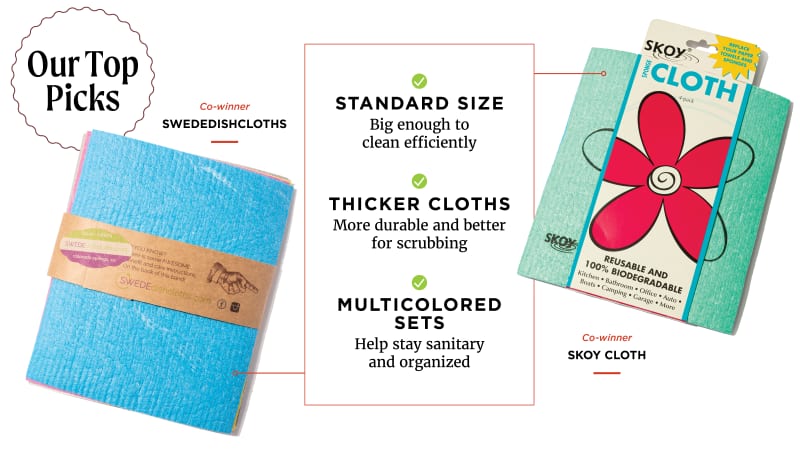
Swedish dishcloths, also referred to as sponge cloths, are a cross between a kitchen sponge and a paper towel. They can be used for a variety of cleaning tasks, including wiping counters and appliances, washing dishes, scrubbing stovetops, and more. After testing a range of products, our co-winners are SWEDEdishcloths and the Skoy Cloth. They’re both strong, absorbent, great at scrubbing away messes, and easy to sanitize.
Invented by Swedish engineer Curt Lindqvist in 1949, Swedish dishcloths have been prevalent in European households for years. They’ve become popular in American households as an eco-friendly alternative to plastic-containing kitchen sponges and single-use paper towels.
Swedish dishcloths are typically about 8 inches long by 7 inches wide, smaller than a regular dishcloth, and resemble flat, thin sponges. Most are composed of 30 percent cotton and 70 percent cellulose, a fiber derived from plants. Like sponges and fabric towels, they’re typically sold in packages of four or five. One company sells a version that more closely resembles paper towels; the sponge cloths come on a perforated roll of 30 and you tear them off as you need them. Most sponge cloths on the market are biodegradable, meaning they will eventually decompose naturally.


Swedish dishcloths are perfect for sopping up countertop spills and scrubbing crusty stovetops.
We tested Swedish dishcloths in the ways we commonly use both sponges and paper towels—washing dishes, sopping up spills, wiping down appliances, scrubbing away sticky messes on surfaces, and cleaning faucets. They were excellent replacements for all these tasks and helped us reduce our traditional paper towel waste. However, they dry out completely in between uses and become much harder and more rigid than a typical kitchen sponge. It’s only when they’re damp that they become pliable and absorbent. As a result, they’re not great for drying dishes or shining glasses; dish towels are more effective there.
After using them, you can rinse Swedish dishcloths in the sink or run them through the dishwasher or washing machine and then let them air dry. You can also sanitize them in the microwave (see FAQ below for details). We tested four brands to find the best of the bunch. Overall, we found that because Swedish dishcloths are really only effective when wet, they cannot completely replace paper towels in most households. However, they are still useful for many cleaning jobs. Most of the brands in the lineup performed the same or very similarly; they were all very absorbent and excellent at wiping surfaces. Yet some characteristics helped our favorites rise to the top. Read on to see what we liked and how we chose our winners.
What to Look For
- Standard Dimensions: We favored sponge cloths that met the typical dimensions for Swedish dishcloths—around 8 inches long by 7 inches wide. Cloths this size were big enough for us to wash dishes efficiently and gave our hands enough room to spread out and wipe down countertops and appliances.
- Thicker Cloths: Our favorite products were about three times thicker than our winning traditional paper towel. This made them more durable and provided enough separation between our hands and the surface while we performed tasks that required some pressure, such as scrubbing counters.

Nice to Have
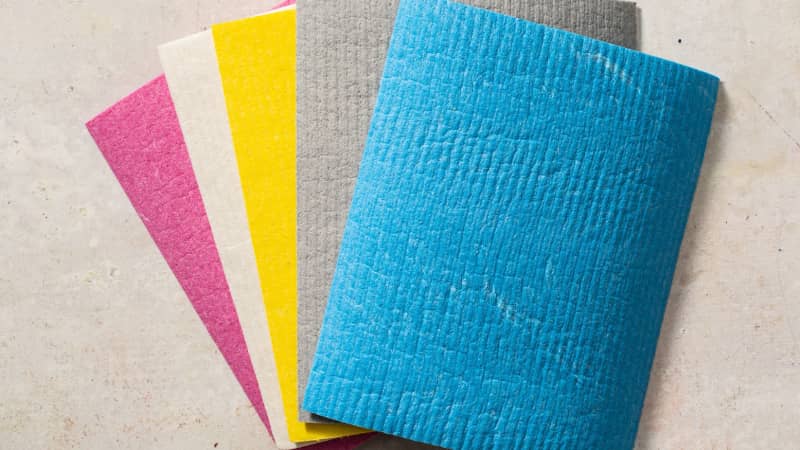
- Multicolored Sets: Using different sponge cloths for specific tasks allows you to keep your kitchen sanitary and well organized. For example, one color could be designated for jobs such as wiping up meat juices and another for washing dishes. A pack of multicolored Swedish dishcloths makes that easier.
What to Avoid
- Oversized Cloths: Those much larger than 8 inches long by 7 inches wide felt bulky, especially when we were washing dishes and scrubbing the tight corners of our stovetops. They also took longer and needed more space to dry.
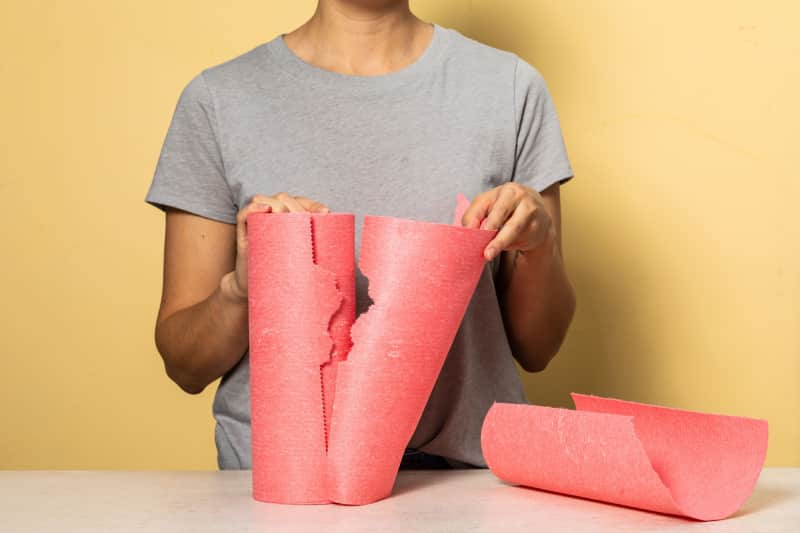
- Superthin Sheets on Perforated Rolls: Perforated rolls are usually a convenient feature that remind us of traditional paper towels because you can tear off a sheet and go. However, when it comes to Swedish dishcloths, they become a hindrance. Because they’re so stiff when dry, when we tore off sheets from the perforated roll they often ripped unevenly. The reusable cloths were forever misshapen and sometimes too small to be effective.
The Tests
- Weigh each cloth or sheet dry
- Weigh each cloth or sheet after being submerged in ¼ cup of water for 1 minute
- Dry a load of dishes (11 separate items)
- Clean countertop littered with crumbs and dried-on condiments
- Wipe faucet
- Scrub stovetop
- Test durability by lifting 100-, 200-, and 500-gram weights on both dry and wet towels and sheets
- Have 13 home testers use towels or sheets over a 1-week period
- Wash according to manufacturer instructions 10 times
How We Rated
- Absorbency: We tested how much water the cloths could absorb and how quickly they dried dishes.
- Ease of Use: We evaluated how easily we could clean various surfaces. We considered whether the cloths were comfortable to hold.
- Strength: We assessed how effectively the cloths scrubbed dried-on messes and noted whether the towels deteriorated after rubbing them against abrasive surfaces. We observed how long the cloths lasted before we replaced them with a new one.