America's Test Kitchen LogoCook's Country LogoCook's Illustrated Logo

Reviews You Can Trust.
See Why.

Do You Need an Electric Composter?

These indoor appliances are all the rage, but are they really the best solution to our food waste woes?

Headshot of Chase Brightwell
By Chase Brightwell

Last Updated July 9, 2025

What You Need To Know

So-called indoor electric “composters” are designed to dehydrate and grind household food waste, making it less messy and smelly to dispose of. However, these machines aren’t able to recreate conventional composting. Instead of producing stable, nutrient-dense compost that can be safely added to soil, these appliances create dried, ground-up food that requires further curing and decomposition before it can be used for agriculture. We recommend people seek out conventional composting options in their area rather than buying one of these devices.

The Food Waste Dilemma

Food waste is an enormous problem. According to the U.S. Environmental Protection Agency (EPA), uneaten food makes up more than 24 percent of our country’s municipal solid waste. That waste goes into landfills, where it rots and releases methane gas, contributing to planetary warming. Finding a more sustainable option for food waste disposal is one of the most effective ways that individual households can help mitigate climate change.

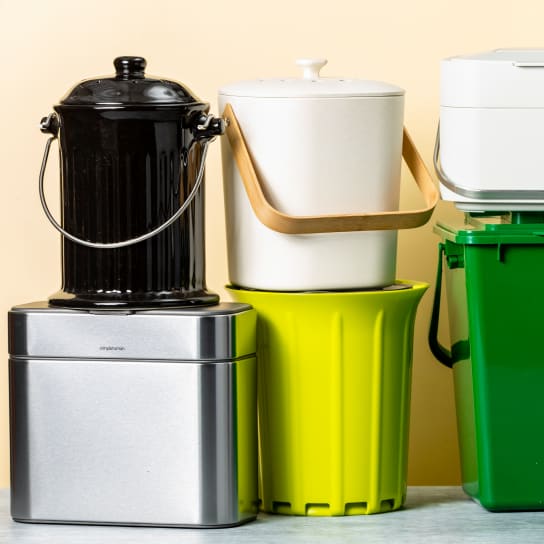
One option is composting: a process of recycling food waste using controlled decomposition, which, when managed properly, can reduce the amount of greenhouse gasses emitted by wasted food. Some people opt to compost on their own property using outdoor bins or piles, and some folks compost their food waste indoors in bins using worms or microbial colonies (a method known as bokashi). Others may use a municipal or third-party curbside pickup service, which collects their food waste and delivers it to a composting facility instead of a landfill.

How Do Electric “Composters” Work?

For those without easy access to conventional composting options, several appliance manufacturers have started selling so-called “electric composters.” These appliances—generally about the size of air fryers—are designed to collect, dehydrate, and grind up food waste, using roughly the same amount of electricity per cycle as a standard dishwasher. 

We added measured amounts of food scraps to each machine. Over the course of several hours, they dried and ground those scraps into soil-like powders.

To use these devices, you accumulate vegetable peels, table scraps, and other food waste in an included collection bin. You place the bin inside your machine and run a processing cycle that heats, dries, and grinds the food for anywhere between 3 and 10 hours. What’s left is a powdery, soil-like substance that many manufacturers liken to compost.

Our Testing Process

We set to work testing the machines, processing months’ worth of food waste. We evaluated how easy the appliances were to set up and operate; how well they dried out and ground up food scraps; and how simple they were to empty and clean. Overall we liked machines with larger capacities and quieter cycles that thoroughly ground up food waste. We especially liked units that didn’t emit strong odors. Even though we found a lot to like about a few models, we were still troubled by the bigger picture: It was clear that we weren’t actually composting.

Most of the machines we tested did a fine job of drying and grinding our food, but it was clear that what they produced was not at all compost.

Why We Don’t Recommend Most Electric Composters

Our testing and interviews with soil scientists and environmental policy experts revealed that “composters” is a misnomer. Conventional composting relies on decomposition, a series of chemical reactions and biological processes that break down food waste. That decomposition is driven principally by microbes that essentially digest the food scraps. The resulting material—the compost—is a nutrient-dense, soil-like substance that is beneficial to add to gardens.

The machines in our lineup only dry out and grind up food. Their powdery, ground-up end products may resemble soil, but they’re not soil. The ground food particles still require decomposition to break down into component nutrients and compounds that plants can use. Additionally, the heat required for food dehydration is usually too intense for many microbes to survive, which means the dry powder created by these electric machines is relatively inert. If you add it to your garden it will take precious water resources to rehydrate. It will then begin to decompose further, providing a potential home for fungus and pests drawn to the extra moisture and intact food fragments.

Some manufacturers sell powdered microbial additives that reintroduce beneficial microbes to the dehydrated grounds. These companies direct users to mix 1 part ground food to 10-15 parts soil, and then add the microbes and let the mixture “cure” for up to a month (either within a garden or potted plant, or in a separate container, depending on the growing season). This is extra work for the user and requires a large amount of soil over time. Essentially, these machines’ manufacturers are selling promises of a simple, single-step replacement for conventional composting that actually requires more time, money, and energy overall. 

The machines’ end products varied in particle size, which helped us compare how thoroughly our food waste was broken down. Some manufacturers directed us to treat the particles with microbial additives and let them cure for several weeks; others provided no explanation for what to do with the grounds besides burying them and hoping for the best.

Though these appliances’ ability to transform messy, smelly food waste into an easily-managed powder may seem beneficial, it’s worth noting the large amount of energy required to do so. Running an additional machine in your home daily will use up more electricity, which for most of us is created at power plants that burn fossil fuels and release greenhouse gasses. Even with this extra energy expenditure, the food you’re dehydrating will still need to be composted. Using this appliance wedges an extra step into the food waste cycle that may seem convenient and mess-free but really uses up a lot of energy for a minimal payoff. There’s no current published research on these small appliances’ cradle-to-grave greenhouse gas emissions. But the EPA has evaluated the energy efficiency of larger, industrial-scale food waste dehydration. Their results indicated that there wasn’t a conclusive environmental benefit to drying and grinding food before disposing of it, due to all the greenhouse gas emissions it required.

What About the Mill?

Although we generally don’t recommend electric composters, one company is taking a different approach that we think may offer some merit. The Mill operates with a subscription model. Members collect and dehydrate their food in a Wi-Fi–connected bin, then send the “food grounds” back to Mill for use in livestock feed. Users’ $45 monthly membership fee covers the cost of the dehydrator, as well as supplies and postage. Mill’s system poses a couple advantages. First, environmental experts agree that the most efficient way for humans to divert food waste is as livestock feed. Second, for people who don’t live near farms, can’t compost at home, and don’t have access to larger composting programs, packing up their dried food and mailing it to Mill is a much cleaner and more accessible way to dispose of food than just sending it to a landfill. But mailing the waste expends energy, and there is not yet enough independent research to conclude if the net environmental impact of Mill’s system is beneficial. Given this lack of clarity, we still think it’s best to find local ways to divert your food waste if you can.

We found the Mill to be incredibly well-designed and easy to control via its intuitive app, and it did the best job of collecting and processing our food waste without a big hassle. Still, we'’e not sold on Mill’s system that involves mailing our food waste back to the company.

The Future of Food Waste

Most of the machines we tested were not convenient solutions for diverting food waste from landfills, but that doesn’t mean you should give up and throw your food scraps in the garbage. You can learn more about at-home composting methods in this guide from EPA. You can also search BioCycle’s composting facility locator for composting facilities in your area that may offer collection or curbside pickup. Most importantly, you can and should learn more about how to waste less food, including learning about proper food storage.

The Tests:

  • Unbox, clean, and set up machines according to manufacturer instructions, including pairing with apps and connecting to Wi-Fi where applicable
  • Run cycle containing standardized amounts of coffee grounds, cooked rice, banana peels, and onion skins
  • Make chicken stock, then strain the remaining solids and process them in machines (removing chicken bones for units that do not allow them)
  • Operate each machine in a home kitchen for several days, collecting food waste daily from household cooking and processing it as needed
  • Measure each model’s noise level with a decibel meter
  • Run cycles containing standardized amounts of coffee grounds, carrot peels, tomato cores, lettuce, and cooked rice, measuring energy usage with an electricity usage monitor 
  • Remove dehydrated food waste and clean bins according to manufacturer instructions
  • Assess dehydrated food waste nutrient content using the University of Maine Analytical Lab and Soil Testing Service

How We Rated

We evaluated the machines through a set of rigorous tests, and we’ve shared our thoughts about their designs and features below. Although some were well designed and easy to use, we’ve prioritized their core function—transforming food scraps into usable compost—over all other considerations. As a result, we can’t recommend any units except the Mill. 

  • Capacity: We rated the appliances on how much food waste they could hold and process.
  • Performance: We evaluated each machine on its ability to process food waste. We also took into account what happened to the ground food next, noting whether it could be shipped away as part of a subscription program or if it needed further processing and composting to become a valid soil amendment. 
  • Ease of Use: We assessed how easy the machines were to set up according to manufacturer instructions. We also noted how easy it was to remove and replace the bins, open and close the lids, and operate and understand the controls. 
  • Cleanup: We evaluated whether the bins were easy to clean.

Everything We Tested

Good 3 Stars out of 3.
Fair 2 Stars out of 3.
Poor 1 Star out of 3.

Recommended with Reservations

  • Capacity:
  • Performance:
  • Ease of Use:
  • Cleanup:

Mill Kitchen Bin + Membership

This sleek device resembles a traditional flip-top trash can in size and design. To add food waste, we pressed a pedal at the bottom of the machine to open the lid, then scraped scraps or threw cuttings into the bin. The bin held up to 11 liters of food waste, meaning scraps could be added, cycled, and dehydrated daily for weeks without needing to be emptied. We scheduled and controlled the unit’s processing cycles through a well-designed smartphone app, which also included a searchable database of foods the bin would accept. We were impressed by how easy this bin was to use and how simple it was to use the app to arrange for our dehydrated “food grounds” to be picked up by the U.S. Postal Service (packaging and shipping costs all included in the membership). Because this unit is designed to be a permanent fixture in members’ kitchens, it’s quite heavy and large, so it was a bit difficult to set up. While we think this bin is a convenient step forward, we think it’s still far more energy efficient (and less costly) to dispose of food waste locally.

Model Number: n/a

Dimensions: 16 x 14.5 x 27 in

Weight: 50.7 lb

Bin Capacity: 11 L

Bin Cleanup: Self-cleaning

Price at Time of Testing: One-time $75.00 bin delivery fee, plus $45.00 monthly membership fee ($615.00 for first year)

  • Capacity:
  • Performance:
  • Ease of Use:
  • Cleanup:

This sleek device resembles a traditional flip-top trash can in size and design. To add food waste, we pressed a pedal at the bottom of the machine to open the lid, then scraped scraps or threw cuttings into the bin. The bin held up to 11 liters of food waste, meaning scraps could be added, cycled, and dehydrated daily for weeks without needing to be emptied. We scheduled and controlled the unit’s processing cycles through a well-designed smartphone app, which also included a searchable database of foods the bin would accept. We were impressed by how easy this bin was to use and how simple it was to use the app to arrange for our dehydrated “food grounds” to be picked up by the U.S. Postal Service (packaging and shipping costs all included in the membership). Because this unit is designed to be a permanent fixture in members’ kitchens, it’s quite heavy and large, so it was a bit difficult to set up. While we think this bin is a convenient step forward, we think it’s still far more energy efficient (and less costly) to dispose of food waste locally.

Model Number: n/a

Dimensions: 16 x 14.5 x 27 in

Weight: 50.7 lb

Bin Capacity: 11 L

Bin Cleanup: Self-cleaning

Price at Time of Testing: One-time $75.00 bin delivery fee, plus $45.00 monthly membership fee ($615.00 for first year)

Not Recommended

  • Capacity:
  • Performance:
  • Ease of Use:
  • Cleanup:

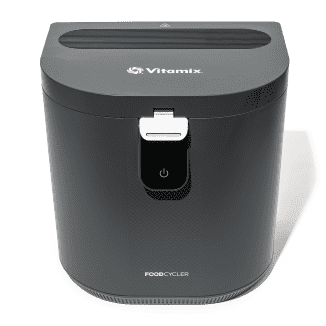
Vitamix FoodCycler Eco 5

Though it’s only an inch taller than the next largest unit we tested, this countertop model offers about twice as much capacity for storing and processing food waste. We were able to collect several days’ worth of waste in the bin before needing to run a cycle. This unit also has our favorite lid in the lineup, which flips up and closes like a trash can lid but is secured with a simple latch (as opposed to a couple other models’ stubborn screw-on lids). Even though we found the bin easy to use, it didn’t offer a convenient way for us to convert our food waste into a soil amendment that was easy to add to our gardens. Instead, it directed us to add a microbial powder and “cure” the food grounds with soil over time, essentially recreating the composting process it promised to eliminate.

Model Number: 71594

Dimensions: 11.5 x 13.75 x 13.5 in

Weight: 29.4 lb

Bin Capacity: 5 L

Bin Cleanup: Self-cleaning

Price at Time of Testing: $499.95

  • Capacity:
  • Performance:
  • Ease of Use:
  • Cleanup:

Though it’s only an inch taller than the next largest unit we tested, this countertop model offers about twice as much capacity for storing and processing food waste. We were able to collect several days’ worth of waste in the bin before needing to run a cycle. This unit also has our favorite lid in the lineup, which flips up and closes like a trash can lid but is secured with a simple latch (as opposed to a couple other models’ stubborn screw-on lids). Even though we found the bin easy to use, it didn’t offer a convenient way for us to convert our food waste into a soil amendment that was easy to add to our gardens. Instead, it directed us to add a microbial powder and “cure” the food grounds with soil over time, essentially recreating the composting process it promised to eliminate.

Model Number: 71594

Dimensions: 11.5 x 13.75 x 13.5 in

Weight: 29.4 lb

Bin Capacity: 5 L

Bin Cleanup: Self-cleaning

Price at Time of Testing: $499.95

  • Capacity:
  • Performance:
  • Ease of Use:
  • Cleanup:

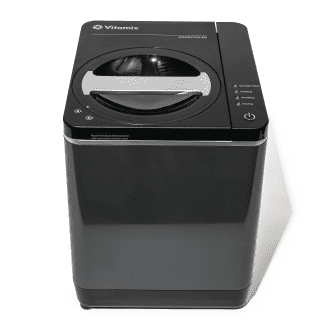
Vitamix FoodCycler FC-50

This model processed most waste fairly well, but we were somewhat frustrated by two factors. The unit gave off a stench while processing chicken bones, and its bin had one of the smallest capacities among those we tested. The bin’s small size limited how much waste we could process at once, and we preferred models with larger bins. The manufacturer also recommended significantly more work to make this machine’s food grounds viable as a fertilizer, including directives to mix at a ratio of 1 part dried food to 10 parts soil and let the mixture sit inactive before use, for up to a month to achieve the full microbial benefit.

Model Number: 068051

Dimensions: 10.5 x 12.5 x 14 in

Weight: 22.6 lb

Bin Capacity: 2.5 L

Bin Cleanup: Dishwasher-safe

Price at Time of Testing: $349.99

  • Capacity:
  • Performance:
  • Ease of Use:
  • Cleanup:

This model processed most waste fairly well, but we were somewhat frustrated by two factors. The unit gave off a stench while processing chicken bones, and its bin had one of the smallest capacities among those we tested. The bin’s small size limited how much waste we could process at once, and we preferred models with larger bins. The manufacturer also recommended significantly more work to make this machine’s food grounds viable as a fertilizer, including directives to mix at a ratio of 1 part dried food to 10 parts soil and let the mixture sit inactive before use, for up to a month to achieve the full microbial benefit.

Model Number: 068051

Dimensions: 10.5 x 12.5 x 14 in

Weight: 22.6 lb

Bin Capacity: 2.5 L

Bin Cleanup: Dishwasher-safe

Price at Time of Testing: $349.99

  • Capacity:
  • Performance:
  • Ease of Use:
  • Cleanup:

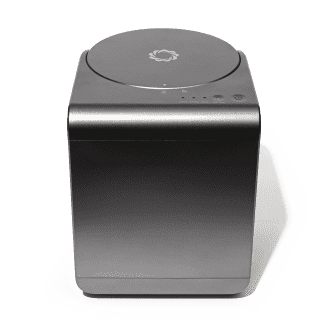
Lomi Classic Composter by Pela Earth

This machine effectively processed our food scraps, but it was louder and emitted more odors than all the other models we tested. This model was also more strict about what it could process; for example, it did not accept chicken or fish bones. We also found this unit’s lid difficult to close and secure, even after months of testing. Most important, this machine is marketed with an emphasis on its ability to “compost,” but it does not recreate conventional composting. Users still have to mix the ground food it produces with soil and microbial additives to make it stable enough to add to their gardens, essentially recreating the decomposition process the machine’s manufacturer promises to eliminate.

Model Number: n/a

Dimensions: 15.5 x 12.5 x 11.5 in

Weight: 17.9 lb

Bin Capacity: 3 L

Bin Cleanup: Dishwasher-safe

Price at Time of Testing: $499.99

  • Capacity:
  • Performance:
  • Ease of Use:
  • Cleanup:

This machine effectively processed our food scraps, but it was louder and emitted more odors than all the other models we tested. This model was also more strict about what it could process; for example, it did not accept chicken or fish bones. We also found this unit’s lid difficult to close and secure, even after months of testing. Most important, this machine is marketed with an emphasis on its ability to “compost,” but it does not recreate conventional composting. Users still have to mix the ground food it produces with soil and microbial additives to make it stable enough to add to their gardens, essentially recreating the decomposition process the machine’s manufacturer promises to eliminate.

Model Number: n/a

Dimensions: 15.5 x 12.5 x 11.5 in

Weight: 17.9 lb

Bin Capacity: 3 L

Bin Cleanup: Dishwasher-safe

Price at Time of Testing: $499.99

  • Capacity:
  • Performance:
  • Ease of Use:
  • Cleanup:

Airthereal Revive Electric Kitchen Composter

This machine was noisy and emitted more odors than most of the other machines in our lineup. We were pleased that its bin was dishwasher-safe and easy to clean, but we felt limited by the bin’s small capacity, which held less food than some other models and necessitated more frequent cycles. We also felt unsatisfied with this product’s inadequate guidance for what to do with the ground and dried food; the company failed to specify how much soil to mix the processed material with, simply assuring us we could add it to soil without any microbial additives or mixing. This, we learned from soil experts, was an invitation for fungus and pests.

Model Number: R500

Dimensions: 10 x 12.5 x 12.5 in

Weight: 17.4 lb

Bin Capacity: 2.5 L

Bin Cleanup: Dishwasher-safe

Price at Time of Testing: $314.99

  • Capacity:
  • Performance:
  • Ease of Use:
  • Cleanup:

This machine was noisy and emitted more odors than most of the other machines in our lineup. We were pleased that its bin was dishwasher-safe and easy to clean, but we felt limited by the bin’s small capacity, which held less food than some other models and necessitated more frequent cycles. We also felt unsatisfied with this product’s inadequate guidance for what to do with the ground and dried food; the company failed to specify how much soil to mix the processed material with, simply assuring us we could add it to soil without any microbial additives or mixing. This, we learned from soil experts, was an invitation for fungus and pests.

Model Number: R500

Dimensions: 10 x 12.5 x 12.5 in

Weight: 17.4 lb

Bin Capacity: 2.5 L

Bin Cleanup: Dishwasher-safe

Price at Time of Testing: $314.99

America's Test Kitchen Accolades Badge

Reviews You Can Trust

The mission of America’s Test Kitchen Reviews is to find the best equipment and ingredients for the home cook through rigorous, hands-on testing. We stand behind our winners so much that we even put our seal of approval on them. Have a question or suggestion? Send us an email at atkreviews@americastestkitchen.com. We appreciate your feedback!

*All products reviewed by America’s Test Kitchen are independently chosen, researched, and reviewed by our editors. We buy products for testing at retail locations and do not accept unsolicited samples for testing. We list suggested sources for recommended products as a convenience to our readers but do not endorse specific retailers. When you choose to purchase our editorial recommendations from the links we provide, we may earn an affiliate commission. Prices are subject to change.

Reviews You Can Trust.
See Why.

This is a members' feature.
America's Test Kitchen LogoCook's Country LogoCook's Illustrated Logo