Types of Flour

In this class we use all-purpose flour—both standard and one with a higher protein content— but there are four main types of flour that the home cook will likely want to keep on hand for various baking projects. So why do different recipes require different flours? The protein level varies among types of flour (and whole-wheat flour has the germ). More protein leads to more gluten, which, in turn, can translate to coarseness, chewiness, toughness, or crispness. Also, because of the variation in protein levels, different flours will absorb water differently—the same amount of water might make a soft, sticky dough with all-purpose flour but a supple, workable dough with bread flour.
All-Purpose Flour

Protein level: All-purpose flour has a moderate protein level (9 to 12 percent). We prefer unbleached flour over bleached because we've found that bleached flour sometimes carries off-flavors that can be detected in simple recipes like bread or biscuits. Our standard all-purpose flour in the test kitchen is 10.5 percent protein and it’s what we use for everything from chocolate chip cookies to Thanksgiving gravy. For certain recipes, however, we found that a higher-protein all-purpose flour performed better, so we opted for King Arthur all-purpose flour, with 11.7 percent protein, which we call for in our class on croissants. However, if you use King Arthur in recipes that don’t specify a higher protein flour the results may be slightly drier and chewier.
Notes: You can lower the protein content of higher protein all-purpose flour by replacing 1 tablespoon of flour per cup with 1 tablespoon of cornstarch.
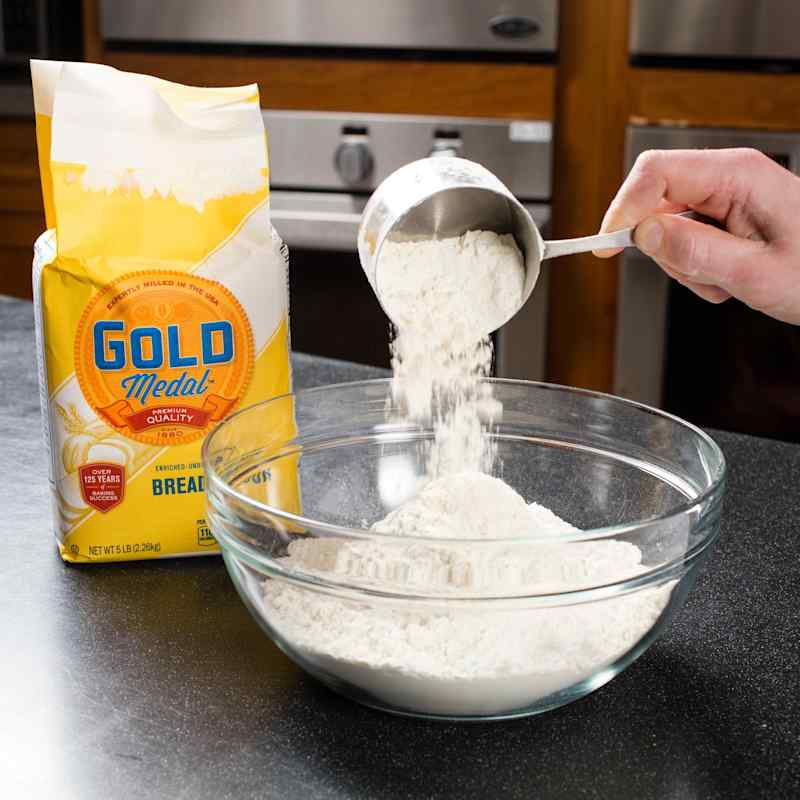
Bread Flour

Protein level: Bread flour has a high protein level (12 percent or above) and is often labeled "made for bread machines." The high protein content ensures strong gluten development and a sturdy dough, which translates to good flavor, chewy texture, and a crisp crust—all assets in a loaf of homemade bread.
Cake Flour

Protein level: Cake flour has a low protein level (6 to 8 percent) and delivers delicate, fine-crumbed cakes and light, airy biscuits. Not all cakes require cake flour, however, and we call for it only in a few recipes like angel food cake where we feel it delivers decidedly better results than all-purpose flour.
Notes: You can also approximate cake flour by mixing cornstarch with all-purpose flour. For each cup of cake flour, use 7/8 cup all-purpose flour mixed with 2 tablespoons cornstarch. Cake flour is rarely used in pizza or bread recipes.
Whole Wheat Flour

Protein level: Whole-wheat flour has a high protein level (about 13 percent) and a distinctive flavor and texture because it’s made from the entire wheat berry. A wheat berry has three elements: the outer bran layer, the germ, and the endosperm (white flours are ground solely from the endosperm). Because whole wheat flour contains the bran and germ it spoils faster than all-purpose flour, so we recommend storing it in the freezer.
Notes: Whole-wheat flour behaves very differently from white flour. That said, you can often replace up to one-third of the all-purpose or bread flour in a recipe with an equal amount of whole wheat flour and obtain good results.