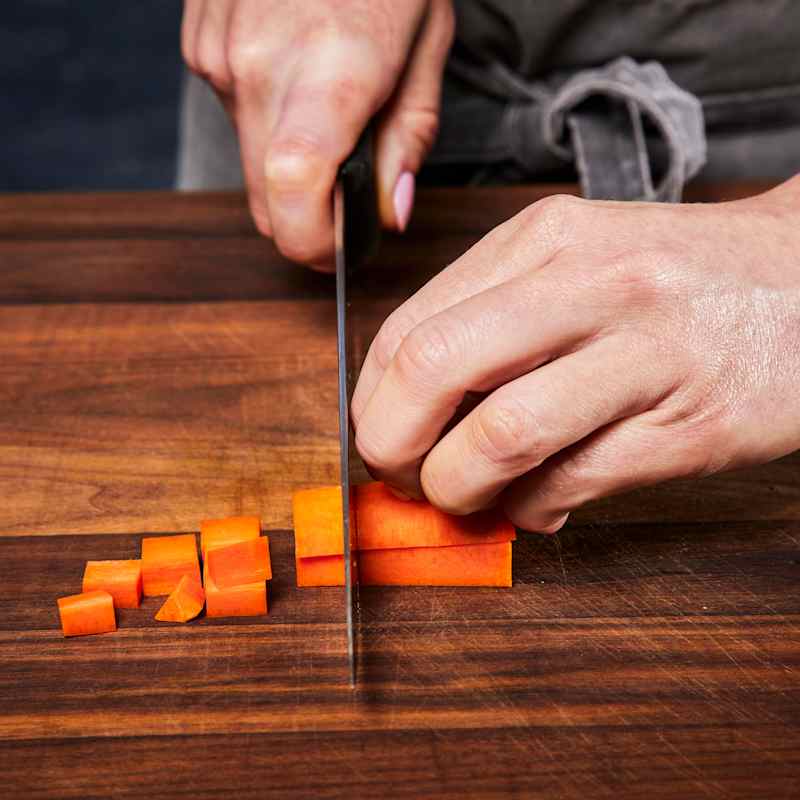
What's in your knife block?

While a kitchen knife set can contain a dozen or more knives, you really only need four knives for most cutting tasks.
Chef’s Knife

We use this knife for everything from chopping an onion to mincing herbs to butchering a chicken. This one knife, with its pointed tip and slightly curved blade, will handle 90 percent of your kitchen cutting work.
Paring Knife

The small blade of a paring knife allows you more dexterity and precision than a chef's knife can provide. We reach for a paring knife for jobs that require a bit more accuracy and exactitude: coring apples, deveining shrimp, cutting citrus segments, peeling garlic, and more. Its small, pointed tip is also great for testing the tenderness of meat or vegetables.
Serrated Knife

Also known as a bread knife, this knife features pointed serrations that allow it to glide through crusty breads, bagels, tomato skins, and more to produce neat slices.
Slicing Knife

This knife (also called a carving knife) is specially designed to cut neatly through meat's muscle fibers and connective tissues. No other knife can cut through cooked meat with such precision in a single stroke. Our holiday birds and roasts would be torn to shambles—hardly presentable—without this knife.