America's Test Kitchen LogoCook's Country LogoCook's Illustrated LogoAmerica's Test Kitchen LogoCook's Country LogoCook's Illustrated Logo

Italian Flatbreads (Piadine)

By Annie Petito

Published on July 14, 2019

Time

40 minutes, plus 30 minutes resting

Yield

Makes 4 flatbreads

Italian Flatbreads (Piadine)

Ingredients

2 cups (10 ounces/283 grams) all-purpose flour ¾ teaspoon baking powder ½ teaspoon table salt 3 tablespoons vegetable oil ¾ cup water

Before You Begin

We use pantry-friendly vegetable oil because the Italian flatbreads (or piadine) it makes are similar in flavor and texture to those made with traditional lard. If you'd prefer to use lard, increase the amount to ¼ cup to account for its lower density. Do not substitute butter or olive oil; their flavors are obtrusive here. A nonstick skillet can be used in place of cast iron; increase the heat to medium-high and preheat the empty skillet with ½ teaspoon of oil until shimmering; wipe out the oil before proceeding with the recipe.

Instructions

  1. Process flour, baking powder, and salt in food processor until combined, about 5 seconds. Add oil and process until no visible bits of fat remain, about 10 seconds. With processor running, slowly add water; process until most of dough forms soft, slightly tacky ball that clears sides of workbowl, 30 to 60 seconds (there may be small bits of loose dough).
  2. Transfer dough to counter and gently knead until smooth, about 15 seconds. Divide dough into 4 equal pieces and shape each into ball. Working with 1 dough ball at a time, place ball seam side down on clean counter and, using your cupped hand, drag in small circles until ball is taut and smooth. Cover dough balls loosely with plastic wrap. Let rest for 30 minutes.
  3. Pat 1 dough ball into 5-inch disk on lightly floured counter (keep remaining dough balls cover). Roll disk into 9-inch round, flouring counter as needed to prevent sticking. Repeat with remaining dough balls.
  4. Heat 12-inch cast-iron skillet over medium heat until drop of water dripped onto surface sizzles immediately, about 3 minutes. Prick 1 dough round all over with fork, then carefully place in skillet. Cook until underside is spotty brown, 1 to 2 minutes, using fork to pop any large bubbles that form. Flip round and cook until second side is spotty brown, 1 to 2 minutes (flatbread should still be pliable). Transfer piadina to plate, gently fold in half, and cover with clean dish towel to keep warm. Repeat with remaining dough rounds, stacking piadine and re-covering with towel as they finish. Serve warm. (Piadine can be stored in zipper-lock bag for up to 2 days. Reheat in cast-iron skillet over medium-high heat for 20 to 30 seconds per side, until warmed through.)

Italian Flatbreads (Piadine)

Save

Time

40 minutes, plus 30 minutes resting

Yield

Makes 4 flatbreads

Ingredients

2 cups (10 ounces/283 grams) all-purpose flour
¾ teaspoon baking powder
½ teaspoon table salt
3 tablespoons vegetable oil
¾ cup water

Test Kitchen Techniques

Ingredients

2 cups (10 ounces/283 grams) all-purpose flour
¾ teaspoon baking powder
½ teaspoon table salt
3 tablespoons vegetable oil
¾ cup water

Test Kitchen Techniques

Ingredients

2 cups (10 ounces/283 grams) all-purpose flour
¾ teaspoon baking powder
½ teaspoon table salt
3 tablespoons vegetable oil
¾ cup water

Test Kitchen Techniques

Why This Recipe Works

For chewy-tender piadine with an open crumb, we added baking powder to the dough, as well as ample amounts of fat and water that diluted the gluten strands, keeping the dough soft and pliable without making it too rich. Rolling the dough into 9-inch rounds made for substantial breads that fit perfectly in the cast-iron pan, which we preheated thoroughly so that they would brown quickly without drying out.

Want more? Read the whole story
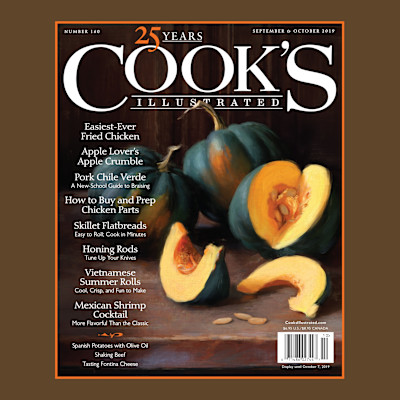
Before You Begin

We use pantry-friendly vegetable oil because the Italian flatbreads (or piadine) it makes are similar in flavor and texture to those made with traditional lard. If you'd prefer to use lard, increase the amount to ¼ cup to account for its lower density. Do not substitute butter or olive oil; their flavors are obtrusive here. A nonstick skillet can be used in place of cast iron; increase the heat to medium-high and preheat the empty skillet with ½ teaspoon of oil until shimmering; wipe out the oil before proceeding with the recipe.

Instructions

  1. Process flour, baking powder, and salt in food processor until combined, about 5 seconds. Add oil and process until no visible bits of fat remain, about 10 seconds. With processor running, slowly add water; process until most of dough forms soft, slightly tacky ball that clears sides of workbowl, 30 to 60 seconds (there may be small bits of loose dough).
  2. Transfer dough to counter and gently knead until smooth, about 15 seconds. Divide dough into 4 equal pieces and shape each into ball. Working with 1 dough ball at a time, place ball seam side down on clean counter and, using your cupped hand, drag in small circles until ball is taut and smooth. Cover dough balls loosely with plastic wrap. Let rest for 30 minutes.
  3. Pat 1 dough ball into 5-inch disk on lightly floured counter (keep remaining dough balls cover). Roll disk into 9-inch round, flouring counter as needed to prevent sticking. Repeat with remaining dough balls.
  4. Heat 12-inch cast-iron skillet over medium heat until drop of water dripped onto surface sizzles immediately, about 3 minutes. Prick 1 dough round all over with fork, then carefully place in skillet. Cook until underside is spotty brown, 1 to 2 minutes, using fork to pop any large bubbles that form. Flip round and cook until second side is spotty brown, 1 to 2 minutes (flatbread should still be pliable). Transfer piadina to plate, gently fold in half, and cover with clean dish towel to keep warm. Repeat with remaining dough rounds, stacking piadine and re-covering with towel as they finish. Serve warm. (Piadine can be stored in zipper-lock bag for up to 2 days. Reheat in cast-iron skillet over medium-high heat for 20 to 30 seconds per side, until warmed through.)

Gift This Recipe

Enjoyed this dish? Let others know by sharing it as a gift recipe.

This is a members' feature.