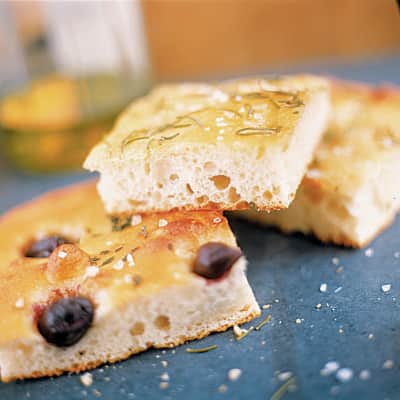
Sage Focaccia
By America's Test KitchenPublished on August 22, 2007
Time
1¾ hours, plus 20 minutes standing and 1¾ hours rising
Yield
Makes one 15 1/2-by-10 1/2-inch rectangle
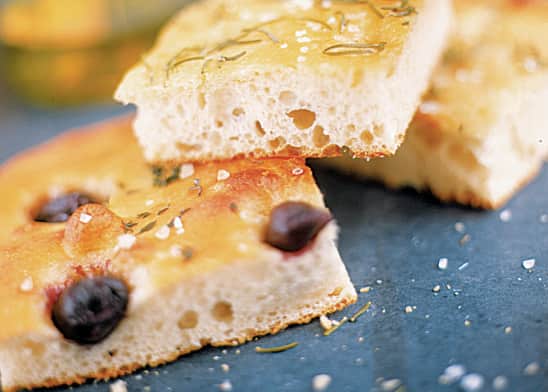
Ingredients
Dough
1 medium baking potato (about 9 ounces), peeled and quartered1 ½ teaspoons instant yeast 3 ½ cups unbleached all-purpose flour 1 cup water (warm, 105 to 115 degrees)2 tablespoons extra-virgin olive oil, plus more for oiling bowl and pan1 tablespoon chopped fresh sage leaf 1 ¼ teaspoons table saltTopping
2 tablespoons extra-virgin olive oil 24 whole fresh sage leaves ¾ teaspoon sea salt, coarse, (or 1 ¼ teaspoons kosher salt)Before You Begin
Rapid-rise or instant yeast reduces the preparation time by more than an hour. If you use an equal amount of regular active dry yeast instead, let the sponge in step 2 develop for thirty minutes rather than twenty, and increase the first and second rises to one and one-half hours each.
Instructions
- Boil 1 quart water in small saucepan; add potato and simmer until tender, about 25 minutes. Drain potato well; cool until it can be handled comfortably and put through fine disk on ricer or grate through large holes on box grater. You will need 1 1/3 cups lightly packed potato for this recipe.
- Meanwhile, in large bowl of electric mixer or workbowl of food processor fitted with steel blade, mix or pulse yeast, 1/2 cup flour, and 1/2 cup warm water until combined. Cover tightly with plastic wrap (or put workbowl lid on) and set aside until bubbly, about 20 minutes. Add remaining dough ingredients, including reserved potato. If using mixer, fit with paddle attachment and mix on low speed (number 2 on KitchenAid) until dough comes together. Switch to dough hook attachment and increase speed to medium (number 4 on KitchenAid); continue kneading until dough is smooth and elastic, about 5 minutes. For food processor, process until dough is smooth and elastic, about 40 seconds.
- Transfer dough to lightly oiled bowl, turn to coat with oil, and cover tightly with plastic wrap. Let rise in warm, draft-free area until dough is puffy and doubled in volume, about 1 hour.
- With wet hands (to prevent sticking), press dough flat into generously oiled 15 1/2-by-10 1/2-inch jelly roll pan (see illustration 1). Or, halve and flatten each piece of dough into 8-inch round on large (at least 18 inches long), generously oiled baking sheet (illustration 2). Cover dough with lightly greased or oil-sprayed plastic wrap; let rise in warm, draft-free area until dough is puffy and doubled in volume, 45 minutes to 1 hour.
- Meanwhile, adjust oven rack to lower-middle position and heat oven to 425 degrees. With two wet fingers, dimple risen dough (illustration 3) at regular intervals.
- Drizzle dough with oil, and put one sage leaf in each oil-filled dimple. Drizzle with coarse salt.
- Bake until focaccia bottom(s) are golden brown and crisp, 23 to 25 minutes. Transfer to wire rack to cool slightly. Cut rectangular focaccia into squares or round focaccia into wedges; serve warm. (Focaccia can be kept on counter for several hours and reheated just before serving. Or, wrap cooled focaccia in plastic and then foil and freeze for up to 1 month; unwrap and defrost in 325-degree oven until soft, about 15 minutes.)
for the dough
for the topping


Time
1¾ hours, plus 20 minutes standing and 1¾ hours risingYield
Makes one 15 1/2-by-10 1/2-inch rectangleIngredients
Dough
Topping
Test Kitchen Techniques
Ingredients
Dough
Topping
Test Kitchen Techniques
Ingredients
Dough
Topping
Test Kitchen Techniques
Why This Recipe Works
When developing our best focaccia recipe, we noticed that a couple of recipes from southern Italy added riced potato to the dough. We found that it produced a bread with moistness, a pleasantly soft texture, and a high rise, but the dough still needed more lift. We knew that sponges (relatively thin mixtures of yeast, water, and flour that are allowed to ferment briefly) are often used to lend flavor and create air holes in bread. So we tried a quick sponge with our working focaccia recipe, stirring the yeast, half the water, and a small portion of the flour together in a small bowl, then covering the bowl with plastic wrap and letting the sponge rest for 30 minutes before adding the remaining ingredients. The fermentation of the sponge produced wonderfully large bubbles, and the result was a bread that rose very high and had a nice, light texture.



2 Comments