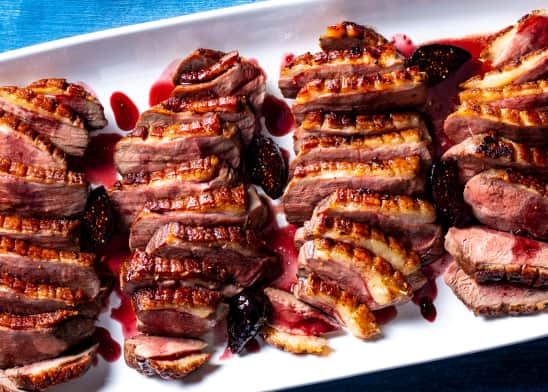
Duck Breasts with Port Wine–Fig Sauce
By Mark HuxsollPublished on October 18, 2021
Time
50 minutes, plus 6 hours salting
Yield
Serves 4
Ingredients
Duck
4 (7- to 8-ounce) boneless duck breasts 2 teaspoons kosher salt 1½ teaspoons pepperSauce
½ cup ruby port ¼ cup dried Black Mission figs, halved through stem¼ cup red wine vinegar 3 tablespoons sugarBefore You Begin
This recipe was developed with duck breasts weighing 7 to 8 ounces each. However, if you can find only larger duck breasts that weigh 10 to 12 ounces each, they will also work here. They tend to come with more excess fat; once it's trimmed away, the breasts will weigh closer to 8 or 9 ounces. You may need to cook these larger duck breasts about 1 minute longer on the second side to reach the desired temperature. We prefer duck cooked to medium-rare or medium.
Instructions
- Pat duck breasts dry with paper towels. Place breasts skin side down on cutting board. Using sharp knife, trim away excess fat around edges of breasts, then remove any visible silverskin attached to meat.
- Flip breasts and cut ½-inch crosshatch pattern in fat, being careful not to cut into meat. Sprinkle all over with salt and pepper. Place duck on large plate skin side up, cover tightly with plastic wrap, and refrigerate for at least 6 hours or up to 24 hours.
- Meanwhile, combine all ingredients in small saucepan. Bring to boil over medium heat. Cook until reduced to about ½ cup, about 15 minutes; set aside off heat. Sauce will thicken to syrupy consistency as it cools. (Cooled sauce can be stored in airtight container for up to 3 days or refrigerated for up to 2 weeks.)
- Place breasts skin side down in cold 12-inch nonstick skillet. Cook over medium heat until copious amount of fat has rendered and skin is well browned and crispy, 17 to 20 minutes.
- Flip breasts skin side up and reduce heat to medium-low. Cook until centers of breasts register 125 to 130 degrees (for medium-rare), 1 to 2 minutes; 130 to 135 degrees (for medium), 3 to 4 minutes; 135 to 140 degrees (for medium-well), 4 to 5 minutes; or 145 to 150 degrees (for well-done), 7 to 8 minutes.
- Transfer breasts to wire rack set in rimmed baking sheet. Tent with aluminum foil and let rest for 10 minutes.
- Transfer duck to carving board and slice ¼ inch thick. Serve with sauce.
for the duck
for the sauce

Time
50 minutes, plus 6 hours saltingYield
Serves 4Ingredients
Test Kitchen Techniques
Ingredients
Test Kitchen Techniques
Ingredients
Test Kitchen Techniques
Why This Recipe Works
Duck is a great choice to cook at home for a special meal. We developed this recipe using boneless breasts from White Pekin ducks for their balanced meat-to-fat ratio. White Pekins are also the most popular breed raised in the United States, so they're easier to find in grocery stores, and the breasts are typically more consistent in size. Sourcing the duck might actually be the hardest part of this recipe. We trimmed away excess fat and any gristly bits and then double-checked for bone fragments. We scored the skin in a crosshatch pattern to help the subcutaneous fat render and the skin crisp. We salted the breasts and refrigerated them, wrapped, for at least 6 hours to firm them up, help them retain moisture, and season them deeply. Starting the breasts skin side down in a cold skillet and then cooking them over medium heat was an efficient way to render the fat, crisp the skin, and cook the meat gently. After flipping the breasts and lowering the heat, we finished cooking them to the desired temperature on the stovetop (we prefer medium-rare or medium). A simple sauce made of port wine, dried figs, vinegar, and sugar cut through the fat and paired perfectly with the duck.





29 Comments