Alu Parathas (Punjabi Potato-Stuffed Griddle Breads)
By Kaumudi MarathéPublished on January 27, 2022
Time
1½ hours, plus 1 hour 5 minutes cooling and resting
Yield
Serves 4 (makes 8 parathas)
Ingredients
Potato Stuffing
1 pound russet potatoes, peeled and cut into 1-inch pieces2 tablespoons minced fresh cilantro 1 tablespoon grated fresh ginger 1½ teaspoons amchoor 1 teaspoon ground cumin ¾ teaspoon table salt 1 Thai chile, stemmed and minced¼ teaspoon kalonji ¼ teaspoon ajwainDough
1⅔ cups (8⅓ ounces/236 grams) all-purpose flour ½ teaspoon sugar 2 tablespoons vegetable oil ½ teaspoon table salt ½ cup plus 1 tablespoon cold water ¼ cup ghee, meltedBefore You Begin
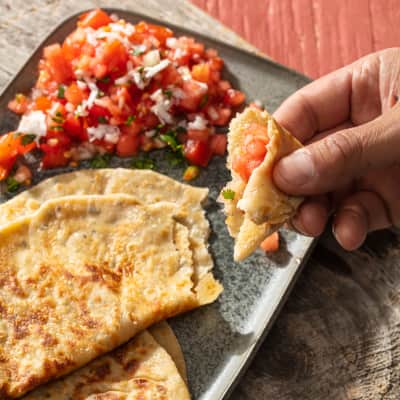
Ghee, kalonji, ajwain, and amchoor can all be purchased at a South Asian market or online. Ajwain has an oregano-like flavor and is often added to fried Indian food to aid digestion; if you can't find it, it's OK to leave it out. If preferred, you can substitute ¼ teaspoon of cayenne pepper for the Thai chile in the stuffing. We strongly recommend weighing the flour for this recipe. Serve the parathas as an entrée with raita, prepared mango pickle, or Tamatya-Kandyachi Koshimbir (Tomato-Onion Salad) for breakfast, lunch, or dinner. For more information on amchoor, see this article.
Instructions
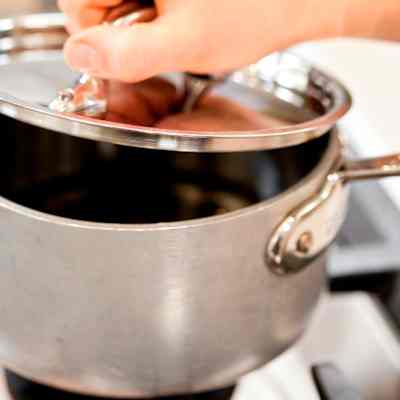
- Place potatoes in large saucepan, add cold water to cover by 1 inch, and bring to boil over high heat. Reduce heat to maintain simmer and cook until potatoes are very tender, about 16 minutes. Drain well and process through ricer or mash with potato masher until completely smooth. Set aside and let partially cool, about 20 minutes.
- Stir cilantro, ginger, amchoor, cumin, salt, Thai chile, kalonji, and ajwain into potatoes. Season with salt to taste. Cover and set aside. (Potato stuffing can be refrigerated for up to 24 hours; let come to room temperature before using.)
- Pulse flour, salt, and sugar in food processor until combined, about 5 pulses. Add oil and pulse until incorporated, about 5 pulses. With processor running, slowly add cold water and process until dough is combined and no dry flour remains, about 30 seconds. Transfer dough to clean counter and knead by hand to form smooth, round ball, about 30 seconds; transfer to bowl, cover with plastic wrap, and let rest for 30 minutes.
- Divide potato stuffing into 8 equal portions and roll into balls (they will be about 1½ inches wide); cover with plastic. Divide dough into 8 equal pieces, about 1¾ ounces each, and cover loosely with plastic. Working with 1 piece of dough at a time, form dough pieces into smooth, taut balls. (To round, set piece of dough on unfloured counter. Loosely cup your hand around dough and, without applying pressure to dough, move your hand in small circular motions. Tackiness of dough against counter and circular motion should work dough into smooth ball.) Let dough balls rest, covered, for 15 minutes. While dough balls rest, line rimmed baking sheet with parchment paper.
- Roll 1 dough ball into 4-inch disk on lightly floured counter. Place 1 stuffing ball in center of dough disk. Gather edges of dough around stuffing to enclose completely; pinch to seal. Place seam side down on lightly floured counter, gently flatten, and lightly and gently roll to even ⅛-inch-thick round (about 8 inches wide). Transfer to prepared sheet and cover loosely with plastic. Repeat with remaining dough balls, stacking parathas between layers of parchment.
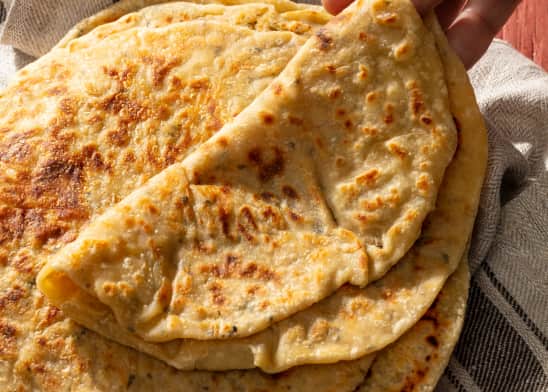
- Heat 10-inch cast-iron skillet over medium heat for 5 minutes, then reduce heat to low. Brush any remaining flour from both sides of 1 paratha, then gently place in hot skillet, being careful not to stretch paratha. Cook until large bubbles begin to form on surface, underside of paratha is light blond, and paratha moves freely in skillet, 30 to 60 seconds. (Paratha may puff.) Using metal spatula, flip paratha; brush with ghee. Cook until underside is spotty brown and moves freely in skillet, 20 to 60 seconds, pressing any puffed edges firmly onto skillet with spatula to ensure even contact.
- Flip paratha back onto first side. Repeat brushing with ghee, pressing, cooking, and flipping once more until paratha is even more spotty brown on both sides and no longer looks raw, about 30 seconds per side. Transfer cooked paratha to second rimmed baking sheet, let cool slightly, then cover loosely with dish towel.
- Repeat with remaining parathas, wiping out skillet with paper towels between each paratha and briefly removing skillet from heat if it begins to smoke or if paratha browns too quickly. Serve hot. (Parathas can be stacked between layers of parchment paper, placed in zipper-lock bag, and refrigerated for up to 2 days; to refresh, heat 10-inch cast-iron skillet over medium heat for 5 minutes, then reduce heat to low. Cook paratha until warmed through, flipping 3 times, 10 to 15 seconds per side.)
for the potato stuffing
for the dough

Time
1½ hours, plus 1 hour 5 minutes cooling and restingYield
Serves 4 (makes 8 parathas)Ingredients
Potato Stuffing
Dough
Test Kitchen Techniques
Ingredients
Potato Stuffing
Dough
Test Kitchen Techniques
Ingredients
Potato Stuffing
Dough
Test Kitchen Techniques
Why This Recipe Works
These potato-stuffed flatbreads hail from Punjab and are a staple across the northern part of the Indian subcontinent and in big cities such as Mumbai and Delhi. Alu parathas are made by wrapping circles of dough around a boldly spiced potato stuffing, rolling the stuffed balls into slim disks, and browning the disks (brushed with ghee) until crisp brown patches develop. The steamy, pliable breads are typically enjoyed as the center of a meal, and frankly, there is no more satisfying breakfast, lunch, or dinner than a stack of piping hot alu parathas. We started by making a compact, flavorful potato stuffing of mashed russets, aromatics, and a bold mix of spices and seeds: amchoor, cumin, kalonji, and ajwain. Next, we mixed a quick dough in the food processor, letting it rest for 30 minutes to allow the gluten to relax. After stuffing the potato balls into rounds of dough, we rolled the packages thin and griddled them in a cast-iron skillet using plenty of nutty ghee. Flipping the breads only four times ensures that they stay pliable while still developing lots of crisp brown spots.
Want more? Read the whole story



54 Comments