Easier Homemade Sous Vide Yogurt
By Lan Lam & Paul AdamsPublished on January 18, 2022
Yield
Makes 2 quarts
Ingredients
Before You Begin
You will need two (1-quart) mason jars with metal lids. Be sure to use freshly opened containers of milk. Any plain yogurt (whole-milk, low fat, nonfat, Greek, etc.) that contains live cultures can be used. For richer yogurt, swap ½ cup of ultrapasteurized heavy cream for ½ cup of the milk before heating; for yogurt that’s more lush but not richer, whisk ¼ cup of nonfat dry milk powder into the cold milk in step 1; for Greek yogurt, place yogurt in fine-mesh strainer lined with triple-layer of cheesecloth and strain overnight. You may make a half recipe, if preferred.
Instructions
- Whisk yogurt and milk until very well combined. Divide evenly between jars (they will be very full). Wipe rims clean, add lids, and screw on rings until finger-tight; do not over-tighten
- Place jars and immersion circulator in container. Add water until jars are submerged to their necks and cover with plastic wrap. Heat water to 104 degrees. Incubate yogurt for 8 hours.
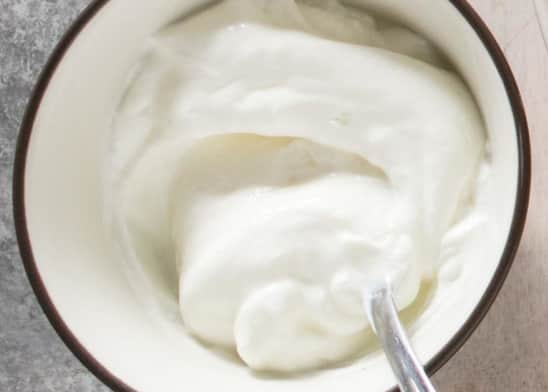
- Using clean spoon, taste yogurt for tartness and consistency. If tarter, thicker yogurt is desired, return jar to water bath and incubate up to 10 hours more, tasting occasionally. Remove jars from water bath and refrigerate until fully cooled, about 8 hours. (Yogurt will keep for 2 weeks.)



Yield
Makes 2 quartsIngredients
Ingredients
Ingredients
Why This Recipe Works
For tangy, creamy yogurt, we skipped the usual preliminary scalding and cooling steps by starting with ultrapasteurized milk, which has already been rapidly heated and chilled. This lets bacterial cultures turn it into an especially thick and silky yogurt. We whisked the ultrapasteurized milk with store-bought yogurt together in jars and placed them into a container with an immersion circulator. By using some store-bought yogurt with live cultures, the strains of bacteria that digest the lactose in milk and then produce lactic acid are already present. This acid is what gives yogurt its flavor and causes the proteins in milk to gradually form a gel, turning liquid milk into creamy yogurt. To provide those bacteria with a cozy environment to do their work, we kept the water in the container at a warm 104 degrees for 8 hours. After that, it was just a matter of tasting for tartness and thickness to decide when to pop the jars into the fridge to let the yogurt set.
Want more? Read the whole story



22 Comments