Buckwheat Flatbread
By Aran GoyoagaPublished on April 25, 2025
Time
40 minutes
Yield
Makes 4 (7-inch) flatbreads
Ingredients
Before You Begin
This recipe was developed using Bob’s Red Mill Organic Buckwheat Groats; we do not recommend using storebought buckwheat flour as it has a coarser texture and a stronger flavor. It might seem fussy to grind the groats for flouring the counter separately, but it ensures the right amount of flour in the flatbread for an easy-to-work-with dough. Because there is no gluten in buckwheat, your dough will not be as stiff or elastic as flatbread made with whole-wheat flour, so roll gently. Be sure to store the flatbreads in a dish towel after searing, as it helps to keep them pliable. This recipe can be easily doubled to make 8.
Instructions
- Process 1 cup (6 ounces) buckwheat groats in blender on high speed until very fine and powdery, starting on lowest setting and working your way up to highest, about 2 minutes. Transfer to medium bowl and whisk in salt. Repeat processing with remaining ⅓ cup (2 ounces) groats in now-empty blender; transfer to small bowl and set aside. (Use this flour for rolling out dough; you won’t need it all. Store extra in airtight container at room temperature for up to 3 months.)
- Add boiling water to flour-salt mixture, stirring with fork until most of flour has been moistened. Let cool slightly, then, using your hands, knead in bowl until shaggy dough forms. (If dough does not come together, add up to 2 tablespoons boiling water, 1 teaspoon at a time. If dough is too wet, add up to 1 tablespoon additional flour, 1 teaspoon at a time.) Drizzle oil over dough, transfer to clean counter, and knead until dough feels smooth and hydrated, but not too soft, about 1 minute.
- Line rimmed baking sheet with parchment paper. Divide dough into 4 pieces. Lightly flour counter with reserved buckwheat flour and roll 1 piece of dough into 7-inch circle (keep remaining pieces covered) using lightly floured rolling pin. Lift and rotate dough as you roll so that dough doesn’t stick to counter. Transfer dough disk to prepared sheet and repeat with remaining dough, layering parchment between each disk.
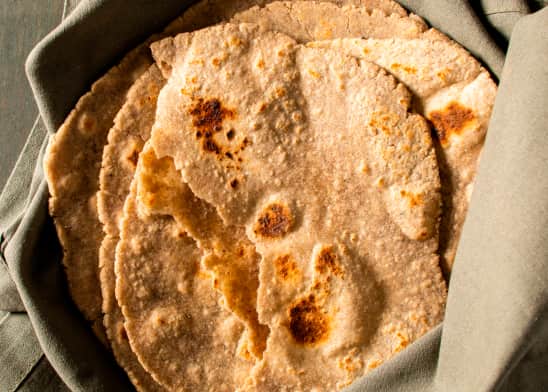
- Heat 10- or 12-inch cast-iron skillet over medium-high heat for 3 minutes. Gently transfer 1 dough disk to preheated skillet and cook until surface is beginning to dry and bottom has some golden spots, about 30 seconds. Slide metal spatula under flatbread, flip, and cook second side until golden in spots and flatbread begins to puff in small bubbles. Continue to cook, flipping every 30 seconds, until flatbread is charred in spots and dry throughout, 2 to 3 minutes.
- Wrap cooked flatbread in clean dish towel and set aside. Repeat with remaining dough, keeping cooked flatbread covered in dish towel to prevent drying and adjusting burner as needed. Serve. (Flatbreads are best eaten same day they are made.)


Time
40 minutesYield
Makes 4 (7-inch) flatbreadsIngredients
Ingredients
Ingredients
Why This Recipe Works
These gluten-free flatbreads are perfect to eat alongside stews and dips as they’re tender but sturdy enough to hold up to a good scoop. (We like to serve them alongside our Slow-Roasted Eggplant Dip with Pomegranate Molasses and Aleppo Pepper.) To ensure the proper texture and flavor, we made our own buckwheat flour from buckwheat groats; it took just a minute to process them until very fine in a blender. Separately grinding the flour for the dough and that used to flour the counter ensured the right amounts for each. And using the right amounts is essential—as adding too much flour would result in a tough, dry dough that would be difficult to roll out. Using boiling water in the dough cooked the starches in the buckwheat flour, which helped with elasticity. Rolling the dough into 7-inch rounds and cooking them in a preheated cast-iron skillet in 30-second intervals ensured that they browned and puffed nicely and also stayed tender.


5 Comments