America's Test Kitchen LogoCook's Country LogoCook's Illustrated LogoAmerica's Test Kitchen LogoCook's Country LogoCook's Illustrated Logo

Homemade Gluten-Free Soba Noodles

By Aran Goyoaga

Published on February 14, 2026

Time

45 minutes

Yield

Serves 4
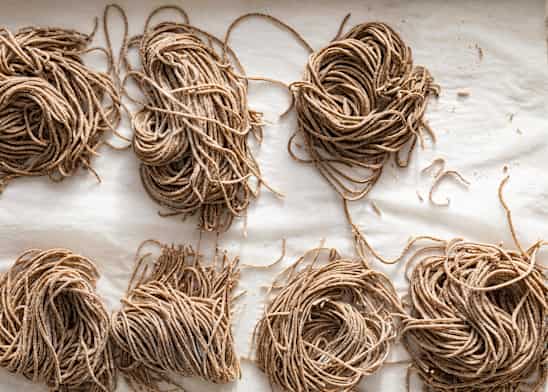
Homemade Gluten-Free Soba Noodles

Ingredients

1½ cups (7¾ ounces/220 grams) buckwheat flour ½ cup (2 ounces/57 grams) tapioca starch ¾ teaspoon xanthan gum ½ teaspoon table salt, plus 1 tablespoon for cooking noodles⅔ cup plus 1 tablespoon boiling water

Before You Begin

There is no gluten in this recipe, so the noodles are more delicate than standard ones made with a mixture of buckwheat and all-purpose flour.

Instructions

  1. Whisk 1½ cups (7¾ ounces) buckwheat flour, ½ cup tapioca starch, ¾ teaspoon xanthan gum, and ½ teaspoon salt in large bowl. Add ⅔ cup boiling water, stirring with fork until combined (dough will look crumbly). Using your hands, knead dough in bowl, adding additional 1 tablespoon boiling water as needed until dough comes together.
  2. Transfer dough to clean counter and knead by hand until dough is firm, smooth, and evenly hydrated, about 2 minutes. (Dough should feel like Play-Doh. If dough is still very dry, moisten your hands and continue to knead until moisture from your hands is incorporated into dough.) Cut dough into 4 pieces. Working with 1 piece of dough at a time (keep remaining pieces covered in plastic wrap) press and roll into 5-inch square (about ¼ inch thick).
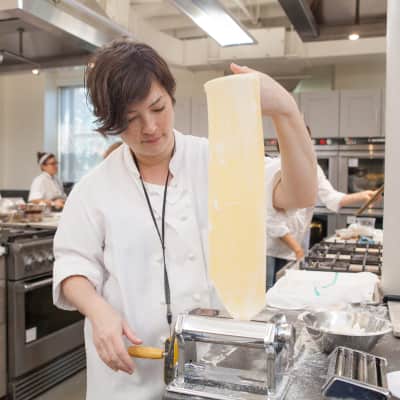
  3. Using pasta machine with rollers set to widest position and working with 1 square at a time, feed dough through rollers. Narrow rollers to next setting and feed dough through rollers. Continue to progressively narrow rollers, feeding dough through, until sheet is ⅛ inch thick. Cut sheet in half crosswise. Repeat with remaining dough squaress.
  4. Dust sheets lightly with buckwheat flour then feed sheets, 1 at a time, through spaghetti setting of pasta machine. Lightly dust noodles with buckwheat flour then transfer to rimmed baking sheet, arranging into small nests on sheet. Cover sheet loosely with plastic wrap. Repeat with remaining pasta sheets. (Noodles can be refrigerated, covered, for up to 3 days or frozen for up to 1 month.)
  5. Bring 4 quarts water to boil in large pot. Add 1 tablespoon salt, reduce heat to medium, then add noodles and gently stir to separate. Cook until tender, about 1–2 minutes. Drain in colander and run under cold running water to prevent noodles from sticking. Serve.
Homemade Gluten-Free Soba Noodles
Photography by Kritsada Panichgul. Styling by Christine Tobin.

Homemade Gluten-Free Soba Noodles

Headshot of Aran Goyoaga
By Aran Goyoaga

Published on February 14, 2026

Save

Time

45 minutes

Yield

Serves 4

Ingredients

1½ cups (7¾ ounces/220 grams) buckwheat flour
½ cup (2 ounces/57 grams) tapioca starch
¾ teaspoon xanthan gum
½ teaspoon table salt, plus 1 tablespoon for cooking noodles
⅔ cup plus 1 tablespoon boiling water

Ingredients

1½ cups (7¾ ounces/220 grams) buckwheat flour
½ cup (2 ounces/57 grams) tapioca starch
¾ teaspoon xanthan gum
½ teaspoon table salt, plus 1 tablespoon for cooking noodles
⅔ cup plus 1 tablespoon boiling water

Ingredients

1½ cups (7¾ ounces/220 grams) buckwheat flour
½ cup (2 ounces/57 grams) tapioca starch
¾ teaspoon xanthan gum
½ teaspoon table salt, plus 1 tablespoon for cooking noodles
⅔ cup plus 1 tablespoon boiling water

Why This Recipe Works

Japanese soba are made with buckwheat flour, which gives them a subtle nutty, earthy flavor. All-purpose flour is often incorporated into the dough to provide more structure. For a gluten-free recipe, we add tapioca starch and xanthan gum, both of which act as binders in the absence of gluten to make the noodles cohesive. We mix the dough with boiling water, which gels the starches (both buckwheat and tapioca), providing a bit more structure and elasticity and trapping moisture that might otherwise make the dough too loose. Traditionally soba dough is rolled by hand and cut with a large knife designed to slice very thin noodles. We find that a pasta roller and cutter makes the job easier, but you can certainly do it by hand instead. The noodles only take a minute to cook in simmering water and are delicious eaten on their own or chilled with a dipping sauce or as the base of a salad.

Before You Begin

There is no gluten in this recipe, so the noodles are more delicate than standard ones made with a mixture of buckwheat and all-purpose flour.

Instructions

  1. Whisk 1½ cups (7¾ ounces) buckwheat flour, ½ cup tapioca starch, ¾ teaspoon xanthan gum, and ½ teaspoon salt in large bowl. Add ⅔ cup boiling water, stirring with fork until combined (dough will look crumbly). Using your hands, knead dough in bowl, adding additional 1 tablespoon boiling water as needed until dough comes together.
  2. Transfer dough to clean counter and knead by hand until dough is firm, smooth, and evenly hydrated, about 2 minutes. (Dough should feel like Play-Doh. If dough is still very dry, moisten your hands and continue to knead until moisture from your hands is incorporated into dough.) Cut dough into 4 pieces. Working with 1 piece of dough at a time (keep remaining pieces covered in plastic wrap) press and roll into 5-inch square (about ¼ inch thick).
  3. Using pasta machine with rollers set to widest position and working with 1 square at a time, feed dough through rollers. Narrow rollers to next setting and feed dough through rollers. Continue to progressively narrow rollers, feeding dough through, until sheet is ⅛ inch thick. Cut sheet in half crosswise. Repeat with remaining dough squaress.
  4. Dust sheets lightly with buckwheat flour then feed sheets, 1 at a time, through spaghetti setting of pasta machine. Lightly dust noodles with buckwheat flour then transfer to rimmed baking sheet, arranging into small nests on sheet. Cover sheet loosely with plastic wrap. Repeat with remaining pasta sheets. (Noodles can be refrigerated, covered, for up to 3 days or frozen for up to 1 month.)
  5. Bring 4 quarts water to boil in large pot. Add 1 tablespoon salt, reduce heat to medium, then add noodles and gently stir to separate. Cook until tender, about 1–2 minutes. Drain in colander and run under cold running water to prevent noodles from sticking. Serve.


Gift This Recipe

Enjoyed this dish? Let others know by sharing it as a gift recipe.

This is a members' feature.