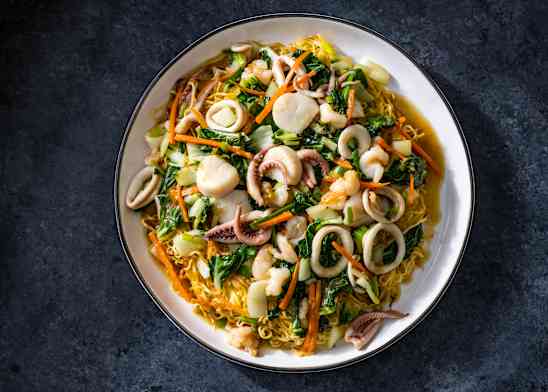
Seafood Pan-Fried Noodles
By Maggie ZhuPublished on June 12, 2026
Time
1 hour
Yield
Serves: 4
Ingredients
Before You Begin
Fresh Hong Kong–style noodles are thin, golden egg noodles readily purchased in the refrigerated section of Asian markets. You can substitute 6 ounces of dried Hong Kong–style noodles, but you will need to cook them longer in step 3 to reach al dente.
Instructions
- Combine 6 ounces squid (bodies sliced crosswise into ¼-inch-thick rings, tentacles cut into bite-size pieces), 1 teaspoon Shaoxing wine, and ⅛ teaspoon table salt in bowl; set aside. Slice 6 ounces shrimp (peeled, deveined, and tails removed) lengthwise across back into two thin pieces. Combine shrimp, 2 teaspoons Shaoxing wine, 1½ teaspoon cornstarch, and remaining ⅛ teaspoon salt in second bowl. Mix well and set aside. 1
- Combine 1 cup chicken broth, 2 tablespoons oyster sauce, 1 teaspoon soy sauce, 1 teaspoon sugar, 1 teaspoon chicken bouillon powder, ¼ teaspoon white pepper, remaining 2 tablespoons Shaoxing wine, and remaining 1½ tablespoons cornstarch in third bowl; set aside.
- Bring 2 quarts water to boil in large saucepan. Add 10 ounces fresh Hong Kong–style noodles and cook, stirring often, until al dente (center of noodles should be firm with slight opaque dot), about 30 seconds. Use spider skimmer or tongs to transfer noodles to colander to drain, reserving boiling water. Drain noodles in colander and rinse under cold running water, tossing with tongs, until cool to touch, about 1 minute. Drain noodles very well.
- Return water to boil over high heat. Add seasoned squid and cook until surface just turns white but inside is not fully cooked, about 30 seconds. Transfer to paper towel–lined rimmed baking sheet. Add shrimp to boiling water and cook until no longer translucent on edges, about 30 seconds. Transfer to sheet with squid. Add 4 ounces large sea scallops (tendons removed, cut in half horizontally) to boiling water and cook until just beginning to turn white on edges, about 30 seconds. Transfer to sheet with squid and shrimp. Pat blanched seafood dry with paper towels.
- Heat 3 tablespoons vegetable oil in wok over medium heat until shimmering. Add drained noodles and spread into disk shape. Cook without moving until the bottom turns golden, 2 to 4 minutes. Flip noodle patty to fry other side until golden, about 2 minutes. (If wok looks dry, add additional 1 tablespoon vegetable oil around noodles on second side.) Transfer noodles to serving platter.
- Add remaining 1 tablespoon vegetable oil to wok. Add whites of 5 scallions, cut into 2-inch pieces; 1 tablespoon grated ginger; and 2 minced garlic cloves and cook over medium heat until fragrant, about 30 seconds. Increase heat to medium-high and stir in 2 heads baby bok choy (stalks halved lengthwise and sliced ½ inch thick, greens cut into 2-inch pieces) and ½ carrot, peeled and cut into 2-inch-long matchsticks. Cook, stirring constantly, until just starting to wilt, about 30 seconds. Stir in drained seafood mixture and cook for another 30 seconds.
- Stir chicken broth mixture to make sure it’s fully combined and add to wok. Stir in greens of 5 scallions, cut into 2-inch pieces. Bring sauce to boil and cook until thickened and seafood is fully cooked through, about 1 minute. Off heat, stir in 1 teaspoon toasted sesame oil. Pour over noodles. Serve.


Time
1 hourYield
Serves: 4Ingredients
Ingredients
Ingredients
Why This Recipe Works
In this Cantonese restaurant favorite, thin, golden egg noodles known as Hong Kong–style noodles create a crispy, sturdy base that stands up to the saucy seafood topping. Briefly boiling the noodles before pan-frying ensures that they hydrate evenly without turning too soft and turn golden and crunchy when pan-fried. Parboiling the shrimp, squid, and scallops eliminates excess moisture that could water down the sauce. A classic cornstarch-thickened Chinese white sauce (so named for its relatively light color) with chicken broth, oyster sauce, and Shaoxing wine adds gloss and savory depth without overpowering the shrimp and scallops. Cooking the noodles and topping separately preserves contrast, delivering crispy noodles beneath silky sauce and seafood for a dish that feels festive and restaurant-worthy.

0 Comments