
“Vanilla” is often used as a synonym for “plain” or “boring,” but truly great vanilla ice cream is anything but. An exceptional vanilla ice cream is full of complexity—so much so that you’ll want to scoop it into a cone all on its own.
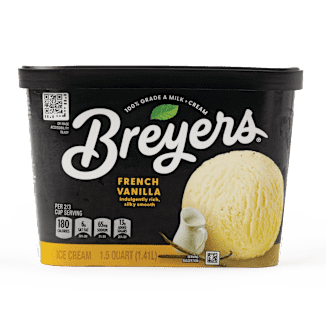
Does a higher price tag increase your chances of finding the creamiest, most luxurious option? Or do the words “vanilla bean” fulfill the promise of noteworthy vanilla flavor? Which vanilla ice cream should you buy to serve alongside a warm, gooey brownie or a tart with local berries? We bought 10 top-selling products, including everything from supermarket classics, such as Ben & Jerry’s and Breyers, to relative newcomers, Jeni’s and Van Leeuwen, to find a remarkable vanilla ice cream.




How Is Supermarket Vanilla Ice Cream Made?
Making vanilla ice cream is simple: Combine sugar, cream, and milk, plus vanilla and sometimes egg yolks. Heating the mixture unfolds the egg proteins, allowing them to link up and hold onto water. The majority of products in our lineup listed “cane sugar” or “liquid sugar” in their ingredients. Some also used corn syrup, which binds up more water and minimizes the growth of large ice crystals, explained our science editor, Paul Adams. Corn syrup also tastes less sweet than cane sugar, allowing manufacturers to add more of it without negatively impacting flavor and making the ice cream too sweet.
The mixture is thoroughly chilled to 40 degrees or even colder, and then it’s ready to churn. Commercial machines are fast. It can take up to 30 minutes to churn a pint in an ice cream machine at home, but it can be done in seconds at a factory. Making ice cream that is delightfully smooth and creamy relies on a precise combination of freezing and agitation. During this time, ice crystals form and air is incorporated, both of which are necessary to thicken ice cream and give it structure. Finally, it’s packed into containers and frozen as quickly as possible.

Great Vanilla Ice Cream Needs Complexity
When perusing the freezer aisle, you may spot a number of styles of vanilla ice cream. “French vanilla” refers not to the origin of the vanilla used, but to the fact that the ice cream contains eggs to make a French-style custard.

Above all, if you’re shopping for vanilla ice cream, it should taste like vanilla. “Vanilla bean” typically means, of course, that the product contains vanilla beans. Our tasters frequently associated visible specks of vanilla bean with a premium product and strong vanilla notes. Turns out, those charming flecks can be misleading. The ground beans used in ice cream are usually byproducts of making vanilla extract and have lost a lot of their potency. We spoke with Kimberly Bukowski, director of the Dairy Certificate Program at the Cornell Dairy Foods Extension, who said, “If you were to take a spoon and taste” plain vanilla beans, they don’t really have any flavor. If a manufacturer adds vanilla beans for looks, they still need to put in some vanilla extract for flavor. All of our top-rated products included both.

“If you were to take a spoon and taste plain vanilla beans, they don’t really have any flavor. If a manufacturer adds vanilla beans for looks, they still need to put in some vanilla extract for flavor.”
—Kimberly Bukowski, director of the Dairy Certificate Program at the Cornell Dairy Foods Extension
Some of the products in our lineup that were advertised as “vanilla” didn’t contain any real vanilla at all. Instead, they used “natural flavor,” and/or “artificial flavor,” which aren’t actually made from vanilla beans. Imitation vanilla has a strong flavor but lacks nuance because it only contains one flavor compound (vanillin), whereas real vanilla has hundreds. Unsurprisingly, tasters noticed “off” or “artificial” flavors, or remarked on a lack of complex flavor in products that didn’t contain real vanilla.
Our top vanilla ice cream also included a little bit of salt. The presence of salt amplifies the perception of sweetness and suppresses bitter notes. It can make the core flavors of a sweet food brighter and more complex, explained Adams.
- What to Look for: Vanilla extract (not just vanilla beans). Contains added salt.
What Is Overrun and Why Does It Matter?
Overrun—the percentage of air in ice cream—plays (arguably) the largest role in ice cream’s final texture. An ice cream that is 100 percent overrun, for example, contains equal amounts of air and ingredients. Percentages higher than that mean that the ice cream contains more air than ingredients. In homemade ice cream, overrun is determined by how quickly or slowly ice cream is churned; faster churning incorporates more air. Manufacturers ensure that a precise volume of air is added to the base as it is churned. For ice cream manufacturers, more air means a lower quantity of expensive ingredients such as milk, cream, and eggs to produce one container of ice cream. For consumers, this means a lower fat, lower calorie product with air displacing calorically dense ingredients. Some people enjoy the light, airy texture of high-overrun ice cream. In general, though, our tasters preferred the denser, creamy, more premium products. We saw a range of 28 to 114 percent overrun in our lineup. In general, tasters preferred ice cream with an overrun of 70 percent or lower.


A quick way to gauge a product’s overrun is to look at the serving size. When comparing the same serving size by volume, a low overrun ice cream weighs more (left), and a high overrun ice cream weighs less (right).
Anyone can use a simple calculation to determine overrun, but an easy clue is to peek at the serving size. All store-bought ice cream has a serving size of ⅔ cup, but the nutrition facts also list the serving by weight. A serving of Häagen-Dazs, a low overrun ice cream, weighs 129 grams. Meanwhile, a serving of Breyers, a high-overrun ice cream, weighs just 85 grams.
- What to Look for: Heavier weight per serving.
Great Vanilla Ice Cream Is Rich and Creamy
Unsurprisingly, fat content influences ice cream’s texture. According to the standard of identity from the U.S. Department of Agriculture, ice cream must contain at least 10% butterfat by weight (any less and the product is classified as a “frozen dairy dessert” instead). In addition to providing richness, fat globules help to trap air, writes Dana Cree in her book, Hello, My Name Is Ice Cream (2017). It also coats ice crystals, making them feel smoother when you eat them, explained Adams. The top-rated products in our lineup had at least 19 grams of fat per serving and listed cream before milk in their ingredient lists. Lower-ranked products had 10 grams of fat or less per serving and were made with more milk than cream.
- What to Look for: At least 19 grams of fat per serving. Cream listed before milk in the ingredients list.
The Best Vanilla Ice Cream
Our favorite vanilla ice cream is a relative newcomer to the supermarket freezer aisle: Van Leeuwen Vanilla Bean Ice Cream. In 2008, the company started as a truck in New York City and now distributes its ice cream to supermarkets across the country. The vanilla ice cream has a remarkably straightforward ingredient list, full of things you would typically use to make ice cream at home. Salt, an ingredient we saw in only two other products, doubled its sodium level compared to most others in the lineup. It lent a beautiful balance and made the ice cream taste “perfectly sweet.” Tasters were charmed by visible vanilla bean flecks, and additional vanilla extract made this ice cream taste complex and anything but plain.
The Tests
- Taste plain
- Measure overrun, a measurement of how much air it contains
- Nutritional information is for a ⅔ cup serving
- Samples were randomized and assigned three-digit codes to prevent bias
- Low to medium overrun (heavier weight per serving)
- At least 19 grams of fat per serving
- Real vanilla extract
- Salt