
 Buy at Amazon
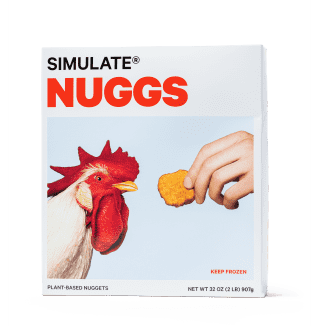
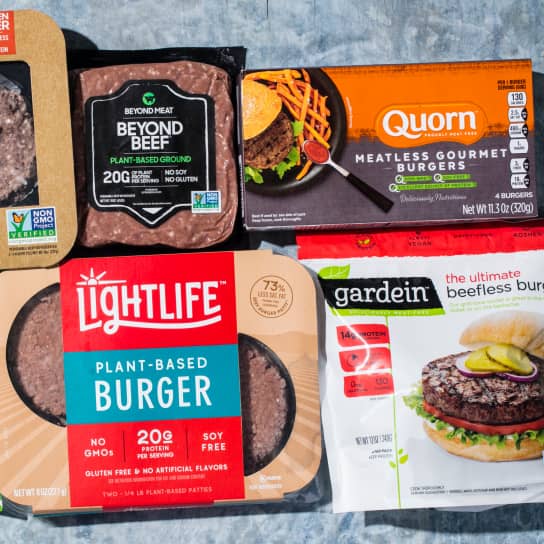
Eight years ago, Beyond Meat released a meat-free burger that mimicked the taste, texture, and experience of eating real meat and radically changed the vegan-meat market. Up until then, veggie burgers were typically made by shaping a mixture of vegetables, legumes, and rice into flat patties. Since Beyond Meat’s debut, consumption of vegan meat has increased. In 2020 alone, sales of all plant-based food grew 27 percent, according to the Plant Based Foods Association and The Good Food Institute. Faux chicken has been a huge part of that growth. When we surveyed the market we found tons of brands, mostly vegan, a few vegetarian, shaped into patties, strips, nuggets, and more. Since nuggets and tenders are currently the most widely available formats, we compared all the major brands on the market to see how good they are, what they're made from, and how closely this new technology has replicated the flavor and texture of real chicken. Here’s what we learned.
What Do These Products Taste Like?
First of all, we must report that some of these products were downright delicious. Our top-rated nuggets were deemed indistinguishable from the real thing. Real chicken nuggets and tenders are fairly mild and savory, and the best products followed suit, with tasters calling them "rich," "meaty," and “chicken-forward.” Almost every product contains garlic and onion as well as yeast extract. Together those ingredients provide savory and meaty flavors and help mimic the flavor of chicken. We liked those that contained a hit of black pepper, too.

Interestingly, manufacturers can’t just add flavorful ingredients to make these products taste good. According to Dr. Andrew J. Gravelle, assistant professor of food science and technology at the University of California, Davis, manufacturers also work with food chemists to develop ingredients that can block or mask the unwanted flavors of soy and pea protein sources (no one wants their vegan or vegetarian meat to taste like a bean). In our tasting, few products exhibited unpleasant flavors, so they were likely masked. The vaguely savory and delicious flavor of chicken nuggets and tenders didn’t prove too hard to re-create, so tasters focused more on textural differences than flavor ones.
Texture: The Final Frontier
Real chicken nuggets are typically made from ground-up meat, while real chicken tenders are typically made from whole pieces of meat. The products we tasted came shaped as nuggets and tenders (and what resembled smaller popcorn-style chunks), but shape didn’t predict the texture of the interior. The interiors of some tenders appeared uniformly "ground," while others were more variegated. The interiors of some nuggets and smaller popcorn pieces were layered to mimic the muscle fibers of real chicken meat. Tasters liked both the ground and layered textures but objected to unnaturally uniform interiors that were either dry and chewy or mushy and pasty.

Except for one product made with jackfruit, a sweet tropical fruit whose texture is naturally meaty, all the products in our lineup were made from vegetarian proteins from soy, peas, beans, wheat, and fungi. None of these ingredients guaranteed success. For example, tasters both liked and disliked the texture of products made mostly from soy protein. We spoke with David Julian McClements, professor of food science at the University of Massachusetts Amherst, who explained that processing more likely accounts for the differences we saw. The same protein treated differently will behave differently.
How Are These Nuggets and Tenders Made?
According to McClements, in order to turn a plant protein into a meat-like thing, the structure needs to be transformed into one that more closely approximates animal muscle. There are several ways to do this, all of which involve cooking a slurry (a mixture of primary ingredients and water) and forcing it into fibrous shapes. A dozen methods have been developed to do this—3D printing (which is rather niche) and shear cell technology (a newly emerging technology) are two examples—but, according to McClements, extrusion is currently the most common method. Extrusion involves "mixing the proteins and other ingredients together, heating them up under pressure, and then forcing them through a small hole.” According to Gravelle, altering the speed and temperature of the extrusion process can optimize the end result.
The details of each brand’s processing are proprietary, but it was clear in our tasting that a springy, more varied, less consistent texture made for more realistic nuggets and tenders, whether the intent was to replicate ground meat or whole muscle meat. Our top-rated nuggets were deemed indistinguishable from the real thing.

Crispy Nuggets and Tenders Only, Please
Once processed, the protein is combined with seasonings and other ingredients and coated with a breading. Breading was important to our tasters. Some breadings were more like a coating, while others were made with crumbs and were more substantial. Their uncooked color ranged from pallid to richly browned. Some breadings were mushy and soft; others were crispy or crunchy. We preferred a crispy coating on our nuggets and tenders, which made for a nice contrast with the “meat.”
Many factors influence the crispiness of the coating. “The ingredients used to create the batter impact how it cooks as well as its appearance and mouthfeel,” McClements explained. “How the batter is then processed also impacts how it behaves during frying,” McClements said, “including how much moisture it releases,” which can cause the crust to become soggy. Packaging also played a key role for one of our favorite brands. We noticed that only one brand of chicken nuggets was sold in a simple cardboard box. The rest were packaged either in plastic bags or in plastic bags that were then boxed. Our tasters said the nuggets packed solely in a box had the crunchiest breading. Our senior science research editor, Paul Adams, explained that without a plastic barrier to impede moisture loss, the boxed nuggets' surfaces likely dried slightly, giving them a crispier exterior.

Our Winner: Impossible Chicken Nuggets Made from Plants
Impossible Chicken Nuggets Made from Plants won over our tasters with their varying texture, crispy breading, and savory flavor. Tasters described the interior as “very meat-like” and “soft without being mushy and [having] enough resistance without being rubbery.” We also liked that the breading had a “light crunch.” Finally, and most importantly, they “actually tasted like chicken.” The nuggets were “savory, meaty, [and] rich.” One taster put it simply: “This one was delicious.” Manufacturers of vegan and vegetarian chicken products have made strides in how realistic and appealing it is, and there’s more room to grow, with innovations and new technologies on the way. Whether you’re new to plant-based foods, are committed to veganism, or fall somewhere in between, these nuggets absolutely deserve a spot in your freezer.
- For brands selling more than one style (some offer plain nuggets, some offer plain tenders, some offer both), try all the styles and include the preferred product in the final tasting
- Taste 10 products (eight nuggets and two tenders), cooked according to the package directions and served plain
- Substantial, varying meat-like interior
- Crispy or crunchy breading that differs in texture from the interior
- Savory, meaty flavors