
 Buy at Amazon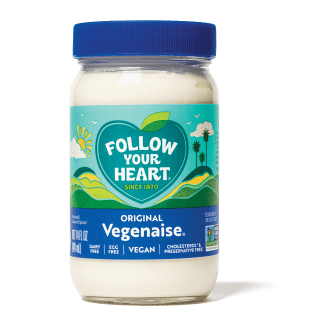
Some may consider mayonnaise to be just a humble sandwich spread, but it plays an important role in the kitchen in other applications. It not only adds moisture and flavor to potato or chicken salads but is also the base for dressings and dips, from green goddess to spinach-artichoke dip. It can even be a binder for burgers. Whether you’re a devotee of traditional mayo and are just looking to try something new, you follow a plant-based diet, or you’re allergic to eggs, we wanted to find a vegan mayo that would fit the bill.

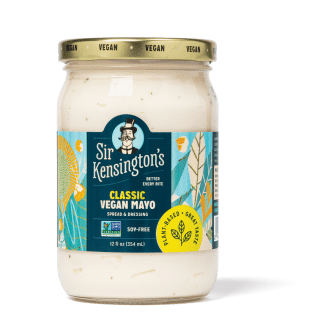
New products have emerged since we last tasted vegan mayo in 2017, and some that we tasted in the past have been revamped and reformulated. We tested seven nationally available brands of vegan mayo to see whether any of them is a good option to slather onto sandwiches or stir into sauces.
Is Vegan Mayo Actually Mayo?
Traditionally, mayonnaise relies on eggs (whole or just yolks) for emulsification. Instead of eggs, vegan mayo contains alternative stabilizers and emulsifiers such as modified food starch, pea protein, guar gum, and/or mustard. Because of this, some people say that vegan “mayo” shouldn’t be called mayo at all. The U.S. Food and Drug Administration (FDA) has a standard of identity for mayonnaise that states that in order to be considered mayonnaise, a product must include at least 65 percent vegetable oil, “acidifying ingredients” (vinegar and lemon or lime juice), and “egg yolk–containing ingredients.”


The main ingredient that vegan mayos have to replace is eggs, which are crucial to emulsification. Instead, they opt for alternative gums, starches, and proteins.
In 2014, Unilever, the parent company of Hellmann’s, filed a lawsuit against Hampton Creek (the company now known as Just, the maker of JUST Mayo), claiming that their popular product should not be called mayo (implying that it was mayonnaise) because it didn’t contain eggs. While this lawsuit was eventually dropped, some of the brands we tasted followed suit and called their products something else, such as “dressing” or “spread.”
Despite their lack of eggs, many of the products we tasted were rich and tangy, surprisingly similar to the conventional stuff, earning the right to be called mayo in our book. But it wasn’t all good news. Others had noticeable off-flavors or were thin and oily. Here’s what made the difference.
How Is Vegan Mayo Made?
Vegan mayo is made similarly to traditional mayonnaise. Water, vinegar and/or lemon juice, stabilizers and/or emulsifiers, and often mustard are combined. Then, oil is slowly streamed in, and the mixture is whipped into an emulsion.
Stabilizers and emulsifiers are necessary to make up for the lack of eggs that would be found in traditional mayo. Traditional mayonnaise is actually made with a fairly small amount of egg (you can make gallons of mayo from just one egg yolk), so replacing it with other emulsifiers is a modest undertaking compared with making other foods vegan. These types of ingredients work to ensure both that the combination of oil and water won’t separate over time and that the mixture will maintain a thick, creamy, homogeneous texture. Some of the products we tasted used either stabilizers or emulsifiers, while others used a combination of both.
While emulsifiers and stabilizers play similar roles in vegan mayo, they work in slightly different ways, explained Bruno Xavier, associate director of the Cornell Food Venture Center. Common vegan mayo ingredients such as pea and soy protein and mustard are emulsifiers, and they act on the surface of a globule of fat, altering its properties to not repel water, Xavier said. The protein or other emulsifying ingredient helps keep the oil and water from separating, he explained. Ingredients such as modified food starch and gums are stabilizers, which operate in the water, creating a three-dimensional structure that locks the globules in place and keeps the mayo from separating.
Which Additives Make the Best Vegan Mayo Texture?
The vegan mayos we tasted ranged from very thick and almost stodgy to loose and liquidy. These differences can largely be attributed to the ingredients the products rely on to replace eggs, how they are incorporated into the emulsion, and how finely they are emulsified, explained Paul Adams, our senior science research editor.

In general, our favorite products contained additives such as modified food starch, soy protein, pea protein, or a combination of these and tended to be on the thicker side. Our least favorite products relied more heavily on gums, aquafaba, or less common proteins such as potato protein. They tended to be on the looser side, grainy, or even noticeably oily and separated.
Which Vegan Mayos Taste the Best?
Mayo should be tangy, savory, and rich. Some of the vegan mayos we tasted were similar to traditional versions, with some tasters insisting one of our favorites tasted “on par with regular mayo” thanks to its tangy flavor. Some tasters noticed color differences, such as one product appearing starkly white or another having a yellowish color from spices or fruit and vegetable juice, an attempt to simulate the off-white to yellow color that traditional mayos have because of the egg yolks.

Some of the vegan mayos, such as the ones that contained aquafaba, had noticeable off-flavors. Tasters found that one product tasted slightly like cardboard or wood, while another was plasticky and nutty. We also disliked products that were overly salty. Our favorites had 100 milligrams or less of sodium per 1-tablespoon serving, while our least favorite had 125 milligrams. This product also had the highest fat content per serving—11 grams—and tasters called it oily, with some even noting “rancid” qualities. Our favorites had 8 or 9 grams of fat per serving and struck the right balance of creamy and rich.
The Best Vegan Mayonnaise
We found two great vegan mayonnaise options that taste almost as good as our favorite regular mayo. We highly recommend both Hellmann’s Plant Based Mayo Spread & Dressing and Follow Your Heart Original Vegenaise.
Made with modified food starch, Hellmann’s vegan version was a “spot-on replica” of the real thing. When we tasted it plain, some tasters found it to be a little too thick, but they didn’t notice this when it was spread on a sandwich, and they loved its mild tangy flavor.

Tasters were big fans of Follow Your Heart’s vegan mayo, which is made with soy protein and mustard flour, noting its “fluffy,” “lush” texture and bright, tangy flavor. One taster noted, “I would happily use this over traditional mayo.”
- Taste plain
- Taste in simple tomato sandwiches
- Samples were randomized and assigned three-digit codes to prevent bias
- Nutritional information was standardized for a 1-tablespoon serving size