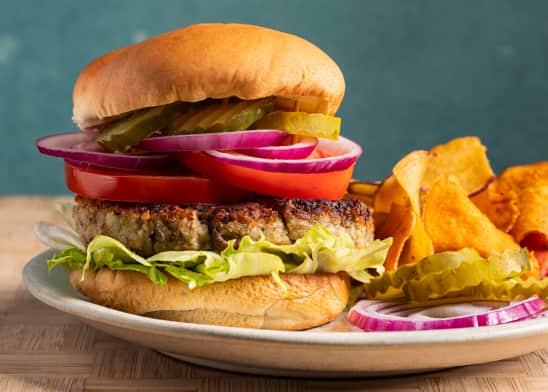
Ultimate Veggie Burgers
By America's Test KitchenPublished on August 21, 2007
Time
2½ hours, plus 20 minutes cooling
Yield
Makes 12 (4-inch) burgers
Ingredients
Before You Begin
Canned lentils can be used, though some flavor will be sacrificed. Use a 15-ounce can, drain the lentils in a mesh strainer, and thoroughly rinse under cold running water before spreading them on paper towels and drying them, as directed in step 1 below. If you cannot find panko, use 1 cup of plain bread crumbs. For tips on freezing uncooked patties, see below.
Instructions
- Bring 3 cups water, lentils, and 1 teaspoon salt to boil in medium saucepan over high heat; reduce heat to medium-low and simmer, uncovered, stirring occasionally, until lentils are just beginning to fall apart, about 25 minutes. Drain in fine-mesh strainer. Line baking sheet with triple layer paper towels and spread drained lentils over. Gently pat lentils dry with additional paper towels; cool lentils to room temperature.
- While lentils simmer, bring 2 cups water and 1/2 teaspoon salt to boil in small saucepan. Stir bulgur wheat into boiling water and cover immediately; let stand off heat until water is absorbed, 15 to 20 minutes. Drain in fine-mesh strainer; use rubber spatula to press out excess moisture. Transfer bulgur to medium bowl and set aside.
- Heat 1 tablespoon oil in 12-inch nonstick skillet over medium-high heat until shimmering. Add onions, celery, leek, and garlic; cook, stirring occasionally, until vegetables begin to brown, about 10 minutes. Spread vegetable mixture on second baking sheet to cool; set aside. Add remaining 1 tablespoon oil to now-empty skillet; heat over high heat until shimmering. Add mushrooms and cook, stirring occasionally, until golden brown, about 12 minutes. Spread mushrooms on baking sheet with vegetable mixture; cool to room temperature, about 20 minutes.
- Process cashews in food processor until finely chopped, about fifteen 1-second pulses (do not wash food processor blade or bowl); stir into bowl with bulgur along with cooled lentils, vegetable-mushroom mixture, and mayonnaise. Transfer half of mixture to now-empty food processor and pulse until coarsely chopped, fifteen to twenty 1-second pulses; mixture should be cohesive but roughly textured. Transfer processed mixture to large bowl; repeat with remaining unprocessed mixture and combine with first batch. Stir in panko, 1 teaspoon salt, and pepper to taste. Line baking sheet with paper towels. Divide mixture into 12 portions, about 1/2 cup each, shaping each into tightly packed patty, 4 inches in diameter and 1/2 inch thick; set patties on baking sheet; paper towels will absorb excess moisture. (Patties can be covered with plastic wrap and refrigerated up to 3 days.)
- Build medium-hot charcoal fire or preheat gas grill on high. Using tongs, wipe grate with wad of paper towels dipped lightly in vegetable oil. Grill burgers, without moving them, until well browned, about 5 minutes; flip burgers and continue cooking until well browned on second side, about 5 minutes. Serve.
- Heat 2 tablespoons vegetable oil in 12-inch nonstick skillet over medium-high heat until shimmering; cook burgers, 4 at a time, until well browned, about 4 minutes per side, lowering heat to medium if browning too quickly. Repeat with additional oil and burgers. Serve. (Cooked burgers can be kept warm in 250-degree oven for up to 30 minutes.)
- With freezing and defrosting, the patties increase in moisture content; it is therefore necessary to add more bread crumbs before freezing. For each burger to be frozen, add 1 teaspoon panko or 1/2 teaspoon plain bread crumbs to the mixture before shaping. Thaw frozen patties overnight in the refrigerator on a triple layer of paper towels covered loosely with plastic wrap. Before cooking, pat the patties dry with paper towels and reshape to make sure they are tightly packed and cohesive.
to cook on the grill
to cook on the stovetop
to freeze

Time
2½ hours, plus 20 minutes coolingYield
Makes 12 (4-inch) burgersIngredients
Test Kitchen Techniques
Ingredients
Test Kitchen Techniques
Ingredients
Test Kitchen Techniques
Why This Recipe Works
Because we found that veggie burger recipes made with soy-based products produced bland, sour, or gummy patties, we turned to lentils and bulgur, which, when combined, fully resolved the texture problem. To replace the meatlike taste in our veggie burger recipe, we turned to food rich in umami—specifically, cremini mushrooms and cashews.






63 Comments