America's Test Kitchen LogoCook's Country LogoCook's Illustrated Logo

Reviews You Can Trust.
See Why.

The Best Nonalcoholic Beer

Nonalcoholic beer is having a moment. With big-name brands and craft-beer brewers joining the game, which should you stock up on?

Headshot of Valerie Sizhe Li
By Valerie Sizhe Li

Published on April 6, 2023

What You Need To Know

Nonalcoholic beer had a bad rap but is staging an exciting comeback. Sales have skyrocketed in the United States, growing almost 70 percent from 2016 to 2021, with annual sales totaling $670 million in 2021. Though still a tiny fraction of the beer market, nonalcoholic beer accounts for 85 percent of the alcohol-alternative sector, according to NIQ, a consumer-data provider.

The rising demand was led by the "sober curious" movement that motivated people to cut down on alcohol intake and by technological advancements that made nonalcoholic beer better able to mimic the sensory experience of alcoholic beer. So how did nonalcoholic beer go from having the reputation of tasting skunky and metallic to being full-bodied, nuanced, and, well, tasting good?

The History of Nonalcoholic Beer

The tradition of making nonalcoholic beer in the United States goes back to 1920, when Congress passed the Volstead Act, banning alcoholic beverages with more than 0.5 percent alcohol by volume (ABV). To bypass the law, Pabst and Anheuser-Busch pivoted to making low-alcohol beers; this method didn’t make beer alcohol-free, but the residual alcohol was lower than 0.5 percent ABV in the final product, which became known as “near beer.” Most of those near beers were riffs on mass-market lager, notes Joshua Bernstein, a Brooklyn-based beer journalist and author of The Complete Beer Course. “The lack of options beyond lager contributed to the delayed takeoff of nonalcoholic beer,” he adds.

The takeaway is that people want moderation in their consumption.

—Jon Berg, VP of Beverage Alcohol Thought Leadership at NIQ

Starting in the 2010s, the demand for nonalcoholic beer began to rise. Notably, 82 percent of nonalcoholic-beer buyers also purchase alcoholic beverages, says Jon Berg, VP of Beverage Alcohol Thought Leadership at NIQ. “The takeaway is that people want moderation in their consumption.” The rise of the craft-beer movement in the early aughts also helped turbocharge the nonalcoholic beer resurgence, leading breweries to diversify the styles of very low-alcohol and completely nonalcoholic beer to mirror current trends in the craft-beer industry. You can now find nonalcoholic versions of popular styles in the craft-brew scene, from hoppy and fruity IPAs and chocolaty stouts to crisp Italian pilsners and funky sour ales. 

The Art of Making Nonalcoholic Beer

To remove alcohol or prevent it from being created, brewers can use physical or biological methods, both of which have merits and drawbacks. The oldest physical method involves brewing beer as normal and then heating it to 173 degrees, the temperature at which ethanol boils off. It reduces the alcohol content to less than 0.5 percent but often results in a flavorless, metallic, and “skunky” beer, known as “heat-struck” in the industry. Today, this has largely been replaced by more advanced physical methods, such as vacuum distillation. “By putting beer through a vacuum, the boiling point of alcohol drops to around 60 degrees, which prevents heat-striking,” says Dana Garves, founder of Oregon BrewLab, a company that provides chemical analyses to the fermentation industry. While some of the flavor compounds may be boiled off with the alcohol under vacuum, they can be captured and added back to the finished brew. Similar to boiling, vacuum distillation can’t remove all alcohol from beer, leaving it with 0.5 percent ABV or below. 

Craft nonalcoholic breweries, such as Athletic Brewing (shown left), don't look much different from an alcoholic-beer brewing operation, where you'd see fermentation tanks where beer is made. (Photo courtesy of Athletic Brewing Co.)

Another method of physical alcohol removal is membrane filtration, in which a filtering system separates alcohol from the beer. While this process reduces the alcohol content to less than 0.5 percent, it cannot produce truly alcohol-free beer.  

Biological methods involve the strategic use of yeast, a crucial ingredient that converts sugars in grains into alcohol. One method is called arrested fermentation, during which brewers can stop the fermentation by removing the yeast when the alcohol level is still less than 0.5 percent. A disadvantage of arrested fermentation is that a large amount of sugar remains in the finished beer, giving it an overly sweet taste. Alternatively, brewers can use special yeast strains that aren’t capable of converting sugars into alcohol.

Not only does the nonalcoholic Guinness look nearly identical to the alcoholic version but we also noticed the distinguishable "malty" and "dark chocolate" notes that are characteristic of this iconic Irish stout.

Each technique has known shortcomings in body and flavor, and we learned that most craft breweries utilize two or more techniques to achieve the closest possible experience to drinking a full-strength beer. However, nonalcoholic beers can be excellent. To determine which ones to highlight here, we consulted beer writers, industry experts, and brewers, as well as sales data from IRI, a Chicago-based market research firm. We identified the top five styles of nonalcoholic beer and have provided summaries of each. We also selected 18 beers, including large manufacturers and small brewers from the United States and elsewhere. Beer preferences are personal, so we’ve given nods to our favorites in each style but have otherwise opted not to rank them. Read more about each style, sorted from lager to stout, followed by detailed descriptions of each beer we’ve tried.

The Top Five Styles of Nonalcoholic Beer

Lager: The most popular beer category in the United States and the largest category represented in our tasting, this easy-drinking beer is crisp, light, and refreshing. Our tasters found nonalcoholic lager a mixed bag. Many of our tasters found that Heineken 0.0 tasted nearly identical to its alcoholic counterpart and O’Doul’s fared well among our panelists too, proving that it’s a classic for a reason. 

Ale: Ale is a large category that encompasses several styles. Its fermentation method, which gives some ales a cloudy appearance and thicker mouthfeel, differs from the one used to make lager. We tasted the most popular styles—golden (or blonde), amber, sour, and pale ales—and they received mixed reviews. The Upside Dawn Golden Ale from Athletic Brewing Co. garnered the most positive feedback. Our tasters described it as having “real character” and the “piney-ness that we associate with ales.” Another big standout was the Omission Good to Go Golden, which was “full-bodied” and “fruity.” 

Wheat: Wheat beer technically belongs in the ale category as its appearance is similarly cloudy, but it has become so popular that we gave it a category of its own. Wheat beers are hard to replicate in nonalcoholic form, partly because dealcoholization takes away some of the heavy body. Our tasters enjoyed “bright, citrusy” Drink’In the Sun by Mikkeller. Heavenly Body Golden Wheat was also a stunner; tasters noted a “wheaty” and “slightly sweet flavor and thick body to match.” 

India Pale Ale (IPA): IPA tends to have strong hoppy flavors with notes of pine. We liked West Coast–style IPA, which is known for its bold bitterness, and the fruitier, hazy New England IPA. The West Coast IPA from Untitled Art was impressively “fizzy” and “bright” with “a fair bit of hoppiness.” Representing the East Coast style, Samuel Adams Just the Haze tasted of “fruity hop[s]” and won high praise. 

Stout: Full-bodied and rich, stout typically features notes of coffee and caramel. Our tasters were impressed with the nonalcoholic Guinness. Flavorwise, it hits all the “coffee,” “licorice,” “rye,” and “bread” notes of its alcoholic counterpart. The All Out by Athletic Brewing Co. offers a little funkier and fruity twist to a classic dark beer but was also well received.

Like the alcoholic version, nonalcoholic Guinness also contains a small widget (smaller than a ping pong ball) that provides a burst of nitrogen for great froth.
  • Sample each beer plain, chilled
FAQs

According to the U.S. Food and Drug Administration (FDA), a beverage can contain up to 0.5 percent alcohol by volume (ABV) and still be considered nonalcoholic. Before purchasing nonalcoholic beer, make sure to read the label, which indicates the alcohol content of the brew. Note that nonalcoholic beers labeled as “0.0” may contain up to 0.05 percent alcohol, which is similar to the amount of alcohol found in ripe bananas and fruit juice.

A growing number of liquor stores have started carrying a larger variety of nonalcoholic beers, and you can find nonalcoholic beers at supermarkets, as well as stores that don’t sell alcohol. According to Athletic Brewing, one of the biggest nonalcoholic craft-beer manufacturers in the U.S., most of their sales come from online orders—and that’s true for other craft brewers as well. You can also shop online at specialty shops such as Boisson and BetterRhodes. Some nonalcoholic beers can also be purchased on Amazon.

Some nonalcoholic beers are indeed gluten-free. However, most nonalcoholic-beer brewing still uses grains, so they may not be gluten-free. Most gluten-free nonalcoholic beers prominently display this information on their packaging.

You should store nonalcoholic beer the same way you store beer that contains alcohol. Keeping it in a dark, cold environment will help preserve the quality of the beer so that it lasts longer.

The Alcohol and Tobacco Tax and Trade Bureau (TTB) has a strict set of guidelines on the naming conventions of various non- and low-alcoholic beers, referred to as “malt beverages,” a category of beverage made from alcoholic fermentation: 

  • Malt beverages must contain more than 0.5% ABV to be labeled as “beer.” 
  • Malt beverages must contain less than 0.5% ABV to be labeled as “nonalcoholic.” In the Prohibition era, this was dubbed “near beer.” 
  • Malt beverages labeled as “alcohol-free” must be 0.0% ABV.

Everything We Tested

Recommended - Lager

Best LagerHeineken 0.0

With “balanced flavor and yeastiness,” this beer was “pretty close to the regular alcoholic thing.” It was pleasantly “full-bodied” but “a bit too sweet” for some.

Style: Lager

Abv: 0%

Origin: Amsterdam, Netherlands

Price at Time of Testing: $9.49 for six 11.2-oz bottles ($0.14 per oz)

With “balanced flavor and yeastiness,” this beer was “pretty close to the regular alcoholic thing.” It was pleasantly “full-bodied” but “a bit too sweet” for some.

Style: Lager

Abv: 0%

Origin: Amsterdam, Netherlands

Price at Time of Testing: $9.49 for six 11.2-oz bottles ($0.14 per oz)

Bitburger Drive Non-Alcoholic Beer

This German-brewed beer reminded us of the characteristics of other beers that are German brewed. It had the “right amount of bitterness” and “yeasty flavor.” However, tasters noted “low carbonation” and “lack of body” in this beer.

Style: Lager

Abv: 0%

Origin: Bitburger, Germany

Price at Time of Testing: $10.49 for six 11.2-oz bottles ($0.16 per oz)

This German-brewed beer reminded us of the characteristics of other beers that are German brewed. It had the “right amount of bitterness” and “yeasty flavor.” However, tasters noted “low carbonation” and “lack of body” in this beer.

Style: Lager

Abv: 0%

Origin: Bitburger, Germany

Price at Time of Testing: $10.49 for six 11.2-oz bottles ($0.16 per oz)

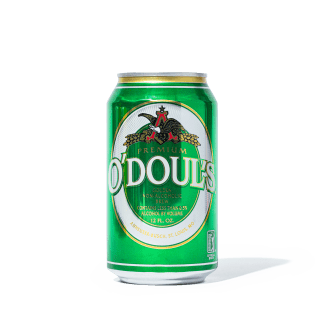
O’Doul’s Non-Alcoholic Brew

One of America’s original nonalcoholic beers, it was “pretty spot on for a macro brewery lager in taste and mouthfeel.” We noticed a “sweet aftertaste” that “lingered in an almost-cloying way,” but it still had “nice effervescence and flavor.”

Style: American-style lager

Abv: <0.5%

Origin: St. Louis, Missouri

Price at Time of Testing: $6.99 for six 12-oz cans ($0.09 per oz )

One of America’s original nonalcoholic beers, it was “pretty spot on for a macro brewery lager in taste and mouthfeel.” We noticed a “sweet aftertaste” that “lingered in an almost-cloying way,” but it still had “nice effervescence and flavor.”

Style: American-style lager

Abv: <0.5%

Origin: St. Louis, Missouri

Price at Time of Testing: $6.99 for six 12-oz cans ($0.09 per oz )

Budweiser Zero Full-Flavored Zero Alcohol Brew

“Medium-bodied” with “nice carbonation,” the nonalcoholic version of one of America’s most iconic beers was almost like a “beer-flavored soda.” It fell “slightly more on the sweet end” with a “fruity nose.”

Style: American-style lager

Abv: <0.5%

Origin: St. Louis, Missouri

Price at Time of Testing: $12.99 for twelve 12-oz cans ($0.09 per oz)

“Medium-bodied” with “nice carbonation,” the nonalcoholic version of one of America’s most iconic beers was almost like a “beer-flavored soda.” It fell “slightly more on the sweet end” with a “fruity nose.”

Style: American-style lager

Abv: <0.5%

Origin: St. Louis, Missouri

Price at Time of Testing: $12.99 for twelve 12-oz cans ($0.09 per oz)

Asahi Dry Zero

This beer had a “pleasant, hoppy taste” that also had “slightly yeasty” notes. It was a bit “watery,” which reminded one taster of the beer from her college days.

Style: Lager

Abv: 0%

Origin: Osaka, Japan

Price at Time of Testing: $3.59 for one 11.8-oz can ($0.31 per oz)

This beer had a “pleasant, hoppy taste” that also had “slightly yeasty” notes. It was a bit “watery,” which reminded one taster of the beer from her college days.

Style: Lager

Abv: 0%

Origin: Osaka, Japan

Price at Time of Testing: $3.59 for one 11.8-oz can ($0.31 per oz)

Recommended - Ale

Best Golden AleAthletic Brewing Co. Upside Dawn Golden Non-Alcoholic Brew

This beer began with “slight sweetness,” followed by “quinine-like bitterness” and a “lemon zest finish.”

Style: Golden Ale

Abv: <0.5%

Origin: Stratford, Connecticut

Price at Time of Testing: $13.99 for six 12-oz cans ($0.19 per oz)

This beer began with “slight sweetness,” followed by “quinine-like bitterness” and a “lemon zest finish.”

Style: Golden Ale

Abv: <0.5%

Origin: Stratford, Connecticut

Price at Time of Testing: $13.99 for six 12-oz cans ($0.19 per oz)

Also Great Golden AleOmission Balanced Brewing Good to Go Golden Non-Alcoholic Brew

“Good body and complex flavors” with “floral and fruity notes” and the “right amount of carbonation” gave the impression that this crowd favorite was “robust,” “craft-brewed”, and “heartier than others.”

Style: Golden AleLager

Abv: <0.5%

Origin: Waunakee, Wisconsin

Price at Time of Testing: $9.99 for six 12-oz cans ($0.14 per oz)

“Good body and complex flavors” with “floral and fruity notes” and the “right amount of carbonation” gave the impression that this crowd favorite was “robust,” “craft-brewed”, and “heartier than others.”

Style: Golden AleLager

Abv: <0.5%

Origin: Waunakee, Wisconsin

Price at Time of Testing: $9.99 for six 12-oz cans ($0.14 per oz)

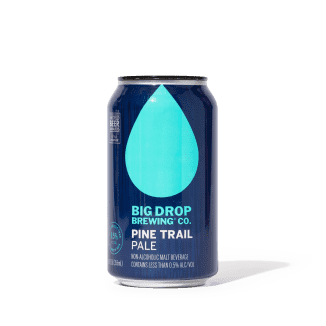
Best Pale AleBig Drop Brewing Pine Trail Pale Non-Alcoholic Malt Beverage

“Hop-forward,” this beer had “strong bitterness that lingers.” It also had notes of “dark roast coffee” with an “herbal,” “oaky” undertone.

Style: Pale Ale

Abv: 0.5%

Origin: London, United Kingdom

Price at Time of Testing: $13.99 for six 12-oz cans ($0.19 per oz)

“Hop-forward,” this beer had “strong bitterness that lingers.” It also had notes of “dark roast coffee” with an “herbal,” “oaky” undertone.

Style: Pale Ale

Abv: 0.5%

Origin: London, United Kingdom

Price at Time of Testing: $13.99 for six 12-oz cans ($0.19 per oz)

Brooklyn Brewery Special Effects Hoppy Amber Non-Alcoholic Brew

“Bready” and “toasty,” this beer had some “nice bitterness” with a “hint of sweetness.”

Style: Amber Ale

Abv: <0.5%

Origin: Brooklyn, New York

Price at Time of Testing: $12.99 for six 12-oz cans ($0.18 per oz)

“Bready” and “toasty,” this beer had some “nice bitterness” with a “hint of sweetness.”

Style: Amber Ale

Abv: <0.5%

Origin: Brooklyn, New York

Price at Time of Testing: $12.99 for six 12-oz cans ($0.18 per oz)

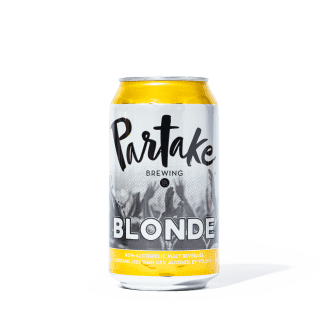
Partake Blonde Non-Alcoholic Malt Beverage

Tasters noted it was "bread-forward" and "refreshing," with a "light mouthfeel" and a "slightly bitter finish.”

Style: Blonde Ale

Abv: <0.5%

Origin: Toronto, Canada

Price at Time of Testing: $29.99 for twelve 12-oz cans ($0.21 per oz)

Tasters noted it was "bread-forward" and "refreshing," with a "light mouthfeel" and a "slightly bitter finish.”

Style: Blonde Ale

Abv: <0.5%

Origin: Toronto, Canada

Price at Time of Testing: $29.99 for twelve 12-oz cans ($0.21 per oz)

BrewDog Faux Fox Black Cherry Sour

One taster summed up this beer as a combination of “cherry ChapStick and cough drops.” One taster noted its “fruity, berry flavor” while another noted “some tartness.”

Style: Sour ale

Abv: <0.5%

Origin: Columbus, Ohio

Price at Time of Testing: $9.99 for six 12-oz cans ($0.14 per oz)

One taster summed up this beer as a combination of “cherry ChapStick and cough drops.” One taster noted its “fruity, berry flavor” while another noted “some tartness.”

Style: Sour ale

Abv: <0.5%

Origin: Columbus, Ohio

Price at Time of Testing: $9.99 for six 12-oz cans ($0.14 per oz)

Recommended - Wheat

Best Wheat AleMikkeller Drink’In the Sun Non Alcoholic Wheat Ale

This beer had notes of “rose” and “brewed tea” with a “lengthy bitter finish.” One taster compared its sweetness and hints of “fruitiness” to “bubblegum."

Style: Wheat

Abv: 0.3%

Origin: Copenhagen, Denmark

Price at Time of Testing: $12.00 for four 12-oz cans ($0.16 per oz)

This beer had notes of “rose” and “brewed tea” with a “lengthy bitter finish.” One taster compared its sweetness and hints of “fruitiness” to “bubblegum."

Style: Wheat

Abv: 0.3%

Origin: Copenhagen, Denmark

Price at Time of Testing: $12.00 for four 12-oz cans ($0.16 per oz)

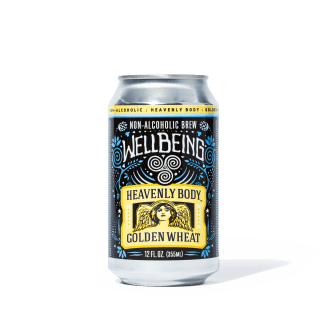
WellBeing Heavenly Body Non-Alcoholic Golden Wheat

We detected “strong dry, hoppy flavors” and “a funky vinegar taste” in this golden wheat beer. It also had notes of “biting bitterness that masks any complexity that’s going on.”

Style: Wheat

Abv: 0.3%

Origin: St. Louis, Missouri

Price at Time of Testing: $8.99 for four 12-oz cans ($0.19 per oz)

We detected “strong dry, hoppy flavors” and “a funky vinegar taste” in this golden wheat beer. It also had notes of “biting bitterness that masks any complexity that’s going on.”

Style: Wheat

Abv: 0.3%

Origin: St. Louis, Missouri

Price at Time of Testing: $8.99 for four 12-oz cans ($0.19 per oz)

Weihenstephaner Hefe Non-Alcoholic Malt Beverage

This wheat beer was “light,” “yeasty,” and “slightly sweet.” But it also tasted “metallic” and “watery” and had “somewhat exaggerated chemical fruity notes in the aftertaste.”

Style: Wheat

Abv: <0.5%

Origin: Freising, Bavaria, Germany

Price at Time of Testing: $10.99 for six 12-oz bottles ($0.15 per oz)

This wheat beer was “light,” “yeasty,” and “slightly sweet.” But it also tasted “metallic” and “watery” and had “somewhat exaggerated chemical fruity notes in the aftertaste.”

Style: Wheat

Abv: <0.5%

Origin: Freising, Bavaria, Germany

Price at Time of Testing: $10.99 for six 12-oz bottles ($0.15 per oz)

Ceria Brewing Company Grainwave Belgian-Style White Alcohol-Free Malt Beverage

Dr. Keith Villa, creator of the iconic Belgian-style ale Blue Moon, designed this nonalcoholic beer to replicate the taste and mouthfeel of his invention. It's so sweet and tropical," noted one taster while another asked "Is this Fresca?”. We found it also had notes of “Froot Loops and Sprite with a malty aftertaste.”

Style: Belgian-style witbier

Abv: 0%

Origin: Arvada, Colorado

Price at Time of Testing: $14.99 for six 12-oz cans ($0.21 per oz)

Dr. Keith Villa, creator of the iconic Belgian-style ale Blue Moon, designed this nonalcoholic beer to replicate the taste and mouthfeel of his invention. It's so sweet and tropical," noted one taster while another asked "Is this Fresca?”. We found it also had notes of “Froot Loops and Sprite with a malty aftertaste.”

Style: Belgian-style witbier

Abv: 0%

Origin: Arvada, Colorado

Price at Time of Testing: $14.99 for six 12-oz cans ($0.21 per oz)

Recommended - India Pale Ale

Best West Coast IPAUntitled Art. West Coast Nonalcoholic IPA

“Fizzy” and “bright” with “a fair bit of hoppiness,” this beer won top marks from our tasters because of its “nice complexity in the nose and on the palate” and a hint of “cherry” in the middle.

Style: West Coast IPA

Abv: <0.5%

Origin: Waunakee, Wisconsin

Price at Time of Testing: $18.99 for six 12-oz cans ($0.26 per oz)

“Fizzy” and “bright” with “a fair bit of hoppiness,” this beer won top marks from our tasters because of its “nice complexity in the nose and on the palate” and a hint of “cherry” in the middle.

Style: West Coast IPA

Abv: <0.5%

Origin: Waunakee, Wisconsin

Price at Time of Testing: $18.99 for six 12-oz cans ($0.26 per oz)

Best Hazy IPASamuel Adams Non-Alcoholic Just the Haze

It tasted like a “watermelon Jolly Rancher”—in a good way—and had a “refreshing hoppy start followed by rich, sweet tropical fruit (pineapple) notes.” The tropical fruit notes in both alcoholic and nonalcoholic New England IPA come from the hops used; in Just the Haze, a combination of citra, mosaic, sabro, and cascade hops are used to elicit the flavors.

Style: Hazy IPA

Abv: <0.5%

Origin: Boston, Massachusetts

Price at Time of Testing: $17.49 for twelve 12-oz cans ($0.12 per oz)

It tasted like a “watermelon Jolly Rancher”—in a good way—and had a “refreshing hoppy start followed by rich, sweet tropical fruit (pineapple) notes.” The tropical fruit notes in both alcoholic and nonalcoholic New England IPA come from the hops used; in Just the Haze, a combination of citra, mosaic, sabro, and cascade hops are used to elicit the flavors.

Style: Hazy IPA

Abv: <0.5%

Origin: Boston, Massachusetts

Price at Time of Testing: $17.49 for twelve 12-oz cans ($0.12 per oz)

Rescue Club Brewing Company Zero Gravity Non-Alcoholic IPA Malt Beverage

This “medium-bodied” beer had “citrus notes similar to that of a New England–style fruity IPA” with the “right amount of hoppiness.”

Style: IPA

Abv: 0%

Origin: Burlington, Vermont

Price at Time of Testing: $10.49 for six 12-oz cans ($0.14 per oz)

This “medium-bodied” beer had “citrus notes similar to that of a New England–style fruity IPA” with the “right amount of hoppiness.”

Style: IPA

Abv: 0%

Origin: Burlington, Vermont

Price at Time of Testing: $10.49 for six 12-oz cans ($0.14 per oz)

Harpoon Open League Non-Alcoholic Hazy IPA

Tasters found “heavy whey scent” with a dense, “grain-like” body in this beer; flavorwise, it centered around “savory notes” that reminded some of “onion and bacon.”

Style: Hazy IPA

Abv: <0.5%

Origin: Boston, Massachusetts

Price at Time of Testing: $13.79 for six 12-oz cans ($0.19 per oz)

Tasters found “heavy whey scent” with a dense, “grain-like” body in this beer; flavorwise, it centered around “savory notes” that reminded some of “onion and bacon.”

Style: Hazy IPA

Abv: <0.5%

Origin: Boston, Massachusetts

Price at Time of Testing: $13.79 for six 12-oz cans ($0.19 per oz)

Lagunitas Zero Alcohol Hoppy Refresher

Tasters identified the fruity flavors, such as “apple,” “strawberry,” and “grape,” which gave the beer “light sweetness.” It also reminded us of “Crystal Lite” but “bitter,” likely coming from the hops that lend IPA its characteristically bitter taste

Style: IPA-inspired

Abv: 0%

Origin: Lagunitas, California

Price at Time of Testing: $5.49 for four 12-oz bottles ($0.11 per oz)

Tasters identified the fruity flavors, such as “apple,” “strawberry,” and “grape,” which gave the beer “light sweetness.” It also reminded us of “Crystal Lite” but “bitter,” likely coming from the hops that lend IPA its characteristically bitter taste

Style: IPA-inspired

Abv: 0%

Origin: Lagunitas, California

Price at Time of Testing: $5.49 for four 12-oz bottles ($0.11 per oz)

Recommended - Stout

Best StoutGuinness Zero Non-Alcoholic Draught

Many tasters correctly recognized that this was Guinness, noting flavors reminiscent of “malty dark chocolate,” “pumpernickel bread,” and “coffee.” Each can contains a small widget (smaller than a ping pong ball) that provides a burst of nitrogen for great froth.

Style: Stout

Abv: <0.5%

Origin: Dublin, Ireland

Price at Time of Testing: $14.00 for four 14.9-oz cans ($0.23 per oz)

Many tasters correctly recognized that this was Guinness, noting flavors reminiscent of “malty dark chocolate,” “pumpernickel bread,” and “coffee.” Each can contains a small widget (smaller than a ping pong ball) that provides a burst of nitrogen for great froth.

Style: Stout

Abv: <0.5%

Origin: Dublin, Ireland

Price at Time of Testing: $14.00 for four 14.9-oz cans ($0.23 per oz)

Athletic Brewing Co. All Out Extra Dark Non-Alcoholic Brew

This “convincingly beer-like” stout was “funky” and “bitter,” and had “tropical fruitiness, like mango and passionfruit.” We also noted “pine-y” and “wheaty” flavors.

Style: Stout

Abv: <0.5%

Origin: Stratford, Connecticut

Price at Time of Testing: $13.99 for six 12-oz cans ($0.19 per oz)

This “convincingly beer-like” stout was “funky” and “bitter,” and had “tropical fruitiness, like mango and passionfruit.” We also noted “pine-y” and “wheaty” flavors.

Style: Stout

Abv: <0.5%

Origin: Stratford, Connecticut

Price at Time of Testing: $13.99 for six 12-oz cans ($0.19 per oz)

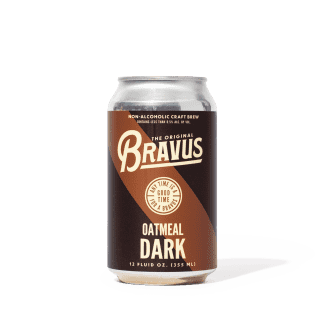
Bravus Brewing Co. Nonalcoholic Oatmeal Stout

It had a “nice malty scent” and tasters described “molasses” and “vegetal” notes. This oatmeal stout was compared to a “less sweet Coca-Cola.”

Style: Stout

Abv: <0.5%

Origin: Anaheim, California

Price at Time of Testing: $13.00 for four 12-oz cans ($0.27 per oz)

It had a “nice malty scent” and tasters described “molasses” and “vegetal” notes. This oatmeal stout was compared to a “less sweet Coca-Cola.”

Style: Stout

Abv: <0.5%

Origin: Anaheim, California

Price at Time of Testing: $13.00 for four 12-oz cans ($0.27 per oz)

Reviews You Can Trust

The mission of America’s Test Kitchen Reviews is to find the best equipment and ingredients for the home cook through rigorous, hands-on testing. Have a question or suggestion? Send us an email at atkreviews@americastestkitchen.com. We appreciate your feedback!

The Expert

Author: Valerie Sizhe Li

Valerie Sizhe Li

Associate Editor, ATK Reviews

Valerie is an associate editor for ATK Reviews. She has many passions, including skiing, running, playing the flute, and spending time outdoors.

Valerie Li Stack is an associate editor for ATK Reviews. Having grown up in a family that traveled extensively, she’s visited more than 50 countries—with more to come. Thanks to these travel experiences and the ability to converse in multiple languages, she’s always learning about regional cuisines around the world. She's a flutist in a 10-piece band called Quahog Wild and occasionally runs marathons. But her biggest passion is skiing, a hobby that she picked up in her adult life. Her stories have appeared in multiple publications, including Eater, USA Today, and more.

Appears In

This item is featured in the following. Click the links to dig in!

*All products reviewed by America’s Test Kitchen are independently chosen, researched, and reviewed by our editors. We buy products for testing at retail locations and do not accept unsolicited samples for testing. We list suggested sources for recommended products as a convenience to our readers but do not endorse specific retailers. When you choose to purchase our editorial recommendations from the links we provide, we may earn an affiliate commission. Prices are subject to change.

Reviews You Can Trust.
See Why.

This is a members' feature.
America's Test Kitchen LogoCook's Country LogoCook's Illustrated Logo