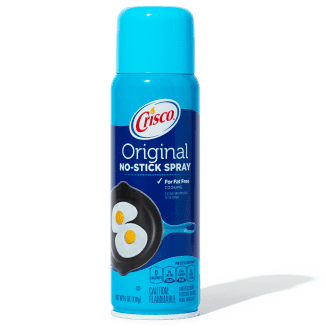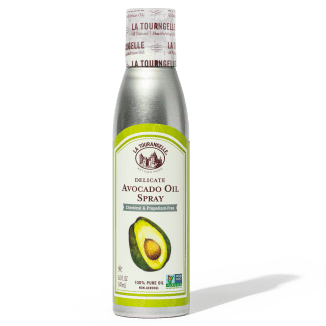


Cooking spray comes in handy in the kitchen. It can be used for coating a skillet before frying eggs or sautéing vegetables or for spraying sheets of aluminum foil before covering lasagnas, casseroles, and salmon to ensure the foil doesn’t stick to the food. It is helpful for preparing muffin tins and cake pans so that baked goods turn out cleanly. We’ve found that it can even be used to grease a measuring cup to ensure sticky ingredients slide out easily.


We use cooking spray to prepare cake pans so baked goods turn out cleanly (left), to spray rimmed baking sheets so vegetables release easily (center), and even to grease measuring cups to ensure sticky ingredients slide out.
For years, cooking sprays were typically made with canola oil, but now you can find products made with coconut oil, avocado oil, olive oil, and more. To find the best cooking spray we cast a wide net, evaluating sprays made from various oils. Regardless of the type (or types) of oil used, the cooking sprays in our lineup fall into two main categories: traditional (with propellants) or bag-on-valve (also referred to as propellantless).
We didn’t see a performance or flavor difference with different types of oils in our testing lineup, but between the two styles, there was a lot to learn, with benefits and drawbacks to each. Read on to find out which is best for you.
Traditional Cooking Sprays
What’s in the Can? Traditional cooking sprays typically consist of one or more oils combined with a propellant such as propane or butane. Under pressure, these propellants are liquids, but when the valve is released, they turn to gas and expand, propelling the oil out of the can as the propellant dissipates into the air.
Spray Pattern: The traditional cooking sprays all had similar nozzles and oil-channel shapes. They dispersed spray in a circular pattern, which we liked because this pattern more efficiently covered the surface of our pans. This spray pattern can be attributed to the shape of the channel the oil travels up before being expelled. Another key design element: The spout was angled straight ahead, so the spray shot straight too. This meant that we knew exactly where the spray was going to land—a big help in evenly and efficiently coating our pans. Lastly, brands with antifoaming agents such as dimethyl silicone also sprayed more evenly.


To demonstrate how differently the sprays dispersed oil and coated cookware, we sprayed them on skillet-sized circles drawn on sheets of paper. Some cooking sprays in our lineup dispersed evenly in a round spray pattern (left). With others, the oil sputtered out in different directions and made it hard to achieve an even, thin layer (right). The differences are likely due to a combination of the ingredients, the shape of the channel the oil travels up before being expelled, and the angle of the can’s head.
Nonstick Ability: Most traditional cooking sprays contain emulsifiers, such as lecithin, to improve performance. Lecithin helps oil adhere to the surface of cookware or bakeware. Cooking sprays containing it created absolutely seamless nonstick surfaces. Neither chicken breasts nor fried eggs stuck to a stainless-steel skillet. The Bundt cake we baked in an intricately patterned pan released like a dream, leaving barely a crumb behind.

Smoke Point: However, there is a drawback to lecithin. Lecithin has a low smoke point, so sprays containing it will darken and negatively affect the appearance and flavor of food when exposed to high temperatures. Because lecithin formulations vary from spray to spray, the smoke points of products also vary. If you plan to use your cooking spray primarily for high-heat cooking such as sautéing vegetables, we recommend skipping sprays that use lecithin.
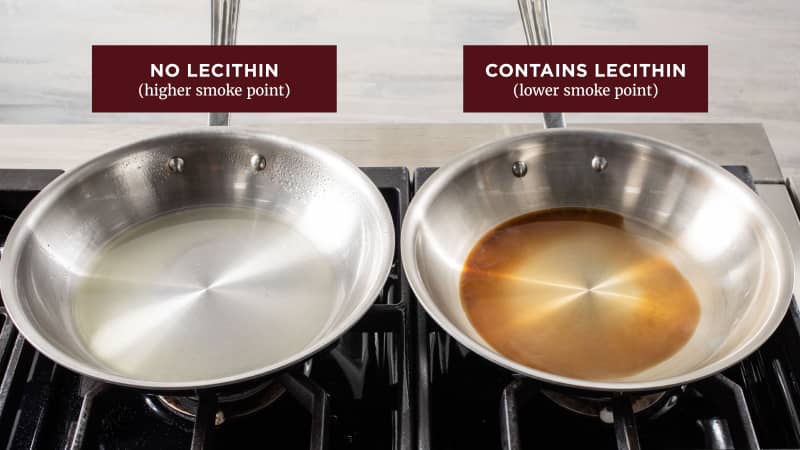
Cleaning: Lecithin helps with cleanup. We noticed this in one of our tests where we sprayed each cooking spray in a stainless-steel skillet and heated it to 400 degrees for 5 minutes, long enough to bring each to its smoke point. Then, we washed each skillet with soap and water. Skillets that had been sprayed with cooking spray containing lecithin were the easiest to clean. Our senior science research editor, Paul Adams, explained, “Emulsifiers, like lecithin, thin out the oil, lowering its surface tension so that it coats the pan more evenly. When it comes time to wash the pan, the lecithin’s emulsifying effect makes it easy for soap and water to penetrate the oil, so it breaks down and washes off readily.”
Bag-on-Valve Cooking Sprays
What’s in the Can? Propellantless cooking sprays use an alternative setup called “bag-on-valve,” which places the oil inside a bag, separate from a pressurized propellant gas (either compressed air or nitrogen), which fills the space between the bag and the can. Opening the valve allows the gas to expand, forcing the oil out. These sprays are made from 100 percent oil and contain no emulsifiers such as lecithin.
Spray Pattern: The bag-on-valve cans sprayed in a vertical oval shape rather than a circle. This shape is due to the design of the channel the oil travels up before being expelled. We found this spraying pattern made it a bit harder to evenly and efficiently cover a pan.
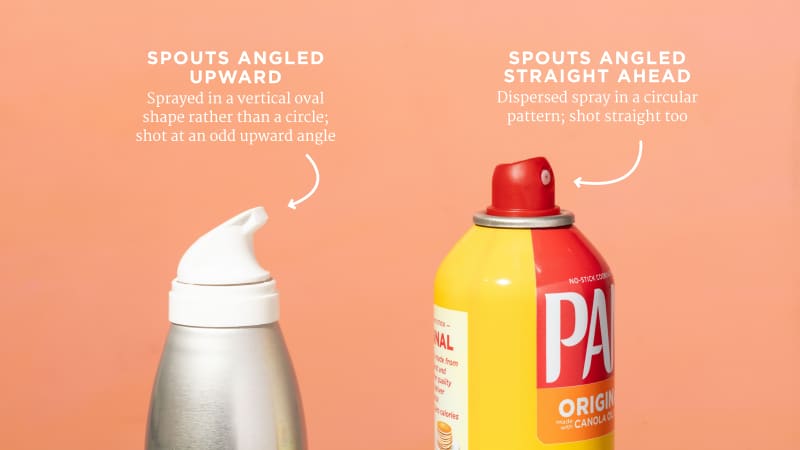
All of the bag-on-valve cans also had spouts that were angled upward (versus straight ahead). This means that these sprays didn’t shoot out directly in front of the can but rather at an odd upward angle, causing us to overshoot the pan and spray the surrounding area.
Lastly, instead of spraying in a fine, even mist, the bag-on-valve sprays discharged more forcefully. Some were worse than others, expelling sputtery, drippy messes of oil, resulting in uneven coverage. These issues are likely due to a combination of the nozzle design and the fact that bag-on-valve sprays don’t use any propellants, antifoaming agents (like dimethyl silicone), or emulsifiers, all of which help create a fine, even mist.
Nonstick Ability: All of the propellantless cooking sprays we tested created great nonstick surfaces. However, we noticed a slight difference in the performance of these sprays compared to sprays that contain lecithin. The food released well, but we noticed a little more sticking and once in a while we had to nudge the food free rather than have it come gliding off or out of the pan.
Smoke Point: A benefit to using bag-on-valve cooking sprays is their higher smoke point. Because they don’t contain lecithin, you can cook at a higher heat without worrying about discoloration or negatively affecting the appearance or flavor of your food.
Cleaning: There is a small drawback to the bag-on-valve models when it comes to cleaning. Stainless-steel skillets that had been coated in spray made from 100 percent oil and then heated to 400 degrees for 5 minutes were harder to clean. Without lecithin, the oil polymerized onto the stainless steel. Oil stuck to the skillets even after washing, leaving a sticky residue that was almost impossible to clean off with just soap and water.
Winners: Pam Original Cooking Spray and Chosen Foods Avocado Oil Spray
We named a winner in each category because we found different benefits to each kind of spray.
Our favorite traditional cooking spray is Pam Original Cooking Spray. It contains propellants and emulsifiers that help it perform well. If you often use high heat to cook or would prefer to use a cooking spray that contains just oil and no other ingredients, we recommend Chosen Foods Avocado Oil Spray. It has great nonstick properties, but your food might need an extra nudge every once in a while to prevent sticking. Even so, we think it’s a great choice for many cooks.
The Tests
- Bake Bundt cakes and taste each to observe whether the sprays contributed any off-flavors
- Make pan-seared chicken breasts and taste each for any off-flavors
- Fry eggs in a stainless-steel skillet
- Spray onto a 9-inch circle drawn on parchment paper and observe spray patterns
- Spray on stainless-steel skillet, heat to 400 degrees, and observe when it begins to smoke
- Wash each skillet after use, noting if the sprays left sticky residue behind or made the skillets particularly hard to clean
How We Rated
- Ease of Use: We liked cooking sprays that were easy to use and control. Products that dispersed in circular spray patterns were easiest to use.
- Performance: Sprays that dispersed evenly to create a uniform thin layer were best. They ensured that food slid out of the pan without sticking or tearing.
- High-Heat Cooking: We evaluated each spray when heated to 400 degrees, noting the temperature at which each began to smoke and how dark in color it was.
- Cleanup: We noted if skillets coated with cooking spray and then used at high temperatures were easy to clean and if there was any sticky, polymerized oil that remained after scrubbing.