 Buy at Amazon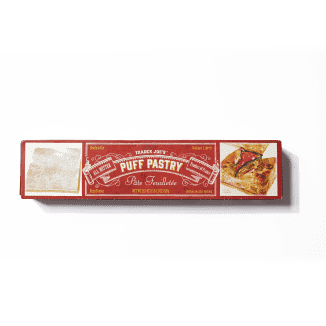
Puff pastry (pâte feuilletée) is a key ingredient for all sorts of flaky delicacies. It’s usually made by wrapping a basic dough around a solid block of butter and sealing it tightly. The envelope of butter and dough is flattened and laminated (or folded over itself) multiple times. With each set of folds, the total number of thin, alternating layers of butter and dough increases exponentially. When baked, the butter in the pastry melts and gives off steam, which in turn rises and inflates the hundreds of papery pastry layers. Delicious? Yes. But all that folding, rolling, and chilling can be tricky and time-consuming to do at home.
Prepared puff pastry (sold either frozen or refrigerated) helps home cooks craft delicious sweet and savory treats in significantly less time. In the test kitchen, we consider store-bought puff to be an invaluable time-saver. We’ve developed an array of recipes that harness its convenience, including pot pies, pigs in blankets, tarts, galettes, and turnovers.


We love using store-bought puff pastry in a variety of popular recipes, from cozy pot pies to fun and delicious pigs in blankets.
These recipes shine best when made with great-tasting pastry. So, we set out to find which nationally available store-bought puff pastries were the most delicious. Our lineup varied in a few ways. Some products were made entirely with butter, while others used palm oil or hydrogenated vegetable oils (more on this below). One product was sold refrigerated, but most of them came frozen. To test them, we baked and sampled cheese straws, galettes, cheese Danish, and pot pies; analyzed our lineup’s ingredients; and explored the physics behind the “puff.”
Thawing and Working with Puff Pastry
Making puff pastry is a delicate process that’s especially temperature-dependent; excess heat during manufacturing, packaging, or transport can melt the fat and ruin the carefully constructed layers. As such, most (but not all) puff pastry is distributed and sold frozen. Keeping the pastry frozen before use reduces the risk that it will spoil or lose its hard-won structural integrity. Each manufacturer recommends a slightly different procedure for thawing, including letting products slowly defrost in the refrigerator overnight or thawing them on the counter for a couple of hours at room temperature. One company even endorses microwave-thawing its frozen puff pastry (we tried it; it worked fine but required a watchful eye to make sure the butter didn’t melt).


Different products listed different thawing instructions on their labels; we usually got the best results when we had enough time to thaw the frozen products in the refrigerator overnight. But thawing at room temperature (and even in the microwave) were options we explored throughout testing as well.
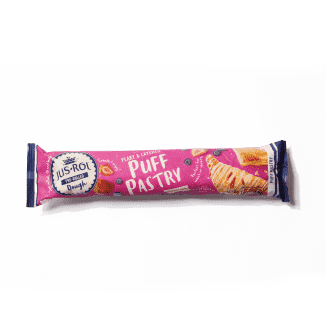
One product in our lineup is sold chilled but not frozen, so consumers can unwrap and use it whenever they’d like. We liked that this eliminated the thawing guesswork, but we found it softened and became stickier faster than the others. This meant we had less time to shape or fill the pastry before it started sticking to the counter, leaving us feeling rushed.
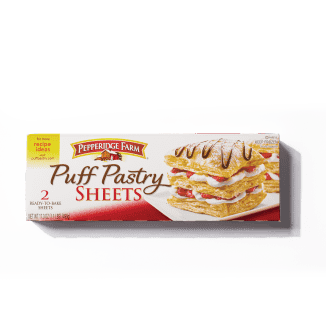
Another major difference is how the puff pastry was packaged. The folded pastries had visible creases, but those creases could be smoothed out with a few pinches from slightly moistened fingers. The products all had slightly different dimensions, which made some more versatile than others. We generally liked pastry sheets that came in large rectangles, as opposed to smaller squares. Larger sheets usually required less rolling out to reach recipes’ stated dimensions, which meant we were less likely to squish the pastry layers with excess rolling or take so much time shaping that the pastry became too warm to work with. We’ve collected a list of these and more best practices for working with the products in our lineup, which you can read more about in our article detailing how to get the most out of your store-bought puff pastry.

Butter versus Oil in Puff Pastry
While conventional puff pastry is made with butter, some companies opt for palm oil or hydrogenated oils instead. In food manufacturing, hydrogenation is a chemical process wherein hydrogen gas is added to vegetable oils, allowing them to stabilize and remain solid at room temperature. Palm oil remains solid at room temperature without hydrogenation. These stable fats are less prone to spoilage and generally cheaper than butter, making them a popular choice among some pastry makers.

Manufacturers can add water to adjust the level of moisture present in their pastries to attempt to mimic the evaporative and leavening capacity of butter. But we found that all-butter pastries still tended to rise higher during baking, indicating that they contained more moisture. This water evaporated into steam and inflated the pastry layers more effectively than water added to pastries made with oil.
It was clear from our tasting that the ones made with oil just don’t taste as good. They were filled with ingredients intended to imitate the taste and color of butter but were more likely to taste bland or slightly artificial. The all-butter pastries, however, offered simple, buttery flavor, which tasters found delicious.
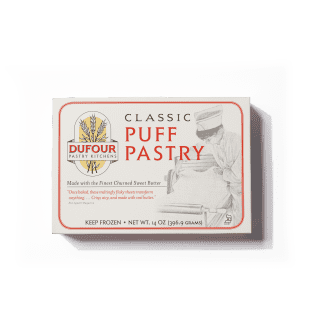
All-butter Dufour rose high and crisped and browned evenly, providing a delicious and attractive addition to every dish we used it with.
Winners: Dufour Pastry Kitchens Classic Puff Pastry and Trader Joe's All Butter Puff Pastry Sheets
The two all-butter pastries in our lineup scored similarly well in our tastings, so we’ve named them co-winners. They both rose and browned nicely and offered rich yet straightforward buttery flavor, complementing savory and sweet fillings alike.
Trader Joe’s puff pastry is a seasonal product available only during the late fall and early winter, but it will last in the freezer for months. One 18-ounce box of Trader Joe’s pastry costs about $5.00 (about $0.27 per ounce) and contains two rolled sheets of pastry, each measuring 12.5 by 10 inches.
Dufour pastry is available year-round, usually in specialty food stores or high-end markets (such as Whole Foods). You can occasionally find Dufour in conventional supermarkets as well. It’s significantly more expensive than the other products we tested—about $12.00 for a 14-ounce box that contains a single 14 by 9-inch sheet ($0.86 per ounce). We like to stock up on Dufour when it’s on sale for special occasions, when its luxurious all-butter flavor will really shine.
- Taste plain, baked in full sheets
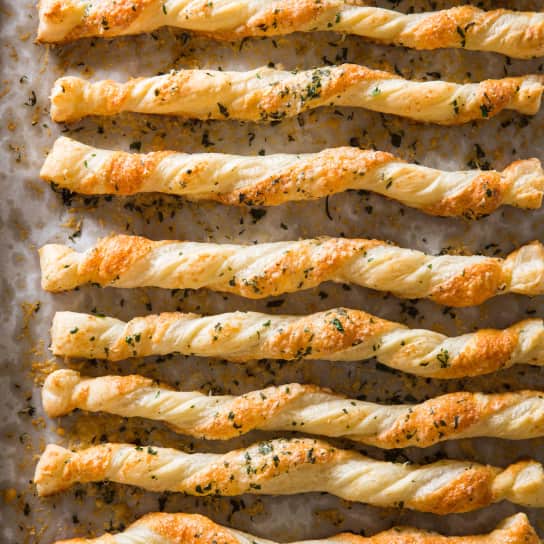
- Taste in Cheese Straws, where pastry is rolled, cut, and twisted
- Taste in One-Hour Apple Galette, where large sheets of pastry act as bottom crusts
- Taste in Danish, where pastry is cut into smaller squares and filled
- Bake lattice tops from Chicken Pot Pie with Spring Vegetables
- Samples were randomized and assigned three-digit codes to prevent bias; products are listed below in order of preference
- Made with butter and only a few other ingredients, offering a rich but simple buttery taste
- Sold frozen rather than refrigerated