From fiery, wok-fried Beef Ho Fun to delicate, nourishing blanched Chinese broccoli, oyster sauce elevates humble ingredients and simple cooking techniques. “The beauty [of oyster sauce] is [its] savoriness, viscosity, and sweetness. The whole thing tastes quite good out of the bottle,’” said Lucas Sin, award-winning chef from Hong Kong, which borders Guangdong province where oyster sauce originated. “One condiment has the entire flavor universe.”


Oyster sauce takes center stage in many Cantonese and other regional Chinese dishes, such as Beef Ho Fun and Stir-Fried Pea Greens with Oyster Sauce and Garlic.
Despite its potency, oyster sauce tends to hide behind the other elements of a dish. “It binds everything together and elevates . . . without muddying the basic flavor profiles [of the main ingredients],” Sin said. It’s woven into the Cantonese way of life—served at breakfast, lunch, and dinner. Sin likened the ubiquity of oyster sauce in Cantonese cuisine to salt and pepper in the West: “Almost everything they make has a touch of oyster sauce in it.”

“The beauty [of oyster sauce] is [its] savoriness, viscosity, and sweetness. The whole thing tastes quite good out of the bottle. One condiment has the entire flavor universe.”
—Lucas Sin, award-winning chef from Hong Kong
The Accidental Discovery That Became Part of a Culinary Canon
While there are some earlier accounts of oyster sauce's existence, it is largely attributed to a happy accident in 1888 in Nanshui Town in China’s Guangdong Province. Street vendor Lee Kum Sheung left a pot of simmering oyster soup unattended until it boiled down to a slick, dark paste. Instead of tossing out the over-reduced soup, he took a taste and found it delicious. A business idea was born and he began selling the sauce, which eventually led to the founding of the multinational food conglomerate now known as Lee Kum Kee.
Soon, the popularity of oyster sauce spilled across the border to Southeast Asian countries with prominent Chinese immigrant populations. In Thailand, it really took off. Thai and immigrant Chinese chefs used oyster sauce in marinades, stir-fries, dipping sauces, and “as many ways as you can imagine,” said Chompon “Boong” Boonnak, co-owner of the James Beard Awards finalist Merai and the award-winning Thai eatery Mahaniyom in Brookline, Massachusetts. Over the years, domestically produced Thai brands emerged as sweeter, less intense versions of their Chinese predecessors to accommodate the local palate, Boonnak noted (a distinction that played out in our results; more on that later).

A Range of Oyster Sauce Options
Traditionally, oyster sauce is made by boiling freshly shucked oysters in a large vat, according to a spokesperson from Lee Kum Kee. But nowadays, some producers smoke the raw oysters over teakwood before boiling, which gives the sauce a bit of smokiness. After the initial cooking stage, the bivalves are removed, leaving the broth to continue simmering until most of the moisture has evaporated. The result is a brown, dense paste packed with briny oyster essence. This is referred to as “oyster extract” on food labeling.


On food labels, ingredients are listed in descending order by weight. Sauce in bottles that list oyster extract first (left) are generally more strongly flavored than sauce in those that list other ingredients first (right).
At this stage, manufacturers add ingredients such as monosodium glutamate (MSG), yeast extract, sugar, and salt; they may also add caramel color to enrich the appearance. Some producers use thickeners, such as modified starch or wheat flour, to create oyster sauce’s distinctive viscous texture and give it a glossy, shiny look.
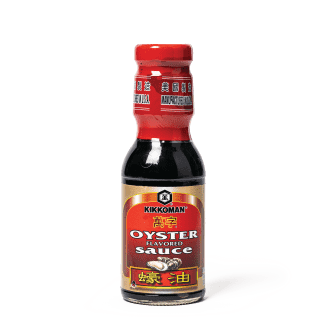
Oyster sauce is a reduction of oyster broth, but the actual oyster content varies. We found that ones labeled as “oyster sauce” usually contain the highest amount of oyster extract. They list “oyster extract” first in their ingredient lists and then water. We also found another common name on products: “oyster-flavored sauce.” We learned that these still contain oyster extract; they just use less of it. Their ingredient lists typically start with water and sugar.
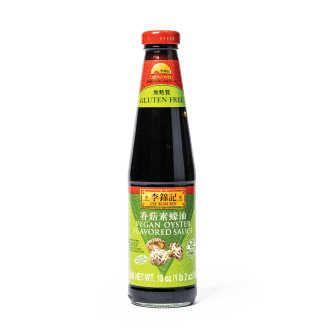
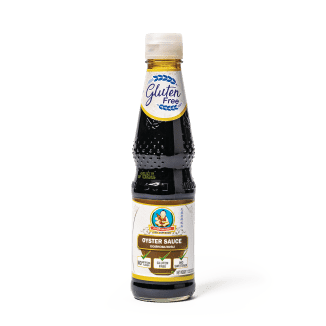
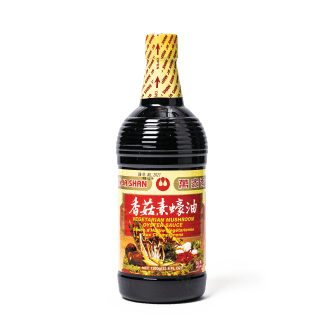
Vegetarian or vegan oyster sauces labeled as “oyster-flavored” are also common. They don’t contain any shellfish; instead, they’re often made with a mushroom product, such as dried mushrooms, mushroom extract, or mushroom powder. The fungi element provides deeply earthy, umami, and slightly sweet notes that are reminiscent of conventional oyster sauce.

Tasting Oyster Sauce
After talking with Cantonese and Thai chefs, we purchased and compared a wide range of oyster sauce and oyster-flavored sauce, including vegetarian and gluten-free versions. We tasted each plain, as a dip for blanched gai lan (Chinese broccoli), and cooked in Stir-Fried Pea Greens with Oyster Sauce and Garlic.
The majority of our tasters had a preference for sauces with stronger and more concentrated oyster flavors, which provided more depth and struck a nice balance between sweet and savory. We were especially impressed with one that had the most pronounced “briny” oyster flavor. One taster noted that it started with the “ocean-y” savoriness of “oysters” and “transitioned into sweetness . . . in my mouth, like magic.”

For maximum oyster flavor, first look for bottles labeled as “oyster sauce” instead of “oyster-flavored sauce.” Then, turn the bottles around and find the ingredients to see whether “oyster” or “oyster extract” is listed first, which indicates a high concentration of oyster. This translates to more intensely complex, oyster-forward profiles than those of products that list water, sugar, or salt as first ingredients. Sauces with less oyster extract are good options for people who prefer a more mild flavor.
Our Favorite Oyster Sauce
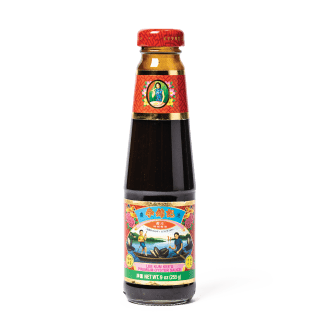
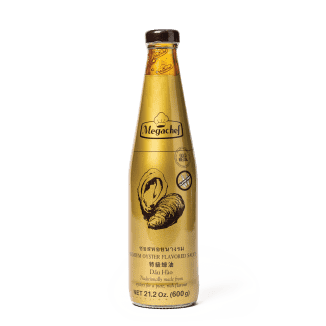
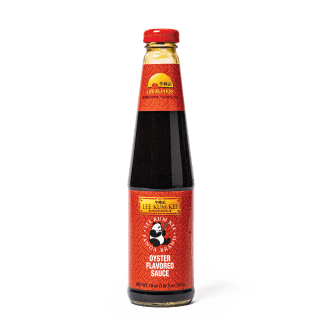
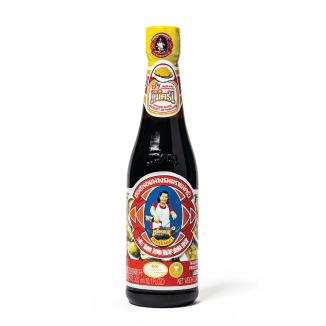
We liked everything we tasted, but some brands emerged as our favorites. Lee Kum Kee Premium Oyster Sauce was richly ocean-y and savory, with a depth of flavor that not every brand offered. We were also impressed by Megachef Premium Oyster Sauce, a Thai-style oyster sauce that was slightly sweeter but still packed a ton of character; it also happens to be gluten-free. The Megachef brand is available online.
Even though mushrooms and oysters have quite different flavor profiles, when used in small quantities in stir-fried dishes, the mushroomy vegetarian oyster sauces can work to enhance flavors. We recommend them if you or someone you’re cooking for doesn’t eat shellfish, but they don’t perfectly replicate the nuances of briny oysters. Dive into the chart below for our full tasting notes.
- Sample plain
- Sample with blanched gai lan (Chinese broccoli)
- Sample in Stir-Fried Pea Greens with Oyster Sauce and Garlic
- For stronger flavor: Oyster extract is the first ingredient
- Thick, viscous consistency