America's Test Kitchen LogoCook's Country LogoCook's Illustrated Logo

Reviews You Can Trust.
See Why.

The Best Decaf Coffee

Decaf coffee was overlooked and mediocre at best. Not anymore.

Headshot of Valerie Sizhe Li
By Valerie Sizhe Li

Last Updated February 20, 2026

What You Need To Know

Decaffeinated coffee was once considered weak and insipid in flavor, but that reputation is changing. Following the rapid growth of specialty coffee and the improvement of decaffeination technology, some decaf now maintains nuances of regular coffee that weren’t possible before. In 2024, a decaf coffee made history by besting its caffeinated counterparts and claiming the champion title in the U.S. Brewers Cup, a national competition to showcase the art of manual filter-coffee brewing. 

So, how do you choose the most flavorful cup—hold the jitters? We set out to find the answer. We first reached out to Circana, a Chicago-based market research firm, to learn the top-selling decaf coffees in the country. We also asked coffee professionals what lesser-known decaf coffee they’re excited about. After narrowing down our list, we selected nine decaf coffees to taste with our colleagues, including Abi Reynolds, ATK staffer and co-owner and roaster of Kid Dream Coffee Company in Beverly, Massachusetts. Not all of the decaf coffee were successful.

Decaf coffee beans of light, medium, and dark roast (from the left) spread out on a white table.
Just like regular coffee, decaf coffee is roasted to varying degrees from light to dark. The best decafs have vibrant aromas and complex flavor profiles.

The Emergence of Decaf Coffee

Caffeine is a soluble compound that occurs naturally in coffee. In the early 1900s, German coffee merchant Ludwig Roselius discovered decaffeination accidentally when a coffee bean shipment of his got soaked in water and the beans lost their stimulating effect. This paved the way for decaf coffee as a commercial product, and the quest to make it taste better was on.

These days heat is typically involved in the process in order to decaffeinate more effectively. “Solubility of the caffeine increases dramatically from room temperature to warm water,” said Tonya Kuhl, co-director of the Coffee Center and chair of the Department of Chemical Engineering at the University of California, Davis. “Green seeds [also called green beans] are really dense, so to get the caffeine out you steam them or contact them with warm water that swells the seeds.” Sometimes, a chemical solvent is used in addition to water to encourage the caffeine’s migration (more on the solvents in a minute). After the decaffeinated beans are rinsed and dried, they’re ready to be roasted.

a pile of pale unroasted coffee beans
To extract the caffeine from raw coffee beans (or “green beans”), the beans are steamed or submerged in warm water. They’re then dried and shipped to coffee roasters for roasting, a process that turn the beans brown.

The Divergence of Decaffeination Methods

The first commercial decaffeination process was invented by Roselius, a coffee merchant, who used a solvent called benzene to remove caffeine. This method went out of fashion when benzene was found to be carcinogenic in the late 1920s.

Alternate ways of decaffeinating coffee beans soon appeared, including one developed in Switzerland in the 1930s called the Swiss Water Process. It decaffeinates coffee with water alone. By soaking an initial batch of green beans, every soluble compound including caffeine dissolves into the water, creating green coffee extract. Then, caffeine is filtered out and the extract is then used with a new batch of moistened beans. The caffeine in the beans diffuse into the caffeine-free extract, while the rest of the coffee solubles, and thus flavor, remain in the beans. Though multiple companies specialize in this technology, only the Canada-based Swiss Water Decaffeinated Coffee Inc. can use the trademarked term, and therefore any decaf coffee labeled as “Swiss Water” is first shipped to Canada and processed there before being shipped elsewhere.

Some decaffeination processes use chemical solvents, such as methylene chloride, derived from methane gas. This solvent has been linked to health hazards, but it’s not present in significant amounts in the decaffeinated coffee beans that reach the consumer, so the U.S. Food and Drug Administration (FDA) has deemed this method safe and it remains in use today. 

Another popular chemical solvent is ethyl acetate. Using it is known commonly as the sugarcane process because the solvent can be derived from sugarcane. Because of Colombia’s abundant sugarcane crop and ethyl acetate processing facilities, most sugarcane-processed decaf coffee is from there. 

a person pours coffee from a thermal carafe to a white mug
Depending on how the beans are processed, decaf coffee may retain a small amount of caffeine. The Swiss Water Process, for example, tends to remove more caffeine than ethyl acetate processing. Check the coffee packaging for information on the processing method.

Ethyl acetate is considered natural because it also occurs in fruits, wine, and certain vegetables in small amounts, but it is often synthesized in facilities to produce the larger quantities needed for decaffeination. Oscar Hernández, the Colombian coffee farmer whose decaf coffee won at the U.S. Brewers Cup, utilizes the sticky, slimy flesh of the green coffee bean, which is called the mucilage. It’s typically discarded, but Hernández ferments the mucilage with ethyl acetate and soaks his beans in this solution for his unique decaffeination process. 

In the 1970s, a method called the supercritical carbon dioxide process came along. In it, carbon dioxide is converted to a supercritical fluid (with properties of both a liquid and a gas) at high pressure and combined with water, forming a solution that interacts with caffeine molecules, effectively removing them without interfering with other volatile compounds. 

Every method has its pros and cons. Swiss Water produces decaf coffee with the lowest caffeine content but often requires shipping green beans to Canada (or other certified facilities) first before sending them to the coffee roasters, which generates carbon emissions. Methylene chloride is accessible, but it’s derived from methane, a greenhouse gas. The ethyl acetate process can be done easily in Colombia, where large decaffeination facilities and production materials, such as coffee, sugarcane, and other raw goods are nearby. But it leaves a little more caffeine than the Swiss Water method. supercritical carbon dioxide does a great job of removing caffeine without chemicals, but it’s costly to run. Both the Swiss Water and supercritical carbon dioxide processes are energy- and resource-intensive. All four decaffeination methods are represented in our lineup.

Is Decaf Caffeine-Free?

Regardless of the method used, all decaf coffee retains a small amount of caffeine. The FDA mandates that 97 percent or more of caffeine be removed. On average, it’s estimated that a 16-ounce cup of decaf coffee contains 12 to 13.4 milligrams of caffeine, compared to 150 to 330 milligrams in a cup of regular coffee. For extra context, there are about 70 milligrams of caffeine in ⅓ cup (113 grams) of semisweet chocolate.

a side-by-side comparison of two cups of coffee with text indicating that decaf coffee contains 12-13.4 mg of caffeine per 16-ounce cup while regular coffee contains 150-300 mg of caffeine
Compared to regular coffee, decaf coffee contains a small amount of caffeine.

Some species of coffee, such as robusta, naturally contain more caffeine than others, such as arabica. It requires more time and effort to decaffeinate robusta than arabica, which puts the beans at more risk of heat and water damage, and more importantly, could be detrimental to their flavor. This is why industry experts prefer using arabica beans; all the decaf coffees we tasted were arabica.

Tasting Decaf Coffee

We were impressed by how many of the coffees were nuanced, robust, and full-flavored, a far cry from the one-note decafs of the past. There was something for everyone; some were crisp and citrusy, while others were heavy-bodied and woodsy. 

We also noticed the subtle, lingering sweetness and acidity from the decaf produced using the sugarcane/ethyl acetate method. The Swiss Water and supercritical carbon dioxide decaf coffees were a mixed bag; we liked some more than the others. Only the one coffee made with the methylene chloride-processed decaf was unpleasantly bitter and “too roasted.” 

However, the decaffeination method doesn’t solely determine the quality of the coffee. We found the differences in the roast level, the roasting technique, and the variety of the beans also shaped the flavor, aroma, and mouthfeel of the coffees. 

an overhead shot of 9 small glass bowls of brewed coffee
The coffees we tried ranged from delicate and tea-like to strong and bold. The color of the brewed doesn’t correlate perfectly with the strength of the flavor, though Folgers was the darkest roast in our lineup.

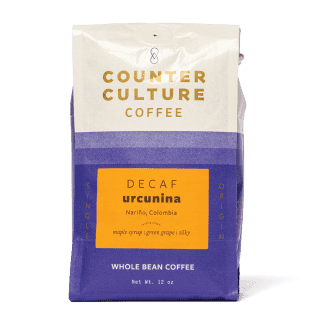
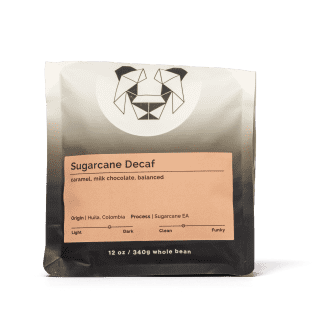
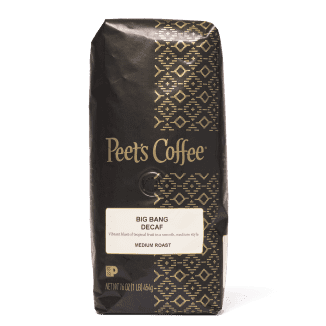
Two Colombian single-origin coffees stood out as our favorites. Counter Culture Coffee’s Decaf Urcunina, which was processed with ethyl acetate, had a smooth mouthfeel and hints of sweet and warm spices. Its “banana bread” and “mango” notes delighted our taste buds. Black & White Coffee Roasters Sugarcane Decaf was a stunner too. It’s also an ethyl acetate–processed coffee with a similarly vibrant, candy-like flavor profile but was a touch more molasses-y and chocolaty. For a deeply roasty aroma and full-bodied coffee, we liked Peet’s Coffee Decaf Big Bang Medium Roast Coffee, which was decaffeinated using the Swiss Water process. We invite you to read about each coffee we tasted in the chart below, where they are listed in order of preference. 

Editor’s Note, February 2026: We learned that Counter Culture Coffee Decaf Urcunina is temporarily out of stock due to supply chain issues. A representative from the company told us that it will be available for purchase by the end of the year.

  • Brew in a drip coffee maker and sample black
  • Full-flavored coffee with nuanced flavor and aroma

FAQs

Pulverizing coffee beans will release the volatile aromatic compounds that they naturally contain. Grinding the beans right before brewing would minimize the loss of those compounds, and that’s why we recommend shopping for whole beans. The shelf life of decaf whole-bean coffee varies depending on the type of beans, the decaffeination method, and the roast level. Because the beans have been “opened up” during the decaffeination process, they’re more porous and can deteriorate faster than caffeinated beans. The shelf life of decaf coffee can be from 2 to 3 months, compared to up to 6 months for regular coffee; it’s always best to check each roaster’s recommended “best by” date, which is usually printed on the bag. As with caffeinated coffee, darkly roasted beans are more oily and more vulnerable to rancidity than light- or medium-roast coffee.

Keep the beans in an airtight container and store it in a cool, dark, and dry environment. If your coffee comes in a bag, its original packaging helps, too, because it has a one-way valve that stops outside oxygen from entering. If you freeze decaf coffee for long-term storage, we recommend vacuum sealing the bag to prevent ice crystals from forming and spoiling the beans.

Everything We Tested

Highly Recommended

Co-Winner: Best Single-Origin CoffeeCounter Culture Coffee Decaf Urcunina

This “vibrant” and “aromatic” medium-bodied decaf smelled like “brown sugar and toast” and tasted “slightly mushroom-y.” It was also “smooth” and “nutty” and reminded us of “mango,” “banana bread,” and “tart orange.” It was “crisp” and “lively”; we think it’s great for fans of light- to medium-bodied coffee. Editor's Note: This coffee is temporarily out of stock due to supply chain issues. The company expects it to be available again in December 2026.

Roast: Medium light

Process: Ethyl acetate

Origin: Nariño, Colombia

Price at Time of Testing: $19.50 for 12 oz ($1.63 per oz)

This “vibrant” and “aromatic” medium-bodied decaf smelled like “brown sugar and toast” and tasted “slightly mushroom-y.” It was also “smooth” and “nutty” and reminded us of “mango,” “banana bread,” and “tart orange.” It was “crisp” and “lively”; we think it’s great for fans of light- to medium-bodied coffee. Editor's Note: This coffee is temporarily out of stock due to supply chain issues. The company expects it to be available again in December 2026.

Roast: Medium light

Process: Ethyl acetate

Origin: Nariño, Colombia

Price at Time of Testing: $19.50 for 12 oz ($1.63 per oz)

Co-Winner: Best Single-Origin CoffeeBlack & White Coffee Roasters Sugarcane Decaf

We were hooked by the “vibrant,” “candy-like,” “fruity” aroma and “citrusy,” “sweet,” and “bright” flavors of this medium-bodied decaf. It was complex, with one taster describing it as like a “chocolate bar with raisins” and as containing “gingerbread” notes. Many panelists noted its nuances seemed beyond the norm of decaf coffee and described it as “lively” and “fruit”-forward.

Roast: Medium dark

Process: Ethyl acetate

Origin: Huila, Colombia

Price at Time of Testing: $21.00 for 12 oz ($1.75 per oz)

We were hooked by the “vibrant,” “candy-like,” “fruity” aroma and “citrusy,” “sweet,” and “bright” flavors of this medium-bodied decaf. It was complex, with one taster describing it as like a “chocolate bar with raisins” and as containing “gingerbread” notes. Many panelists noted its nuances seemed beyond the norm of decaf coffee and described it as “lively” and “fruit”-forward.

Roast: Medium dark

Process: Ethyl acetate

Origin: Huila, Colombia

Price at Time of Testing: $21.00 for 12 oz ($1.75 per oz)

Best Supermarket BlendPeet’s Coffee Decaf Big Bang Medium Roast Coffee

We liked the“robust” and “pleasant” flavors and “good level of acidity” in this medium-bodied decaf coffee. The aroma reminded us of “rose petals,” and we tasted deeply roasty notes of “chicory” and “a hint of caramel.”

Roast: Medium

Process: Swiss Water

Origin: Ethiopia

Price at Time of Testing: $20.95 for 16 oz ($1.31 per oz)

We liked the“robust” and “pleasant” flavors and “good level of acidity” in this medium-bodied decaf coffee. The aroma reminded us of “rose petals,” and we tasted deeply roasty notes of “chicory” and “a hint of caramel.”

Roast: Medium

Process: Swiss Water

Origin: Ethiopia

Price at Time of Testing: $20.95 for 16 oz ($1.31 per oz)

Coffee Bean Direct CO2 Decaf Colombian

This light-bodied decaf had a “mild and floral” aroma and a “nice balance of flavor and body.” We noted “lemongrass,” “citrus,” and “peach” in the cup, which was “slightly acidic.” For those who like a light roast coffee, this would be a perfect, citrusy daily decaf.

Roast: Medium light

Process: Supercritical Carbon Dioxide

Origin: Colombia

Price at Time of Testing: $21.95 for 16 oz ($1.37 per oz)

This light-bodied decaf had a “mild and floral” aroma and a “nice balance of flavor and body.” We noted “lemongrass,” “citrus,” and “peach” in the cup, which was “slightly acidic.” For those who like a light roast coffee, this would be a perfect, citrusy daily decaf.

Roast: Medium light

Process: Supercritical Carbon Dioxide

Origin: Colombia

Price at Time of Testing: $21.95 for 16 oz ($1.37 per oz)

Recommended

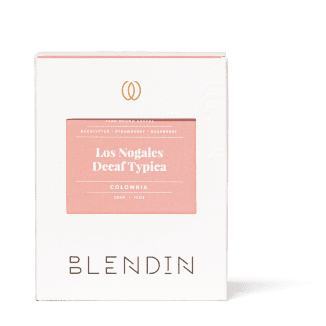
BlendIn Coffee Club Los Nogales Typica Decaf

This light-bodied decaf had a “delicate” but “robust” aroma that boasts a “vibrant smell of dates” and “port wine” and was compared to rum, malt vinegar, and beer. The beans are decaffeinated using their mucilage—the viscous, sugary layer surrounding the bean—which has been fermented with ethyl acetate; this imbues the coffee with “fruity,” “citrus forward,” and “tart” flavors. BlendIn coffee shop owner Weihong Zhang won the U.S. Brewers Cup finals with this decaf coffee. Many of us loved it, but coffee drinkers who don’t typically brew floral, fruity coffee might find it too tart and citrusy.

Roast: Medium

Process: Ethyl acetate on mucilage

Origin: Pitalito, Huila, Colombia

Price at Time of Testing: $28.00 for 12 oz ($2.33 per oz)

This light-bodied decaf had a “delicate” but “robust” aroma that boasts a “vibrant smell of dates” and “port wine” and was compared to rum, malt vinegar, and beer. The beans are decaffeinated using their mucilage—the viscous, sugary layer surrounding the bean—which has been fermented with ethyl acetate; this imbues the coffee with “fruity,” “citrus forward,” and “tart” flavors. BlendIn coffee shop owner Weihong Zhang won the U.S. Brewers Cup finals with this decaf coffee. Many of us loved it, but coffee drinkers who don’t typically brew floral, fruity coffee might find it too tart and citrusy.

Roast: Medium

Process: Ethyl acetate on mucilage

Origin: Pitalito, Huila, Colombia

Price at Time of Testing: $28.00 for 12 oz ($2.33 per oz)

Recommended with Reservations

% ARABICA Decaf Arabica Blend

This “thin”-bodied coffee was a bit more “light” than we expect of a medium roast. Some tasters also found the flavor and aroma to be “mild” and “a bit weak.” It was slightly citrusy with notes of “roasted nuts” and “marshmallow.”

Roast: Medium

Process: Swiss Water

Origin: Proprietary Blend

Price at Time of Testing: $36.00 for 16 oz ($2.25 per oz)

This “thin”-bodied coffee was a bit more “light” than we expect of a medium roast. Some tasters also found the flavor and aroma to be “mild” and “a bit weak.” It was slightly citrusy with notes of “roasted nuts” and “marshmallow.”

Roast: Medium

Process: Swiss Water

Origin: Proprietary Blend

Price at Time of Testing: $36.00 for 16 oz ($2.25 per oz)

Lavazza DEK Filtro

This dark roast coffee was “visually quite dark” and “more opaque” than other coffees we tried; it had a “toasty” and “subtle earthy” taste. The aroma was “boozy,” reminding some tasters of “bourbon,” “caramel,” and “oak.” The flavor was “smooth” and “mild” with “chocolate” and “vanilla” notes.

Roast: Medium

Process: Supercritical Carbon Dioxide

Origin: Proprietary Blend

Price at Time of Testing: $16.53 for 1.1 lb ($0.94 per oz)

This dark roast coffee was “visually quite dark” and “more opaque” than other coffees we tried; it had a “toasty” and “subtle earthy” taste. The aroma was “boozy,” reminding some tasters of “bourbon,” “caramel,” and “oak.” The flavor was “smooth” and “mild” with “chocolate” and “vanilla” notes.

Roast: Medium

Process: Supercritical Carbon Dioxide

Origin: Proprietary Blend

Price at Time of Testing: $16.53 for 1.1 lb ($0.94 per oz)

Not Recommended

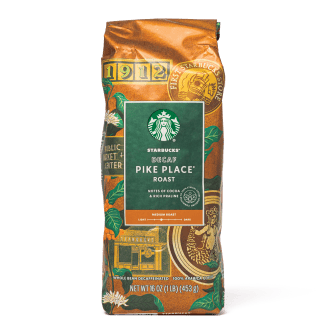
Starbucks Pike Place Roast Decaf Whole Bean Coffee

This heavy-bodied decaf was the only one treated with methylene chloride. Most of us weren’t thrilled with its “burnt,” “ashtray,” and “charcoal” flavors. Some even complained it tasted “straight from the bottom of the pot.” However, it did have a few fans who defended it, noting that the “richer taste” and “full body” could be cut with milk. It was labeled as a medium roast but we agreed that it was on the darker side.

Roast: Medium

Process: Methylene chloride

Origin: Proprietary Blend

Price at Time of Testing: $31.00 for 32 oz ($0.97 per oz)

This heavy-bodied decaf was the only one treated with methylene chloride. Most of us weren’t thrilled with its “burnt,” “ashtray,” and “charcoal” flavors. Some even complained it tasted “straight from the bottom of the pot.” However, it did have a few fans who defended it, noting that the “richer taste” and “full body” could be cut with milk. It was labeled as a medium roast but we agreed that it was on the darker side.

Roast: Medium

Process: Methylene chloride

Origin: Proprietary Blend

Price at Time of Testing: $31.00 for 32 oz ($0.97 per oz)

Folgers Classic Decaf Coffee

Unfortunately, we didn’t like this supermarket mainstay, which is a top-seller nationally and only available in preground format. Tasters described the aroma as “stale,” “too roasty,” “too bitter,” and “burnt.” Some likened it to “instant coffee.” Even for dark roast fans, this decaf tasted “a little too strong” and “more like expired beans.”

Roast: Medium

Process: Ethyl acetate

Origin: Proprietary Blend

Price at Time of Testing: $9.99 for 25.9 oz ($0.39 per oz)

Unfortunately, we didn’t like this supermarket mainstay, which is a top-seller nationally and only available in preground format. Tasters described the aroma as “stale,” “too roasty,” “too bitter,” and “burnt.” Some likened it to “instant coffee.” Even for dark roast fans, this decaf tasted “a little too strong” and “more like expired beans.”

Roast: Medium

Process: Ethyl acetate

Origin: Proprietary Blend

Price at Time of Testing: $9.99 for 25.9 oz ($0.39 per oz)

Reviews You Can Trust

The mission of America’s Test Kitchen Reviews is to find the best equipment and ingredients for the home cook through rigorous, hands-on testing. Have a question or suggestion? Send us an email at atkreviews@americastestkitchen.com. We appreciate your feedback!

The Expert

Author: Valerie Sizhe Li

Valerie Sizhe Li

Associate Editor, ATK Reviews

Valerie is an associate editor for ATK Reviews. She has many passions, including skiing, running, playing the flute, and spending time outdoors.

Valerie Li Stack is an associate editor for ATK Reviews. Having grown up in a family that traveled extensively, she’s visited more than 50 countries—with more to come. Thanks to these travel experiences and the ability to converse in multiple languages, she’s always learning about regional cuisines around the world. She's a flutist in a 10-piece band called Quahog Wild and occasionally runs marathons. But her biggest passion is skiing, a hobby that she picked up in her adult life. Her stories have appeared in multiple publications, including Eater, USA Today, and more.

*All products reviewed by America’s Test Kitchen are independently chosen, researched, and reviewed by our editors. We buy products for testing at retail locations and do not accept unsolicited samples for testing. We list suggested sources for recommended products as a convenience to our readers but do not endorse specific retailers. When you choose to purchase our editorial recommendations from the links we provide, we may earn an affiliate commission. Prices are subject to change.

Reviews You Can Trust.
See Why.

This is a members' feature.
America's Test Kitchen LogoCook's Country LogoCook's Illustrated Logo