

This is Technique #100 from our 100 Techniques Every Home Cook Can Master.
Each technique is broken into three sections: why it works, key steps, and recipes that use it. Learn these recipe building blocks and you'll be set up for a lifetime of cooking success.
We’ve always been partial to the textural and visual contrast of the iconic New York cheesecake.
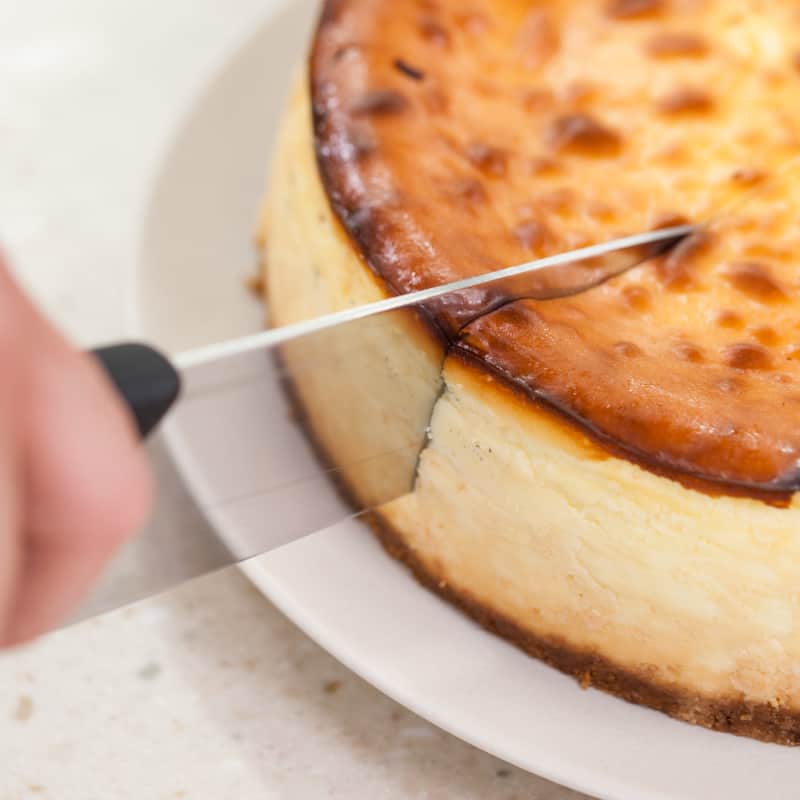
Its characteristic dark brown top and gentle downward slope from slightly puffed perimeter to plush center is rich suede to other cheesecakes’ slippery satin.
New York cheesecake is made with the same basic components as other cheesecakes: a cream cheese–based filling atop a buttery graham cracker crumb crust.
But the baking method differs.
Sign up for the Notes from the Test Kitchen newsletter
Our favorite tips and recipes, enjoyed by 2 million+ subscribers!
What Makes a New York-Style Cheesecake Distinct?
While most cheesecakes are set into an insulating water bath and baked gently at a moderate temperature to ensure a homogeneous texture throughout, the classic New York recipe calls for it to go straight into a blazing-hot oven sans water bath.
This causes the cake’s rim to puff up and the top to brown.
During this brief high-heat phase, the proteins in the eggs and dairy just begin to form bonds that subtly change the texture of the filling.
Then, the oven temperature is turned down very low, where it remains until the filling is set. The temperature drop halts the protein bonding process, preventing the filling from curdling while resulting in subtly different textures throughout.
But all this proves problematic in home ovens, with the cheesecake sometimes turning out grainy and cracked with burnt edges, or oozy and undercooked beneath a properly browned top.
How We Prevent Overcooking Our Cheesecake
After countless tests, we realized the one uncontrollable variable was the oven itself. Different ovens take vastly different amounts of times for the temperature to fall depending on their insulation levels.
So we turned the traditional high-to-low technique topsy-turvy and went low to high instead.
Bake the cheesecake at 200 degrees until completely set and the internal temperature registers 165 degrees.
Then, remove it from the oven, crank up the heat until it reaches 500 degrees, and place the cheesecake back in the oven near the top, where it will brown in just a few minutes—so quickly that overcooking is a non-issue.
How We Maintain a Crispy Crust
The other perennial problem with classic New York cheesecake is that the porous crumb crust tends to turn soggy with the long baking time.
To keep that must-have graham flavor but make the crust less vulnerable to moisture, add a bit of flour to craft a cohesive, hybrid pastry-graham crust.

Desserts Illustrated
Part cookbook, part handbook, Desserts Illustrated is the last word on the last (but definitely not the least) course.
Shop NowStep by Step: How to Bake a New York Deli Cheesecake
If you follow these simple steps, you'll achieve a silky cheesecake with a perfectly browned top and a crisp crust every time.
Step 1: Process and Pack the Crust

Process crust ingredients in food processor. Using bottom of measuring cup, pack firmly into springform pan. Parbake on lower rack until edges begin to brown.
Step 2: Mix Filling

Using stand mixer, beat cream cheese, sugar, and salt until combined. Scrape bowl and paddle, add liquid ingredients, and beat until combined. Add egg yolks and beat to combine. Scrape bowl and paddle and add whole eggs in batches, beating until combined after each addition.
Step 3: Strain Filling

Strain filling through fine-mesh strainer set in bowl, pressing with silicone spatula to help filling pass through strainer.
Step 4: Rest Filling and Pop Bubbles

Pour filling into crust and let rest for 10 minutes. Draw tines of fork across surface to pop air bubbles that have risen to surface.
Step 5: Bake Low

Bake cheesecake on lower rack at low temperature until center registers 165 degrees. Remove cake from oven and increase oven temperature.
Step 6: Bake High

Bake cheesecake on upper rack at higher temperature until top is evenly browned.
Watch us cook through the full recipe.
Recipes That Use This Technique
Make our Foolproof New York Cheesecake recipe yourself and consider trying a few other cakes and toppings.

Foolproof New York Cheesecake
For the perfect New York slice of cheesecake, we carefully adjusted our oven to achieve a lush texture and a beautiful brown top.
Get the Recipe
Mixed Berry Coulis
Tired of thick, overly sweet fruit sauces that taste like jam? We found a way to make one with bright, fresh flavors using only a few simple ingredients.
Get the Recipe
La Viña–Style Cheesecake
Who says cheesecake needs to be fussy? This version has just five ingredients, an easy method, and a sweet backstory.
Get the Recipe

Light New York Cheesecake
Of all the desserts that people long for in low-fat form, cheesecake is probably the most popular—but it’s also the most difficult to lighten. We set out to develop a light cheesecake worth eating.
Get the RecipeReady to learn another technique? Choose from our list of 100 Techniques Every Home Cook Can Master.