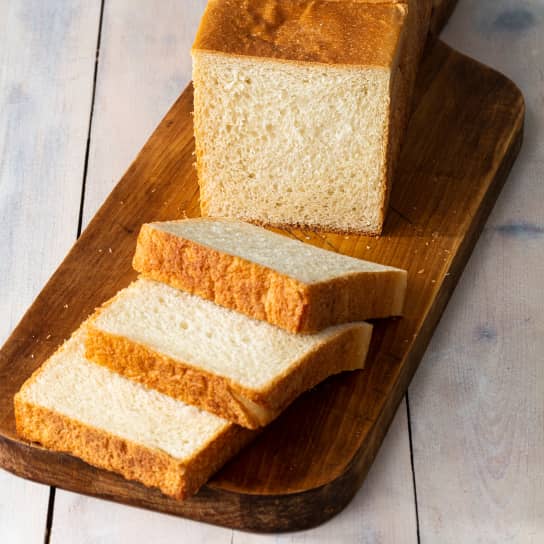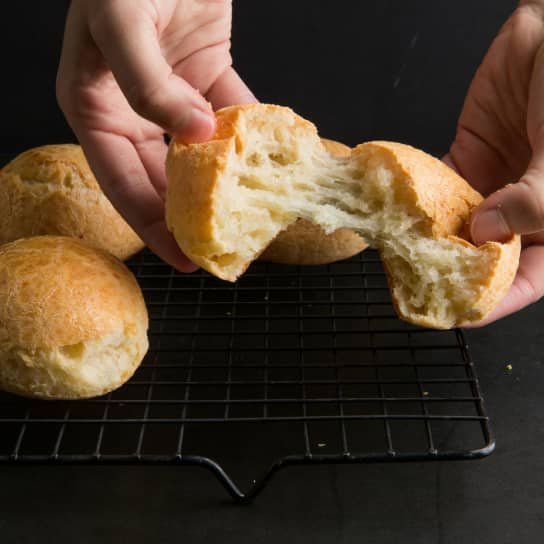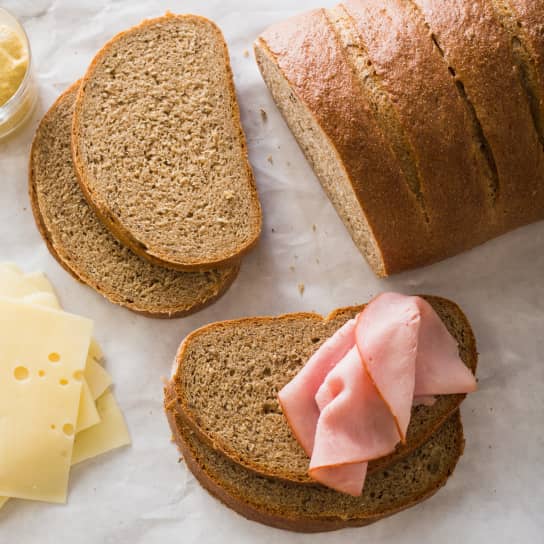
Whether we are trying to create more of it in rustic bread or pizza dough or working to limit its development for tender baked goods like cakes and muffins, there’s no denying gluten’s importance.
But what exactly is it?
Let’s get down to the basics, using the most common source of gluten—wheat flour—which is the main ingredient in everything from pasta and pizza to cakes and cookies.
Sign up for the Notes from the Test Kitchen newsletter
Our favorite tips and recipes, enjoyed by 2 million+ subscribers!
What Is Gluten?
Gluten is an elastic protein that has the ability to trap air, much like a balloon. It's formed when two important proteins in wheat flour, glutenin and gliadin, bond together in the presence of water.
The most common source of gluten is flour that is milled from wheat berries, which contain starches, proteins, and fats. There are two main proteins in wheat flour—glutenin and gliadin. Glutenin is a very large, loosely coiled protein, while gliadin is a much smaller and tightly coiled sphere. Glutenin provides most of the strength and elasticity in dough, allowing it to bounce back after it has been stretched. Gliadin, on the other hand, provides the stretch.
In dry flour, these proteins are basically lifeless strands wrapped around granules of starch. But they begin to change shape when they come in contact with water, a process called hydration. Once moistened, the individual protein molecules (the glutenin and gliadin) begin to link up with one another to form long, elastic chains called gluten. These strands of gluten combine to form a membranelike network. The network engulfs swollen starch granules and gas bubbles (created by yeast, chemical leaveners like baking powder, or foams like whipped egg whites), stretching as the batter or dough rises and then bakes, giving the finished cake or loaf its structure and chew.

Wheat flour contains two types of protein strands, glutenin and gliadin, wrapped around starch granules.

When flour is combined with water, the protein strands unwind and link together to form a membrane-like network, which is called gluten.
What Does Gluten Look Like?
Beyond our conceptual understanding of it, is there a more tangible way to see and feel gluten? The Cook’s Illustrated team ran a simple experiment to find out.
They made two basic doughs by mixing flour and water in a food processor until a smooth ball formed. For one dough they used cake flour, which contains between 6 and 8 percent protein, and for the other one they used bread flour, which usually runs from 12 to 14 percent protein. After making the doughs, they placed each in a mesh strainer and massaged them under running water to wash away all of the starch. Once the water ran clear (a sign that the starch was gone), they were left with two piles of essentially pure gluten. The differences in the appearance and texture of the two doughs were a dramatic confirmation of the profound impact of gluten.

CAKE FLOUR: Low-protein cake flour formed a very small amount of sticky, weak gluten. This characteristic is a boon to cake and muffins, in which too much gluten can turn the crumb unappealingly tough.

BREAD FLOUR: High-protein bread flour formed a large ball of highly resilient, rubbery gluten that could be stretched very thin without tearing. This structure traps air in breads, providing high rise and good texture.
In this episode of What's Eating Dan?, Dan Souza explores pizza dough science (and reveals what gluten looks like) to illustrate why a slow fermented pizza crust tastes so much better.
What Affects Gluten Development?
There are several factors that can affect gluten development. Here are three common ones.
1. FLOUR: Bread flour is milled from high-protein wheat, which means it’s capable of developing more gluten, or structure, which is perfect for chewy artisan loaves. In contrast, cake flour is made from soft wheat with a low protein content. As a result, cake flour produces less gluten, making it perfect for tender cakes. All-purpose flour has a relatively high protein content of 10 to 12 percent, depending on the brand. Bread flours have even more protein, generally 12 to 14 percent. Cake flour has just 6 to 8 percent protein.
2. WATER: The amount of water can affect gluten development. Basically, the more water in a dough or batter, the stronger and more elastic the gluten strands. Why does this matter? If the gluten strands are strong and elastic, they can support the starch granules and air bubbles that hydrate and swell as the dough rises and bakes, producing an airier bread with good chew.
3. TIME: The third variable is the mixing time. A muffin batter that is gently stirred will develop less gluten than a bread dough beaten in a stand mixer for 10 minutes. More stirring equals more gluten, which equals more structure and chew.
Gluten’s Three Common Roles
It's helpful to understand what gluten does in various recipes. Let's look at the three most common roles played by wheat flour.
Flour Thickens
In sauces, gravies, soups, and stews, wheat flour plays the role of thickener. When the starch granules in the flour are heated in these dishes, they absorb water, swell, and eventually burst, releasing a starch molecule called amylose that diffuses throughout the solution, trapping additional water and forming a gelatinous network. This is how a few tablespoons of flour turn chicken stock into gravy.
Some thickeners, like cornstarch, are pure starches and contain more amylose than other thickeners, like flour, that contain components other than starch molecules. (Remember, flour also contains proteins and fats, and the starch content is about 75 percent.) Purity affects not only thickening power but performance.
Cornstarch is actually more fickle than flour. For instance, overwhisking pastry cream can break the bonds of the starch gel and thin out the custard. In contrast, the proteins and lipids in flour dilute its capacity to form starch gels, so that more flour is needed for thickening. But these nonstarch compounds also act as binders, ensuring that the liquid not only thickens but also stays that way.

The How Can It Be Gluten-Free Cookbook
Gluten-free cooking takes a quantum leap forward with this collection of groundbreaking recipes and revolutionary techniques.
Buy NowFlour Coats
In addition to its use as a thickener, flour can also be used as a coating in dishes like fried chicken or panfried pork chops. The starches in the flour are responsible for most of the browning and crisping, while the proteins in the flour help the coating cling to the surface of the food. The proteins also create chew or texture in the fried or baked coating.
Flour Builds Structure
Finally, the main use for flour in the home kitchen is as a structural agent in baked goods. It’s here that the gluten performs an essential function; the ability of the proteins in wheat flour to expand and trap gas bubbles is key in many baked goods.
In a baked good such as a muffin, the starch granules in the flour absorb moisture and swell as the batter is being prepared. The strands of gluten bond together and surround the starch granules. Gluten is particularly elastic and strong, especially when heated. This highly organized and strong network of gluten gives the muffin its structure and shape.
Compared with wheat flour, gluten-free flours generally contain less protein, so they don’t do as good of a job of organizing and holding the swollen starch granules. These proteins are also less elastic than gluten. In order to replace wheat flour with a lowerprotein flour, such as rice flour, you must boost the effectiveness of that protein.