Making dozens of "slurkeys." Sawing coolers in half. Employing robots to help test cutting boards' durability.
For decades, the America's Test Kitchen team has been pushing the boundaries of cooking with intense experiments and meticulous testing. (It's kind of our thing.)
These findings inform the recipes, reviews, and tips that you find on our TV shows, in our magazine and books, and on our site and app.
We've rounded up some of the most creative and unexpected ways we've busted myths and tested curiosities, all in the name of better home cooking.
1. We demonstrated non-Newtonian fluids using a vat of cornstarch. In order to better understand why ketchup is solid until force is applied, and why some other ingredients behave differently, senior Books editor and ATK cast member Joe Gitter went for a run on top of a vat of cornstarch and water in an experiment designed by ATK's science expert Dan Souza.
Watch Joe Gitter run on a vat of cornstarch and water in the name of kitchen science.
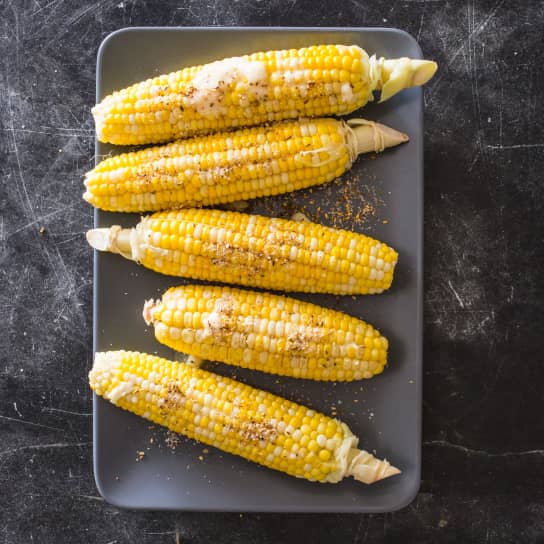
2. We regularly use blue dye to make better recipes. Whether it's discovering the absorption of custard in bread for french toast; which potato soaks up the most water when boiled; how waterproof we’ve made oiled sandwich bread; how leakproof springform pans are; or how salted water moves through boiled corn, in the kitchen we love using the visual representation of blue dye to help us nail our recipes and reviews.

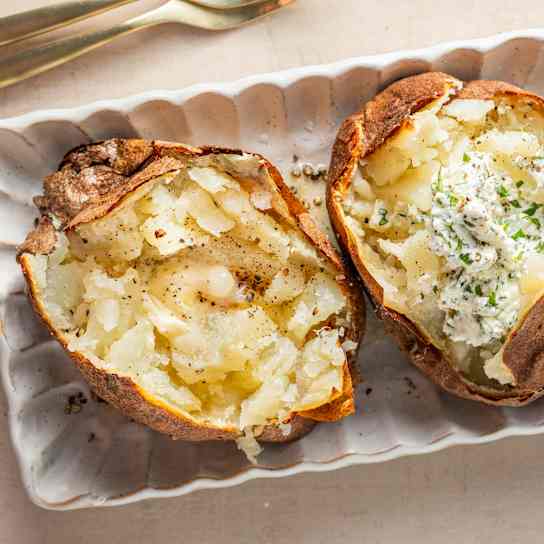
3. We weighed baked potatoes down to the gram. To confirm our hunch that baked potatoes left to sit for too long before being slit open turned stodgy and dense, Cook's Illustrated deputy editor and ATK cast member Lan Lam recorded the weight of individual potatoes before baking, cooked them, then let them sit for various amounts of time before cutting them open and weighing them again. Sure enough, the potatoes that were slit open after a long rest not only weighed more, but were also gummier and less fluffy than those opened right away.
Elle Simone Scott and Bridget Lancaster cook through Lan Lam's baked potato recipe in this segment of America's Test Kitchen TV.
4. We hired a knife-wielding robot to test cutting boards. To determine our winning wood and bamboo cutting board, ATK Reviews editor Miye Bromberg wanted to know if hard wood boards would dull kitchen knives faster than soft wood boards. To determine the answer, we teamed up with the Autodesk Technology Center in Boston and used one of their robots to make 5,000 cuts on every board with a brand-new, factory-sharpened knife, pausing every 200 cuts to test the sharpness of the blade.

5. We made over 100 "slurkeys." “Slurkey,” for the unaware, is a turkey slushie. When trying to discover how far sodium penetrates meat when salted or brined, Dan Souza and Lan Lam salted turkeys for varying amounts of time. When using a probe to measure the penetrated sodium content of each turkey after being salted, the sample must be in liquid. So they took a core sample of every turkey and blended it into a slurry with water.
6. We sawed insulated coolers in half. When testing large, hard-sided coolers, there was only one way the ATK Reviews team could assess the thickness and density of a cooler’s insulated walls, and that was to break out the Sawzall.

7. We used Slim Jims to mimic fingers when testing cut-resistant gloves. Cut-resistant gloves come in different levels of cut resistance, and one way we tested the glove’s durability was by stuffing Slim Jim Beef Jerky Sticks in the fingers of each glove and using fresh razor blades to cut across them with increasing levels of force. No Slim Jims were harmed in the making of this review.
8. We closely examined raw eggs in a dark room. Cook's Illustrated deputy food editor Andrea Geary was in pursuit of the perfect soft-boiled egg when she huddled in a dark room with a high-powered flashlight, a permanent marker, and several dozen eggs. She theorized that the placement of the yolk within the egg before cooking impacted her results, and she could tell its location by shining a flashlight through the thin shell and marking the yolk’s spot on the outside. (Spoiler alert: It doesn’t matter, but now we know for certain.)
9. We made dough balloons to demonstrate why gluten content matters in bread. To show how high-protein bread flour gives us gluten-rich bread dough that is ideally elastic, we inflated balls of that dough with helium.
Ever wondered what gluten looks like? Dan Souza ran an experiment to find out.
10. We threw tomato sauce-filled bags on the ground. While testing the effectiveness of the seal on food storage bags, ATK Reviews executive editor and America's Test Kitchen cast member Lisa McManus filled each contending bag with tomato sauce, created a tarped trench, and pushed the bags off the counter to see which ones would burst and which ones wouldn’t.
11. We regularly whack equipment on concrete to test their durability. Stainless-steel skillets, water bottles, and insulated water bottles are just some of the items that have been subjected to this treatment to test their structural integrity and ensure their ability to withstand everyday wear-and-tear and accidents.

12. We used texture analyzers to determine that cutting steak against the grain really does matter. To determine how much more tender a steak can become when cut against the grain, we cooked a whole flank steak to 130 degrees. We then cut equally thick slices both with and against the grain, and used a CT3 Texture Analyzer to test how much force was required to “bite” 5 millimeters into the slices. The slices carved against the grain required just a quarter of the amount of force needed to travel the same distance down into the meat that was cut with the grain.

13. A consistometer helped us perfect our tomato component in Mexican shrimp cocktail. When Cook's Illustrated senior editor Annie Petito was looking for a thicker viscosity tomato juice that wouldn’t lead to a runny Cóctel de Camarón, we built a DIY consistometer. This contraption comprises clear strips of glass angled slightly where the tomato juices could be placed at the top of each piece of glass to visually see how fast and thin it spread down the glass.

14. We toasted 1,095 consecutive slices of bread to challenge our three top toasters. When simulating a year's worth of home usage, we toasted 365 pieces of bread in each of our top three slot toasters to see how they would hold up.

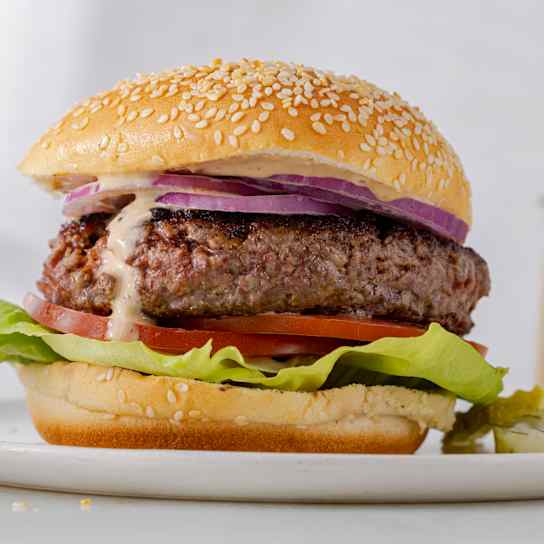
15. We smashed burgers with a Dutch oven to test tenderness. To visually demonstrate how much more tender a hand-ground burger is than a burger made with store-bought ground beef, we dropped a Dutch oven on both from 6 inches above. The one we ground ourselves splattered while the other remained unpleasantly bouncy and intact.