


In Shanghai, you’re never far from shengjian bao.
At any hour, diners can pop into the casual eateries that specialize in the dumpling in the bustling city and order a round.
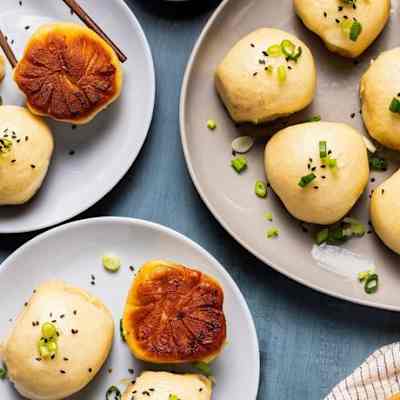
They arrive within minutes: a cluster of puffed, pan-fried buns, topped with sesame seeds and scallions and deeply bronzed on the bottom, cradling a piping-hot center of juicy pork and rich broth.
Sign up for the Cook's Insider newsletter
The latest recipes, tips, and tricks, plus behind-the-scenes stories from the Cook's Illustrated team.
They’re eaten for breakfast, as late night snacks, and for every meal in between, and once you’ve tried one, you’ll understand why—within one package, shengjian gives you the liquid flood of soup dumplings (xiao long bao); the golden, crusty bottom of potstickers (guotie); and the yeasted fluffiness of a steamed bun (baozi).
It’s Always Time for Shengjian
Many shengjian bao joints open early and close late; some are even open 24 hours a day. They are some of food writer Christopher St. Cavish’s favorite places for people-watching. “They draw a really big cross-section of the neighborhood,” he says. Spend a whole day eating shengjian bao (also known as “shengjian mantou” by locals), and you’d be joined first by elderly breakfast seekers, then by waves of office workers looking for a quick lunch, and finally by groups of lively clubgoers in search of a late-night snack.

Shanghai’s many shengjian bao restaurants each make the dumplings slightly differently.
Some wrappers are unleavened, while others are fluffy as bread. Some are bursting with liquid, while others are merely moist and served with soup on the side.
My recipe here is right in the middle: I like a tender, slightly puffed wrapper holding enough soup to be superjuicy without being too messy to eat.
While the process for making shengjian is involved, it’s straightforward. It starts with the most magical step—creating a soup that’s solid at room temperature (allowing you to fold it into a dumpling wrapper) and liquid once heated. I incorporate that soup into an aromatic pork filling studded with scallions and ginger and fold the filling into yeasted rounds of dough.
After a brief proof, all that’s left to do is steam and fry the dumplings, browning their bottoms, liquefying the soup inside, and expanding the pillowy wrappers.
Turn Soup into Gel

Shengjian bao pulls off an impressive culinary magic trick: The filling is solid when it’s nestled into the wrappers, but when the dumplings are cooked, a rush of flavorful soup emerges from the meat.
The key is gelatin: The soup for shengjian needs to be so gelatinous and concentrated that it’s solid when cold, enabling you to chop it into tiny pieces and encase it in the wrappers.
The soup is traditionally made by simmering pig skin or chicken scraps for hours to extract and concentrate the gelatin, a process that’s effective but time-consuming for a home cook. Instead, I took a helpful shortcut: an envelope of powdered gelatin and concentrated broth.
I hydrated some gelatin in a saucepan of water and added chopped scallion and ginger along with a small amount of bouillon concentrate (while a meaty undertone isn’t the objective of simmering the pork skin in the traditional method, it is a byproduct of it, and bouillon replicates that).
I simmered it all to infuse the soup with the flavors of the scallion and ginger and then strained it, reduced it, added ice to cool it down a bit, and poured it into a shallow layer in a chilled baking pan.
Because the gelatin was so concentrated and the layer was so thin, it set up to a bouncy texture in about 20 minutes, which was just enough time to make the wrapper dough and the filling. When it came time to add it to the filling, I simply mashed the solidified soup with a fork to break it into small pieces.
Make a Puffy Wrapper

The puff in a shengjian wrapper comes from yeast, which gives the dumplings their subtle yet distinctive bread-like flavor.
Making the dough was like making any other yeasted bread: Combine flour, yeast, a bit of sugar, and salt in a bowl; add water and a little oil; mix and knead until smooth and elastic.
The moisture balance had to be just right: too sticky, and the wrappers were tricky to roll and shape; too dry, and the dough wouldn’t stick to itself so the dumplings wouldn’t seal properly.
Take it from me: Weighing both the flour and the water prevents unnecessary frustration.
While yeast gives the wrapper the desired fluffiness and distinctive flavor, large air bubbles can end up as weak spots in the formed dumplings, so it’s best to let the dough proof for just a short time, long enough to make the filling, which I did in the same stand mixer bowl—no need to wash it.
Put Flavor (and Spring) into the Filling
Before flavoring the ground pork, I tossed it with a baking soda solution. It would keep the meat tender by raising the pH, changing the electrical charge in such a way that it would be more difficult for the proteins to bond tightly.
If you’ve had other Chinese pork dumplings, then the flavors in shengjian filling will be familiar to you: more ginger and scallions, pungent garlic, and nutty sesame oil, all girded by the umami of soy sauce.
Beating the pork mixture in a stand mixer caused its sticky proteins to link up into a strong network that trapped fat and moisture, ensuring that when it was cooked, it would be cohesive and slightly springy. As the final step, I mixed in the mashed, solidified soup, dispersing it throughout the pork.
Assemble the Dumplings

The wrappers on the best shengjian bao are evenly thick all around; rolling out each wrapper so that the edges were tapered meant that the pleated side of the dumpling would be about as thick as the browned side. I placed a portion of the filling in the center of a wrapper and, with a series of pinches and pleats, enclosed it. I pressed the top together and twisted it to seal before placing it pleated side down in a well-oiled skillet. I let the filled dumplings proof briefly while I tidied up.
- Pinch outer edge of dough together with your thumb and index finger and hold. Using other thumb and index finger, push edge of dough toward pinched portion to create first pleat.
- Pinch pleat to seal and continue pinching. Push dough toward pinched portion to begin forming second pleat.
- Repeat pinching and pleating motion, rotating dough with each pleat, until all of dough is pleated and dumpling has rounded shape.
- Pinch top of gathered dough edges together and twist to seal dumpling.
Steam and Fry

Cooks use a combination steam-sear method to cook shengjian bao, giving it its crusty bottom and fluffy top.
I placed the skillet over medium heat and when the dumplings started to sizzle and the bottoms were golden brown, I added some water and covered them with the lid.
As the water bubbled, air pockets in the wrappers expanded, and the tops of the dumplings slowly swelled until they touched each other. Inside, the meat cooked and the bits of gelled liquid melted and coalesced into a rich soup.
When the water had been absorbed, I removed the lid and let the dumpling bottoms crisp and brown in the remaining fat.
The Art of Eating Shengjian Bao

The interiors of shengjian bao remain hot for a surprisingly long time. That’s because yeast inflates thousands of tiny air pockets in the puffy wrapper. Like those in a Styrofoam cooler or a Baked Alaska’s meringue, these air pockets insulate well, keeping the filling hot for longer than if it was contained by a denser wrapper. It’s thus critical to eat the buns carefully, as outlined below.
- Holding bao with chopsticks, nibble, poke, or tear a small hole in the wrapper and let some of the heat dissipate.
- Sip soup from the dumpling or pour it into a spoon.
- If desired, drizzle a few drops of vinegar into the dumpling before eating.
Shengjian Bao (Shanghainese Pan-Fried Soup Dumplings)
Crisp, fluffy, and meaty, with savory soup inside, shengjian bao feature the best parts of Chinese soup dumplings, potstickers, and steamed buns combined.
Get the Recipe