Deep-Dish Quiche with Sausage, Broccoli Rabe, and Mozzarella
By America's Test KitchenPublished on February 24, 2011
Time
3¼ hours, plus 1½ hour chilling, 20 minutes freezing, and 2 hours cooling
Yield
Serves 8 to 10 (Makes one 9-inch quiche)

Ingredients
Pastry Dough
1 ¾ cups (8¾ ounces/248 grams) unbleached all-purpose flour, plus more for work surface½ teaspoon table salt 12 tablespoons unsalted butter (1 ½ sticks), cold, cut into ½-inch cubes and frozen 10 minutes3 tablespoons sour cream ¼-⅓ cup ice water 1 large egg white, lightly beatenCustard Filling
8 ounces (227 grams) hot or sweet Italian sausage, casings removed½ pound broccoli rabe, washed, trimmed, and cut into ½-inch pieces1 ½ tablespoons cornstarch 1 ½ cups whole milk 8 large eggs 1 large egg yolk 1 ½ cups heavy cream 1 teaspoon table salt ¼ teaspoon ground black pepper ⅛ teaspoon grated nutmeg ⅛ teaspoon cayenne pepper 6 ounces (170 grams) low-moisture whole-milk mozzarella cheese, shredded (about 1 ½ cups)Before You Begin
To prevent the crust from sagging during blind baking, make sure it overhangs the pan’s edge and use plenty of pie weights (about 3 to 4 cups). The cooled quiche can be served warm or at room temperature, or refrigerated for up to 3 days and reheated. To reheat the whole quiche, place it on a rimmed baking sheet on the middle rack of a 325-degree oven for 20 minutes. Reheat slices at 375 for 10 minutes.
Instructions
- Process flour and salt together in food processor until combined, about 3 seconds. Add butter and pulse until butter is size of large peas, about ten 1-second pulses.
- Mix sour cream and ¼ cup ice water in small bowl until combined. Add half sour cream mixture to flour mixture; pulse for three 1-second pulses. Repeat with remaining sour cream mixture. Pinch dough with fingers; if dough is floury, dry, and does not hold together, add 1 to 2 tablespoons ice water and process until dough forms large clumps and no dry flour remains, three to five 1-second pulses.
- Turn dough out onto work surface and flatten into 6-inch disk; cover disk in plastic wrap and refrigerate until firm but not hard, 1 to 2 hours, before rolling. (Dough can be refrigerated for up to 24 hours. Let thoroughly chilled dough stand at room temperature 15 minutes before rolling.)
- Cut two 16-inch lengths of foil. Arrange foil pieces in round 9 by 2-inch cake pan so they are perpendicular, pushing them into corners and up sides of pan; press overhang against outside of pan. Spray foil lightly with nonstick cooking spray.
- Roll out disk of dough on generously floured work surface to 15-inch circle (about ¼ inch thick). Roll dough loosely around rolling pin and unroll into cake pan. Working around circumference, ease dough into pan by gently lifting edge of dough with 1 hand while pressing into pan bottom with other. Trim any dough that extends more than 1 inch over edge of pan. Patch any cracks or holes with dough scraps as needed. Refrigerate any remaining dough scraps. Refrigerate dough-lined pan until firm, about 30 minutes, and then freeze for 20 minutes.
- Adjust oven rack to lower-middle position and heat oven to 375 degrees. Line dough with parchment or foil and fill completely with pie weights or dried beans, gently pressing weights into corners of shell. Bake on rimmed baking sheet until exposed edges of dough are beginning to brown but bottom is still light in color, 30 to 40 minutes. Carefully remove parchment and pie weights. If any new holes or cracks have formed in dough, patch with reserved scraps. Return shell to oven and bake until bottom is golden brown, 15 to 20 minutes longer. Remove shell from oven and brush interior with egg white. Set aside while preparing filling. Reduce oven temperature to 350 degrees.
- Cook sausage in 12-inch skillet over medium heat, stirring to break sausage into ½-inch pieces, until no longer pink, 5 to 7 minutes. Transfer to paper towel-lined plate and discard all but 2 tablespoons fat from skillet. Return skillet to medium heat, add rabe, and cook, stirring occasionally, until slightly softened, about 6 minutes. Transfer rabe to large plate lined with triple layer of paper towels. Gently press with double layer of paper towels to remove excess moisture.
- Place cornstarch in large bowl; add 3 tablespoons milk and whisk until cornstarch has dissolved. Whisk in remaining milk, eggs, yolk, cream, salt, pepper, nutmeg, and cayenne until smooth and homogeneous.
- Scatter sausage, rabe, and mozzarella evenly over crust. Gently pour custard mixture over filling. Using fork, push filling components down into custard and drag gently through custard to dislodge air bubbles. Gently tap pan on counter top to dislodge any remaining air bubbles.
- Bake until top of quiche is lightly browned, toothpick inserted into center comes out clean, and center registers 170 degrees on instant-read thermometer, 1 to 1 ¼ hours. Transfer to wire rack and let rest until cool to touch, about 2 hours.
- When ready to serve, use sharp paring knife to remove any crust that extends beyond edge of pan. Holding edges of foil, remove quiche from pan; gently slide thin-bladed spatula between quiche and foil to loosen, then slide quiche to serving plate. Cut into wedges and serve.
for the dough
for the custard


Time
3¼ hours, plus 1½ hour chilling, 20 minutes freezing, and 2 hours coolingYield
Serves 8 to 10 (Makes one 9-inch quiche)Ingredients
Pastry Dough
Custard Filling
Test Kitchen Techniques
Ingredients
Pastry Dough
Custard Filling
Test Kitchen Techniques
Ingredients
Pastry Dough
Custard Filling
Test Kitchen Techniques
Why This Recipe Works
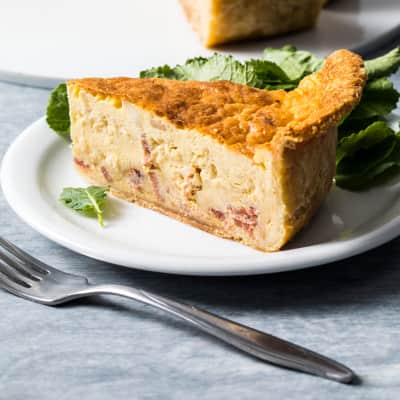
The success of our streamlined deep-dish quiche Lorraine recipe depended on the right ratio of eggs to liquid, plus gentle, even heat. To add the quiche’s fillings without affecting our perfect custard, we whisked a little cornstarch into the dairy component of our custard. This kept it glossy and rich and allowed us to bake our quiche Lorraine recipe longer, which firmed our custard. Finally, we found three ways to add insurance against leaks and tears in the crust of our quiche Lorraine.





10 Comments