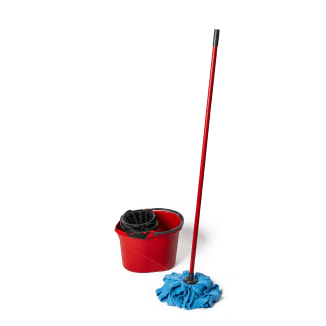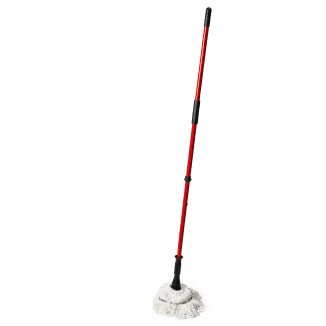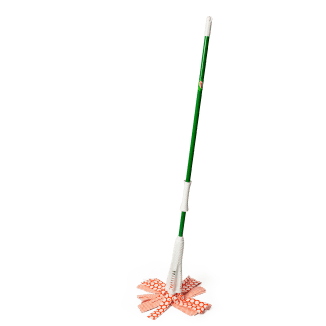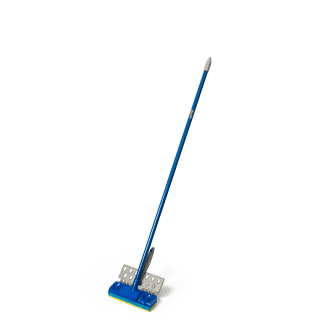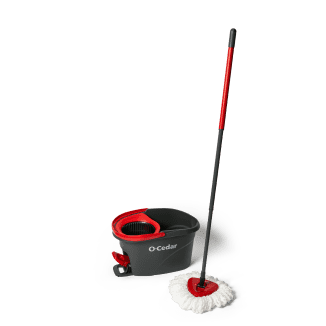
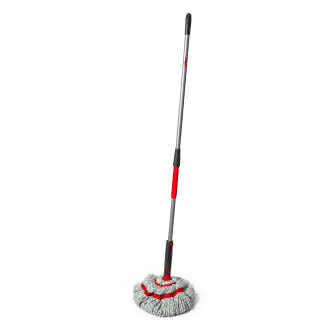
Whether you want to mop up a big spill, scrub a sticky stain, or just give your floors a routine cleaning, you need a wet mop that is easy to operate, absorbent, and durable. We tested several different types of mops—including some that came with buckets—and found a standout in the O-Cedar EasyWring Spin Mop & Bucket System. Our winning mop is easy to assemble and clean, impressively absorbent, and adept at tackling tough messes. Its accompanying bucket is also easy to use and wrings out water remarkably well. Additionally, we named a favorite stand-alone mop, the Rubbermaid Microfiber Twist Mop. It was particularly effective at scrubbing up tough stains, but its wringing mechanism was a bit strenuous to use.

Some mops are made more for spot cleaning, while many others are designed for tackling big messes and deep cleaning. For this review, we decided to stick to wet mops, which are marketed as effective for both light and heavy-duty jobs and are designed to not only clean stains but also absorb liquid spills (see “What about spray mops?” below). Most of the mop heads were made of wide strips of cloth or yarn-like string, but we also included two with sponge heads. We limited the lineup to models with mechanisms that wrung out water.
While some of the wringing mechanisms were attached to the mops themselves, several models came with special buckets that contained wringing mechanisms. Some of the bucket mechanisms spun like centrifuges; another compressed the mop head to squeeze out water. To activate these mechanisms, we either stepped on a foot pedal or pressed down on the mop after aligning it in the bucket’s centrifuge or basket.


Of the three different bucket styles we tested, we preferred the bucket that we activated using a foot pedal, which spun the mop, draining and wringing it all at once.
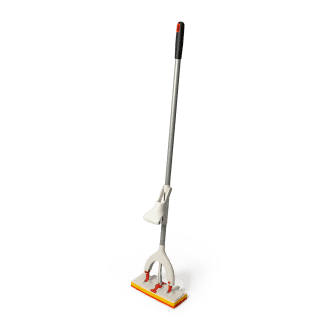
The wringing mechanisms on the handles of stand-alone mops worked in a few different ways. Some had ratcheting devices or plastic sleeves that we twisted to squeeze out water. When using the two mops with sponge heads, we pulled levers either to fold and squeeze the sponge or to fold a perforated plastic tab over the sponge, mashing it down.
What to Look For
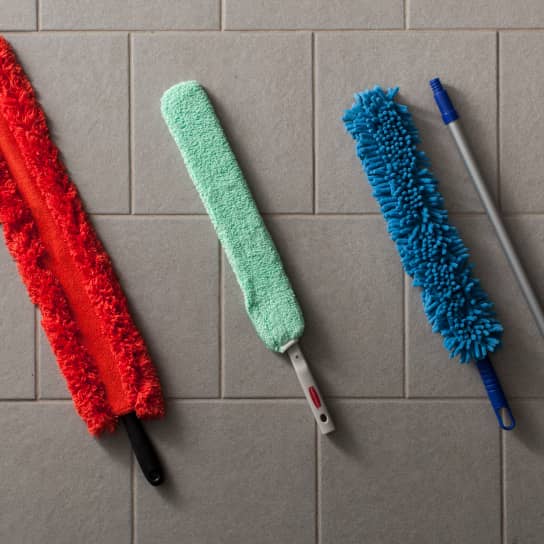
- Microfiber: Microfiber is a synthetic fabric made of millions of minuscule polyester and nylon fibers, and it’s the gold standard of cleaning materials. Microfiber mop heads consist of strips of cloth, yarn-like strings, or flat pads. The millions of tiny fibers in a microfiber mop head are essentially microscopic, so they cling to dirt, grime, and even bacteria in a way that other materials can’t and often don’t need detergents to get things squeaky clean. They’re also superabsorbent, holding on to substantial amounts of water and sopping up liquid spills with ease. One mop head contained no microfiber, and it was less absorbent than the others. Other mop heads contained at least some microfiber portions, and a few were made completely of microfiber—these performed best.


Microfiber is a superabsorbent material, and mops with heads made completely of microfiber (left) performed better than mop heads that contained only a bit of microfiber or none at all (right).
- Easy and Efficient Wringing Mechanisms: The best models had intuitive wringers that we mastered quickly and removed a lot of water easily. Some were so effective that the mop heads dried completely in 24 hours—compared with up to three days for some mops with less effective wringers. Our favorite wringers allowed us to customize how much water was left in the mop head, from fully saturated to barely damp.


We preferred wringing mechanisms that truly allowed us to apply intense pressure (left). Some, such as the wringing sleeve on the right, were just too feeble to get the job done.
- Easily Removable and Machine-Washable Mop Heads: A gross, dirty mop head is unavoidable at the end of a long cleaning session, and we preferred mop heads that were easy to detach. The best mops had heads that we could simply throw in the washing machine and then reuse.
- Long Handles: Think of a mop handle as an extension of your arms; it’s much easier to reach farther with a longer handle. Most important, long-handled mops kept us from hunching over. Even shorter testers preferred the models with long handles.

Our favorite mops had long handles, which helped us cover more ground at once without straining our backs and arms.
Nice to Have
- Wide, Flat Mop Heads: On most mop heads, the scrubbing pressure is concentrated directly below the handle. But a few models had broad, flat triangular or round mop heads that distributed pressure across a wider surface area, making for more efficient scrubbing.

Mops with wide, flat mop heads distributed force across a larger surface area, making them more efficient at scrubbing stains.
- Lightweight Construction: Lighter mops were easier on our backs and arms; heavy mops tired us out more quickly. This was especially noticeable between dipping the mops in their buckets and wringing them out. Heaviness isn’t a deal breaker—some of the heavier mops were also the best performers—but a lighter mop, such as our winner, is nice to have.

For our heavy-duty stain test, we smeared barbecue sauce, heavy cream, and peanut oil all over our lab floor; let it sit overnight; and used each mop to scrub a labeled square the next morning. The smell? Strong.
What to Avoid
- Sponge Mops: Sponge mops absorbed some liquid and scrubbed up a few particles, but they mostly just smeared messes around. They also had to be wrung out much more frequently than the other mops. One model’s sponge can’t be detached from the head, so it can’t be easily washed. Grime built up quickly even with our attempted washings of this model, making it a poor candidate for long-term use.
Mops with sponge heads took a longer time to scrub up stains and tended to just smear things around.
- Complicated or Ineffective Wringing Mechanisms: The wringers of some of the mops in our lineup were too complicated to quickly get the hang of. Others were simple but required strenuous twisting, which taxed our backs and arms. Some wringers also didn’t remove enough water, leaving their mop heads oversaturated. We preferred simple, effective wringers.
- Wringers That Get Your Hands Dirty: Need we say more? Some wringers positioned our hands too close to the action, covering them in dirty water and grime. No thank you.
- Assemble the mops
- Weigh the mops when the heads are dry, fully saturated, and wrung out to evaluate their absorbency and wringing efficiency
- Use the mops with water on a dry hardwood floor and under cabinets and appliances to assess their maneuverability and ease of use
- Track dirt and mud on a tile floor and use the mops to clean it up
- Spill coffee on a rubber tile floor and use the mops to clean it up
- Spread barbecue sauce, heavy cream, and peanut oil on a rubber tile floor; allow them to dry overnight; and use the mops with a cleaning solution to clean the stains the next day
- Let the mop heads dry completely, noting the time it takes and if the heads retain any odors
- Have multiple testers use the mops
- Wash the mop heads five times in a washing machine and dryer (where applicable) or by hand