America's Test Kitchen LogoCook's Country LogoCook's Illustrated LogoAmerica's Test Kitchen LogoCook's Country LogoCook's Illustrated Logo

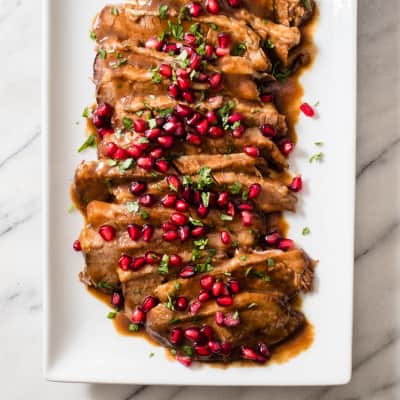
Braised Brisket with Red Wine and Thyme

By Andrew Janjigian

Published on September 22, 2017

Yield

Serves 6 to 8

Braised Brisket with Red Wine and Thyme

Ingredients

1 (4- to 5-pound) beef brisket, flat cut, fat trimmed to ¼ inchKosher salt and pepper 2 tablespoons vegetable oil 2 large onions, chopped¼ teaspoon baking soda 6 garlic cloves, minced4 anchovy fillets, rinsed, patted dry, and minced to paste1 tablespoon tomato paste ⅛ teaspoon cayenne pepper ¼ cup all-purpose flour 2 cups chicken broth 1 cup red wine 6 sprigs fresh thyme 3 bay leaves 2 tablespoons unflavored gelatin

Before You Begin

This recipe requires salting the brisket for at least 16 hours; if you have time, you can salt it for up to 48 hours. We recommend using a remote probe thermometer to monitor the temperature of the brisket. Serve with boiled or mashed potatoes or buttered noodles.

Instructions

  1. Place brisket, fat side down, on cutting board and cut in half lengthwise with grain. Using paring knife or metal skewer, poke each roast 20 times, pushing all the way through roast. Flip roasts and repeat on second side.
  2. Sprinkle each roast evenly on all sides with 2 1/2 teaspoons salt (5 teaspoons salt total). Wrap each roast in plastic wrap and refrigerate for at least 16 hours or up to 48 hours.
  3. Adjust oven rack to middle position and heat oven to 325 degrees. Heat oil in large roasting pan over medium heat until shimmering. Add onions and baking soda and cook, stirring frequently, until onions have started to soften and break down, 4 to 5 minutes. Add garlic and cook until fragrant, about 30 seconds. Stir in anchovies, tomato paste, cayenne, and 1/2 teaspoon pepper. Add flour and cook, stirring constantly, until onions are evenly coated and flour begins to stick to pan, about 2 minutes. Stir in broth, wine, thyme sprigs, and bay leaves, scraping up any browned bits. Stir in gelatin. Increase heat to medium-high and bring to boil.
  4. Unwrap roasts and place in pan. Cover pan tightly with aluminum foil, transfer to oven, and cook until meat registers 180 to 185 degrees at center, about 1½ hours. Reduce oven temperature to 250 degrees and continue to cook until fork slips easily in and out of meat, 2 to 2 1/2 hours longer. Transfer roasts to baking sheet and wrap sheet tightly in foil.
  5. Strain braising liquid through fine-mesh strainer set over large bowl, pressing on solids to extract as much liquid as possible; discard solids. Let liquid settle for 10 minutes. Using wide, shallow spoon, skim fat from surface and discard. Wipe roasting pan clean with paper towels and return defatted liquid to pan.
  6. Increase oven temperature to 400 degrees. Return pan to oven and cook, stirring occasionally, until liquid is reduced by about one-third, 30 to 40 minutes. Remove pan from oven and use wooden spoon to draw liquid up sides of pan and scrape browned bits around edges of pan into liquid.
  7. to make ahead

  8. Transfer roasts to carving board and slice against grain 1/4 inch thick; transfer to wide serving platter. Season sauce with salt and pepper and pour over brisket. Tent platter with foil and let stand for 5 to 10 minutes to warm brisket through. Follow recipe through step 6 and let sauce and brisket cool completely. Cover and refrigerate sauce and roasts separately for up to 2 days. To serve, slice each roast against grain 1/4 inch thick and transfer to 13 by 9-inch baking dish. Heat sauce in small saucepan over medium heat until just simmering. Pour sauce over brisket, cover dish with aluminum foil, and cook in 325-degree oven until meat is heated through, about 20 minutes.
Braised Brisket with Red Wine and Thyme
Styling by Marie Piraino.

Braised Brisket with Red Wine and Thyme

Save

Yield

Serves 6 to 8

Ingredients

1 (4- to 5-pound) beef brisket, flat cut, fat trimmed to ¼ inch
Kosher salt and pepper
2 tablespoons vegetable oil
2 large onions, chopped
¼ teaspoon baking soda
6 garlic cloves, minced
4 anchovy fillets, rinsed, patted dry, and minced to paste
1 tablespoon tomato paste
⅛ teaspoon cayenne pepper
¼ cup all-purpose flour
2 cups chicken broth
1 cup red wine
6 sprigs fresh thyme
3 bay leaves
2 tablespoons unflavored gelatin

Ingredients

1 (4- to 5-pound) beef brisket, flat cut, fat trimmed to ¼ inch
Kosher salt and pepper
2 tablespoons vegetable oil
2 large onions, chopped
¼ teaspoon baking soda
6 garlic cloves, minced
4 anchovy fillets, rinsed, patted dry, and minced to paste
1 tablespoon tomato paste
⅛ teaspoon cayenne pepper
¼ cup all-purpose flour
2 cups chicken broth
1 cup red wine
6 sprigs fresh thyme
3 bay leaves
2 tablespoons unflavored gelatin

Ingredients

1 (4- to 5-pound) beef brisket, flat cut, fat trimmed to ¼ inch
Kosher salt and pepper
2 tablespoons vegetable oil
2 large onions, chopped
¼ teaspoon baking soda
6 garlic cloves, minced
4 anchovy fillets, rinsed, patted dry, and minced to paste
1 tablespoon tomato paste
⅛ teaspoon cayenne pepper
¼ cup all-purpose flour
2 cups chicken broth
1 cup red wine
6 sprigs fresh thyme
3 bay leaves
2 tablespoons unflavored gelatin

Why This Recipe Works

For braised brisket that would be both tender and moist, we started by salting the meat (halved lengthwise for quicker cooking and easier slicing and poked all over with a paring knife to allow the salt to penetrate) and letting it sit for at least 16 hours, which helped it retain moisture as it cooked; the salt also seasoned it. From there, we brought the meat to 180 degrees—the sweet spot for the collagen breakdown that is necessary for the meat to turn tender—relatively quickly in a 325-degree oven and then lowered the oven temperature to 250 degrees so that the brisket finished cooking gently and retained as much moisture as possible. Instead of searing the meat (a messy, unwieldy step), we removed it and then reduced the braising liquid (chicken broth, red wine, lots of onions and garlic, anchovies, tomato paste, herbs, and spices) in the pan to achieve rich flavor. Reducing the sauce also built body, which we enhanced with flour and gelatin for a velvety consistency.

Before You Begin

This recipe requires salting the brisket for at least 16 hours; if you have time, you can salt it for up to 48 hours. We recommend using a remote probe thermometer to monitor the temperature of the brisket. Serve with boiled or mashed potatoes or buttered noodles.

Instructions

  1. Place brisket, fat side down, on cutting board and cut in half lengthwise with grain. Using paring knife or metal skewer, poke each roast 20 times, pushing all the way through roast. Flip roasts and repeat on second side.
  2. Sprinkle each roast evenly on all sides with 2 1/2 teaspoons salt (5 teaspoons salt total). Wrap each roast in plastic wrap and refrigerate for at least 16 hours or up to 48 hours.
  3. Adjust oven rack to middle position and heat oven to 325 degrees. Heat oil in large roasting pan over medium heat until shimmering. Add onions and baking soda and cook, stirring frequently, until onions have started to soften and break down, 4 to 5 minutes. Add garlic and cook until fragrant, about 30 seconds. Stir in anchovies, tomato paste, cayenne, and 1/2 teaspoon pepper. Add flour and cook, stirring constantly, until onions are evenly coated and flour begins to stick to pan, about 2 minutes. Stir in broth, wine, thyme sprigs, and bay leaves, scraping up any browned bits. Stir in gelatin. Increase heat to medium-high and bring to boil.
  4. Unwrap roasts and place in pan. Cover pan tightly with aluminum foil, transfer to oven, and cook until meat registers 180 to 185 degrees at center, about 1½ hours. Reduce oven temperature to 250 degrees and continue to cook until fork slips easily in and out of meat, 2 to 2 1/2 hours longer. Transfer roasts to baking sheet and wrap sheet tightly in foil.
  5. Strain braising liquid through fine-mesh strainer set over large bowl, pressing on solids to extract as much liquid as possible; discard solids. Let liquid settle for 10 minutes. Using wide, shallow spoon, skim fat from surface and discard. Wipe roasting pan clean with paper towels and return defatted liquid to pan.
  6. Increase oven temperature to 400 degrees. Return pan to oven and cook, stirring occasionally, until liquid is reduced by about one-third, 30 to 40 minutes. Remove pan from oven and use wooden spoon to draw liquid up sides of pan and scrape browned bits around edges of pan into liquid.
  7. to make ahead

  8. Transfer roasts to carving board and slice against grain 1/4 inch thick; transfer to wide serving platter. Season sauce with salt and pepper and pour over brisket. Tent platter with foil and let stand for 5 to 10 minutes to warm brisket through. Follow recipe through step 6 and let sauce and brisket cool completely. Cover and refrigerate sauce and roasts separately for up to 2 days. To serve, slice each roast against grain 1/4 inch thick and transfer to 13 by 9-inch baking dish. Heat sauce in small saucepan over medium heat until just simmering. Pour sauce over brisket, cover dish with aluminum foil, and cook in 325-degree oven until meat is heated through, about 20 minutes.

Gift This Recipe

Enjoyed this dish? Let others know by sharing it as a gift recipe.

Keep Exploring

This is a members' feature.