Kuku Sabzi for a Crowd
By Annie PetitoPublished on January 30, 2025
Time
1½ hours
Yield
Serves 8

Ingredients
Before You Begin
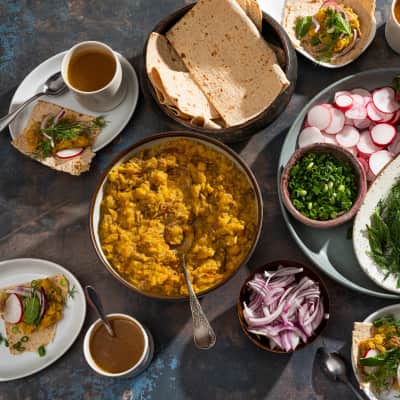
You should use only the tender stems and leaves of the herbs; buy 8 ounces each of parsley and cilantro and 4 ounces of dill so that you have enough once the tough stems are removed. We recommend measuring the prepped herbs by weight to ensure the proper ratio of greens to eggs; washing and drying the herbs a day before using; and chopping them by hand with a sharp knife, which produces a lighter, drier texture. If using a food processor, pulse the herbs in batches to avoid overprocessing. If using an electric stovetop, preheat a second burner to medium heat and use that to cook the kuku in step 3. Kuku is typically served as part of a larger meal with white fish and rice. You can also serve it as a light meal with flatbread and a mix of crunchy and tangy condiments, such as middle eastern pickles, sliced tomatoes, or with thick yogurt.
Instructions
- Combine leek, parsley, cilantro, romaine, dill, and garlic in large bowl. Whisk eggs, salt, and pepper in medium bowl until well combined and no streaks of white remain. Add eggs to leek mixture and stir until evenly moistened and mixture is cohesive (it will be very thick).
- Heat 3 tablespoons oil in 10-inch nonstick skillet over medium-high heat. When oil shimmers, add small amount of mixture to skillet. When it sizzles, quickly add remaining mixture (if there’s any liquid at bottom of bowl, stir it back into leek mixture before adding to skillet) and spread into even layer, smoothing top with spatula.
- Reduce heat to medium; cover; and cook until top is set (it should give a little and leave a slight indent when gently pressed) and bottom and sides are deeply browned, 18 to 22 minutes, rotating skillet every 4 to 5 minutes for even browning and adjusting heat as necessary to ensure kuku isn’t getting too dark (oil around edges of skillet should be gently but actively sizzling).
- Uncover. Using silicone spatula, loosen kuku from skillet, gently shaking back and forth until kuku moves around freely from sides. Off heat, invert plate over skillet. Using pot holders, swiftly and carefully invert kuku onto plate.
- Add remaining 1 tablespoon oil to skillet and slide kuku, browned side up, back into skillet. Tuck edges of kuku into skillet with silicone spatula. Return skillet to medium heat and continue to cook, uncovered, until bottom is browned, about 10 minutes longer.
- Invert plate over skillet and, using pot holders, invert kuku onto plate. Slide kuku onto cutting board or serving plate and let stand for at least 5 minutes before slicing and serving. Kuku can be served hot, warm, at room temperature, or cold.

Time
1½ hoursYield
Serves 8Ingredients
Test Kitchen Techniques
Ingredients
Test Kitchen Techniques
Ingredients
Test Kitchen Techniques
Why This Recipe Works
Kuku sabzi, the savory Persian herb cake that’s integral to Nowruz celebrations and also enjoyed year-round, requires a precise ratio of finely chopped greens to egg (there should be just enough to bind up the greens) to be uniformly verdant and cohesive, so we measured the greens by weight. We also finely chopped them by hand so that the texture of the cake was light and moist, not damp or dense. Cooking the batter in an oil-slicked skillet over gentle heat encouraged even browning without burning and also made the cake easy to slide out of the skillet and invert. Covering the kuku during cooking enveloped the cake with steam so that the interior cooked evenly. After inverting the cake, we cooked it uncovered until the second side was browned.
Want more? Read the whole story



13 Comments