America's Test Kitchen LogoCook's Country LogoCook's Illustrated LogoAmerica's Test Kitchen LogoCook's Country LogoCook's Illustrated Logo

Bibimbap 비빔밥 (Mixed Rice)

By Sarah Ahn & Nam Soon Ahn

Published on March 28, 2025

Time

1¼ hours

Yield

Serves 4
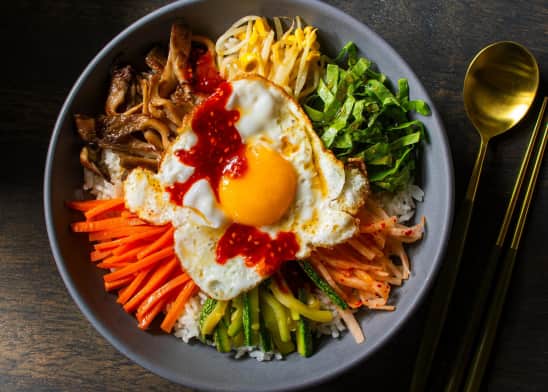
Bibimbap 비빔밥 (Mixed Rice)

Ingredients

Yangnyeom Gochujang (Seasoned Gochujang)

7 tablespoons (154 grams) gochujang 5 tablespoons maesil cheong (plum extract syrup)1 tablespoon sesame seeds, toasted and coarsely ground1½ teaspoons minced garlic

Bibimbap

5 ounces (142 grams) Korean radish, cut into 3‑inch matchsticks4 teaspoons sugar, divided1 teaspoon distilled white vinegar ½ teaspoon gochugaru 1½ teaspoons fine salt, divided6 ounces (170 grams) oyster mushrooms, trimmed6 ounces (170 grams) soybean sprouts 7½ tablespoons neutral cooking oil, divided2 large carrots (200 grams), peeled and cut into 3‑inch matchsticks1 aehobak (Korean summer squash; 227 grams), trimmed and cut into 3‑inch matchsticks, ¼ inch thick4 large eggs 4 cups (740 grams) cooked short- or medium-grain white rice 1½ cups (57 grams) shredded romaine lettuce 2 tablespoons toasted sesame oil, plus extra for serving (optional)

Before You Begin

If you can’t find the aehobak, you can substitute grey squash or zucchini. This is a very versatile dish, so don’t feel limited by what’s listed in this recipe. Feel free to use other cooked vegetables such as matchstick bell peppers, thinly sliced onions, and blanched spinach. Ground beef is also another common protein added to bibimbap. You can also substitute other mushrooms for the oyster mushrooms. The size and thickness of the ingredients are crucial for achieving the harmony in bibimbap, so pay attention to your knife work.

Instructions

    for yangnyeom gochujang

  1. In medium bowl, stir together 7 tablespoons gochujang, 5 tablespoons maesil cheong, 1 tablespoon sesame seeds that have been toasted and coarsely ground, and 1½ teaspoons minced garlic. Set aside. (Refrigerate for up to 4 days.)
  2. for bibimbap

  3. In small bowl, combine 5 ounces Korean radish cut into 3‑inch matchsticks, 1 teaspoon sugar, 1 teaspoon distilled white vinegar, ½ teaspoon gochugaru, and ¼ teaspoon fine salt. Set aside.
  4. Using your hands, pull 6 ounces trimmed oyster mushrooms lengthwise into ½-inch-thick strands. Add mushrooms to 14-inch flat-bottomed wok or 12-inch nonstick skillet, cover, and cook over medium heat until mushrooms release their liquid, about 10 minutes.
  5. Stir mushrooms and continue to cook, covered, until they are fully softened, about 2 minutes. Drain mushrooms, transfer to separate bowl, and set aside to cool.
  6. Add 6 ounces soybean sprouts and ⅓ cup of water to now-empty wok. Cover and cook over medium-high heat until sprouts begin to wilt and turn translucent, about 3 minutes. Stir sprouts and continue to cook, covered, until sprouts are fully softened, about 2 minutes.
  7. Drain sprouts, then return them to wok along with 1½ teaspoons neutral cooking oil, ½ teaspoon sugar, and ¼ teaspoon salt. Cook over medium-high heat, tossing constantly, until sprouts are evenly coated. Mound sprouts on large platter; set aside.
  8. Heat 1 tablespoon neutral oil in now-empty wok over medium-high heat until shimmering. Add 2 large carrots, peeled and cut into 3-inch matchsticks, and cook, tossing constantly, until softened and evenly coated, about 1 minute. Stir in 1 teaspoon sugar and ½ teaspoon salt and continue to cook until carrots are crisp-tender but not browned, about 2 minutes. Arrange carrots in separate mound on platter with sprouts; set aside.
  9. Heat 1 tablespoon neutral oil in now-empty wok over medium-high heat until shimmering. Add 1 aehobak, trimmed and cut into 3-inch matchsticks ¼ inch thick. Cook, tossing constantly, until softened and evenly coated, about 1 minute. Stir in 1 teaspoon sugar and ¼ teaspoon salt and continue to cook until aehobak is crisp-tender but not browned, 1 to 2 minutes. Arrange aehobak in separate mound on platter with vegetables; set aside.
  10. Working in batches, squeeze mushrooms by hand to remove excess water. (Do not over-squeeze; mushrooms should still be slightly moist.) 
  11. Heat 1 tablespoon neutral oil in now-empty wok over medium-high heat until shimmering. Add mushrooms and toss to coat in oil. Add remaining ½ teaspoon sugar and remaining ¼ teaspoon salt and cook, tossing constantly, until heated through but not browned, about 15 seconds. Arrange mushrooms in separate mound on platter with vegetables; set aside.
  12. Heat remaining ¼ cup neutral oil in now-empty wok over medium-high heat until just smoking. Working quickly, carefully crack 1 egg into wok and use silicone spatula to pull egg whites toward yolk to create an even circle. Repeat with second egg, making sure two eggs do not touch. Cook until eggs are crisp around edges and bottom and whites just around perimeter of yolks are beginning to set, about 1 minute.
  13. Using spoon, baste each egg twice with hot oil. (This will produce a runny yolk; continue to baste as desired to create a more set yolk.) Using spatula, transfer eggs to plate. Repeat with remaining 2 eggs and oil left in wok.
  14. Using moistened rice paddle or silicone spatula, gently fluff 4 cups (740 grams) cooked short- or medium-grain white rice. Divide rice among 4 individual serving bowls.
  15. Arrange seasoned radish, stir-fried vegetables, and 1½ cups (57 grams) shredded romaine lettuce attractively on top of rice. Dollop rounded tablespoon of yangnyeom gochujang in center of each bowl, top each bowl with fried egg, and drizzle each with 1½ teaspoons sesame oil. Serve, passing remaining yangnyeom gochujang and extra sesame oil, if using, separately.
Bibimbap 비빔밥 (Mixed Rice)
Styling by Chantal Lambeth.

Bibimbap 비빔밥 (Mixed Rice)

Save

Time

1¼ hours

Yield

Serves 4

Ingredients

Yangnyeom Gochujang (Seasoned Gochujang)

7 tablespoons (154 grams) gochujang
5 tablespoons maesil cheong (plum extract syrup)
1 tablespoon sesame seeds, toasted and coarsely ground
1½ teaspoons minced garlic

Bibimbap

5 ounces (142 grams) Korean radish, cut into 3‑inch matchsticks
4 teaspoons sugar, divided
1 teaspoon distilled white vinegar
½ teaspoon gochugaru
1½ teaspoons fine salt, divided
6 ounces (170 grams) oyster mushrooms, trimmed
6 ounces (170 grams) soybean sprouts
7½ tablespoons neutral cooking oil, divided
2 large carrots (200 grams), peeled and cut into 3‑inch matchsticks
1 aehobak (Korean summer squash; 227 grams), trimmed and cut into 3‑inch matchsticks, ¼ inch thick
4 large eggs
4 cups (740 grams) cooked short- or medium-grain white rice
1½ cups (57 grams) shredded romaine lettuce
2 tablespoons toasted sesame oil, plus extra for serving (optional)

Ingredients

Yangnyeom Gochujang (Seasoned Gochujang)

7 tablespoons (154 grams) gochujang
5 tablespoons maesil cheong (plum extract syrup)
1 tablespoon sesame seeds, toasted and coarsely ground
1½ teaspoons minced garlic

Bibimbap

5 ounces (142 grams) Korean radish, cut into 3‑inch matchsticks
4 teaspoons sugar, divided
1 teaspoon distilled white vinegar
½ teaspoon gochugaru
1½ teaspoons fine salt, divided
6 ounces (170 grams) oyster mushrooms, trimmed
6 ounces (170 grams) soybean sprouts
7½ tablespoons neutral cooking oil, divided
2 large carrots (200 grams), peeled and cut into 3‑inch matchsticks
1 aehobak (Korean summer squash; 227 grams), trimmed and cut into 3‑inch matchsticks, ¼ inch thick
4 large eggs
4 cups (740 grams) cooked short- or medium-grain white rice
1½ cups (57 grams) shredded romaine lettuce
2 tablespoons toasted sesame oil, plus extra for serving (optional)

Ingredients

Yangnyeom Gochujang (Seasoned Gochujang)

7 tablespoons (154 grams) gochujang
5 tablespoons maesil cheong (plum extract syrup)
1 tablespoon sesame seeds, toasted and coarsely ground
1½ teaspoons minced garlic

Bibimbap

5 ounces (142 grams) Korean radish, cut into 3‑inch matchsticks
4 teaspoons sugar, divided
1 teaspoon distilled white vinegar
½ teaspoon gochugaru
1½ teaspoons fine salt, divided
6 ounces (170 grams) oyster mushrooms, trimmed
6 ounces (170 grams) soybean sprouts
7½ tablespoons neutral cooking oil, divided
2 large carrots (200 grams), peeled and cut into 3‑inch matchsticks
1 aehobak (Korean summer squash; 227 grams), trimmed and cut into 3‑inch matchsticks, ¼ inch thick
4 large eggs
4 cups (740 grams) cooked short- or medium-grain white rice
1½ cups (57 grams) shredded romaine lettuce
2 tablespoons toasted sesame oil, plus extra for serving (optional)

Why This Recipe Works

Bibimbap is a savory, sweet, and all-around nutritious meal that’s supremely satisfying, and it can be a great way to use up leftover ingredients. The ingredients in bibimbap should be enjoyed in harmony, with no particular ingredient standing out. To achieve this, Nam Soon takes the time to season ingredients individually, which is more of an effort but results in a better, more balanced dish. This approach allows the unique flavors and textures of each ingredient to shine, ensuring that the final dish is cohesive and flavorful. The fried egg makes a great addition because its contrasting crispy texture complements the tender vegetables well; the method in this recipe ensures crispy edges and creamy yolks.

Before You Begin

If you can’t find the aehobak, you can substitute grey squash or zucchini. This is a very versatile dish, so don’t feel limited by what’s listed in this recipe. Feel free to use other cooked vegetables such as matchstick bell peppers, thinly sliced onions, and blanched spinach. Ground beef is also another common protein added to bibimbap. You can also substitute other mushrooms for the oyster mushrooms. The size and thickness of the ingredients are crucial for achieving the harmony in bibimbap, so pay attention to your knife work.

Instructions

    for yangnyeom gochujang

  1. In medium bowl, stir together 7 tablespoons gochujang, 5 tablespoons maesil cheong, 1 tablespoon sesame seeds that have been toasted and coarsely ground, and 1½ teaspoons minced garlic. Set aside. (Refrigerate for up to 4 days.)
  2. for bibimbap

  3. In small bowl, combine 5 ounces Korean radish cut into 3‑inch matchsticks, 1 teaspoon sugar, 1 teaspoon distilled white vinegar, ½ teaspoon gochugaru, and ¼ teaspoon fine salt. Set aside.
  4. Using your hands, pull 6 ounces trimmed oyster mushrooms lengthwise into ½-inch-thick strands. Add mushrooms to 14-inch flat-bottomed wok or 12-inch nonstick skillet, cover, and cook over medium heat until mushrooms release their liquid, about 10 minutes.
  5. Stir mushrooms and continue to cook, covered, until they are fully softened, about 2 minutes. Drain mushrooms, transfer to separate bowl, and set aside to cool.
  6. Add 6 ounces soybean sprouts and ⅓ cup of water to now-empty wok. Cover and cook over medium-high heat until sprouts begin to wilt and turn translucent, about 3 minutes. Stir sprouts and continue to cook, covered, until sprouts are fully softened, about 2 minutes.
  7. Drain sprouts, then return them to wok along with 1½ teaspoons neutral cooking oil, ½ teaspoon sugar, and ¼ teaspoon salt. Cook over medium-high heat, tossing constantly, until sprouts are evenly coated. Mound sprouts on large platter; set aside.
  8. Heat 1 tablespoon neutral oil in now-empty wok over medium-high heat until shimmering. Add 2 large carrots, peeled and cut into 3-inch matchsticks, and cook, tossing constantly, until softened and evenly coated, about 1 minute. Stir in 1 teaspoon sugar and ½ teaspoon salt and continue to cook until carrots are crisp-tender but not browned, about 2 minutes. Arrange carrots in separate mound on platter with sprouts; set aside.
  9. Heat 1 tablespoon neutral oil in now-empty wok over medium-high heat until shimmering. Add 1 aehobak, trimmed and cut into 3-inch matchsticks ¼ inch thick. Cook, tossing constantly, until softened and evenly coated, about 1 minute. Stir in 1 teaspoon sugar and ¼ teaspoon salt and continue to cook until aehobak is crisp-tender but not browned, 1 to 2 minutes. Arrange aehobak in separate mound on platter with vegetables; set aside.
  10. Working in batches, squeeze mushrooms by hand to remove excess water. (Do not over-squeeze; mushrooms should still be slightly moist.) 
  11. Heat 1 tablespoon neutral oil in now-empty wok over medium-high heat until shimmering. Add mushrooms and toss to coat in oil. Add remaining ½ teaspoon sugar and remaining ¼ teaspoon salt and cook, tossing constantly, until heated through but not browned, about 15 seconds. Arrange mushrooms in separate mound on platter with vegetables; set aside.
  12. Heat remaining ¼ cup neutral oil in now-empty wok over medium-high heat until just smoking. Working quickly, carefully crack 1 egg into wok and use silicone spatula to pull egg whites toward yolk to create an even circle. Repeat with second egg, making sure two eggs do not touch. Cook until eggs are crisp around edges and bottom and whites just around perimeter of yolks are beginning to set, about 1 minute.
  13. Using spoon, baste each egg twice with hot oil. (This will produce a runny yolk; continue to baste as desired to create a more set yolk.) Using spatula, transfer eggs to plate. Repeat with remaining 2 eggs and oil left in wok.
  14. Using moistened rice paddle or silicone spatula, gently fluff 4 cups (740 grams) cooked short- or medium-grain white rice. Divide rice among 4 individual serving bowls.
  15. Arrange seasoned radish, stir-fried vegetables, and 1½ cups (57 grams) shredded romaine lettuce attractively on top of rice. Dollop rounded tablespoon of yangnyeom gochujang in center of each bowl, top each bowl with fried egg, and drizzle each with 1½ teaspoons sesame oil. Serve, passing remaining yangnyeom gochujang and extra sesame oil, if using, separately.

Gift This Recipe

Enjoyed this dish? Let others know by sharing it as a gift recipe.

This is a members' feature.