Pork Belly Okonomiyaki (Japanese Cabbage Pancake)
By David YuPublished on June 9, 2025
Time
1 hour
Yield
Serves 4
Ingredients
Okonomiyaki Sauce
2 tablespoons ketchup 1 tablespoon Worcestershire sauce 1 tablespoon soy sauce 1 tablespoon sugarOkonomiyaki
¾ cup boiling water ¾ teaspoon instant dashi powder, such as Hondashi1 cup (5 ounces) all-purpose flour 2 large eggs 3 tablespoons finely grated yamaimo or potato starch¾ teaspoon table salt 2½ cups chopped green cabbage (½-inch pieces)6 ounces thinly sliced pork belly, cut into 1‑inch pieces2 scallions, sliced thin2 tablespoons beni shoga, drained, plus extra for serving1 tablespoon vegetable oil Kewpie mayonnaise Bonito flakes AonoriBefore You Begin
This recipe uses several ingredients that can be found in a Japanese or Chinese market. Japanese mountain yams labeled yamaimo or nagaimo can both be used here (nagaimo is a specific type of yamaimo). When peeling and grating, use disposable kitchen gloves, as the yam’s peel may cause mild skin irritation when handled raw. Thinly sliced uncured pork belly can often be found in the freezer section of the grocery store. Beni shoga is red pickled ginger marinated in plum vinegar. Aonori (powdered green laver), katsuobushi (smoked bonito flakes), and Kewpie mayonnaise are common accompaniments to okonomiyaki; include all or some of these toppings as desired. Okonomiyaki is typically served whole on a communal platter; provide a pie server to help separate portions.
Instructions
- Combine 2 tablespoons ketchup, 1 tablespoon soy sauce, 1 tablespoon Worcestershire, and 1 tablespoon sugar in bowl; set aside for serving.
- Combine ¾ cup boiling water and ¾ teaspoon instant dashi powder in small bowl; let cool slightly. Whisk dashi, 1 cup all-purpose flour, 2 large eggs, 3 tablesoons finely grated yamaimo, and ¾ teaspoon table salt in large bowl until combined. Gently fold in 2½ cups chopped green cabbage (½-inch pieces); 6 ounces thinly sliced pork belly, cut into 1-inch pieces; 2 thinly sliced scallions; and 2 tablespoons beni shoga, drained, until just combined.
- Heat 12‑inch cast-iron skillet over medium heat for 3 minutes. Reduce heat to medium-low. Add 1 tablespoon vegetable oil to skillet, swirling to coat bottom, and heat until shimmering. Add cabbage mixture and spread into even 10‑inch round, about 1 inch thick. Cover and cook until okonomiyaki is lightly golden on bottom, 10 to 12 minutes, rotating skillet halfway through cooking and adjusting heat if bottom begins to brown too quickly.
- Slide okonomiyaki onto large plate, then invert onto second large plate. Slide okonomiyaki back into skillet browned side up and cook, uncovered, until golden brown on bottom, about 10 minutes, rotating skillet halfway through cooking and adjusting heat if bottom begins to brown too quickly.
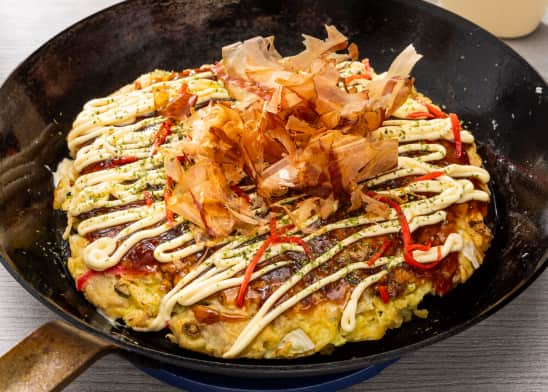
- Off heat, spread sauce evenly over top of okonomiyaki. Drizzle generously with Kewpie mayonnaise, sprinkle with bonito flakes and aonori, and top with extra beni shoga. Serve.
for the okonomiyaki sauce
for the okonomiyaki


Time
1 hourYield
Serves 4Ingredients
Ingredients
Ingredients
Why This Recipe Works
Okonomiyaki is a savory filled pancake popularized in Japan as an inexpensive yet filling dish beginning in the early 1900s, when earthquakes and war left many in Japan with a short supply of food. It has evolved to become a common Japanese street food as well as a staple in Japanese home kitchens with many delectable variations, and it is easy to re-create in an American kitchen. It almost always features flour, eggs, cabbage, and pork for the griddled base, but the translation of okonomiyaki, “grilled as you’d like,” means that it can certainly change based on personal taste and availability of ingredients. Our recipe aims to represent the popular Osaka-style okonomiyaki, in which ingredients are mixed into the batter, as opposed to Hiroshima-style, in which the ingredients and batter are cooked in distinct layers. Traditionally prepared on a teppan, a Japanese iron griddle, okonomiyaki lends itself perfectly to cooking in a traditional cast-iron skillet, which we preheat so that it is superhot when we add the batter. A defining characteristic of okonomiyaki is its soft yet slightly custardy interior texture, which it gets from adding grated yamaimo, Japanese mountain yam; as you grate the yam, it forms a viscous, slippery paste to mix into the batter to provide creaminess. Delicious as it is, the pancake is only complete with the traditional toppings: Homemade okonomiyaki sauce provides tanginess and sweetness, a drizzle of Kewpie mayo adds a savory richness, and katsuobushi (smoked bonito flakes) and aonori (dried and powdered green seaweed) bring umami and slight saltiness to the okonomiyaki.



12 Comments