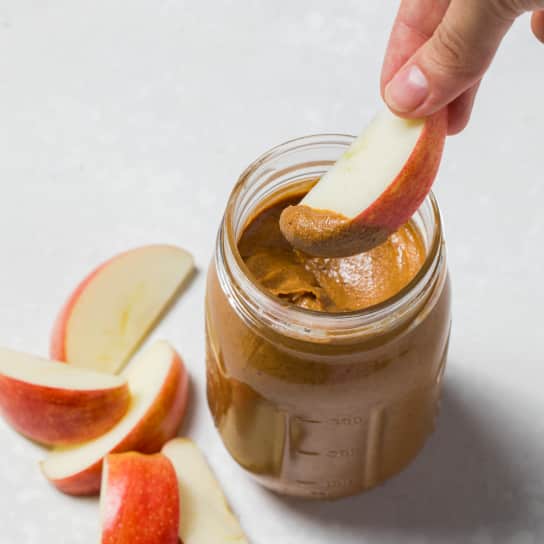

We love almond butter for its slightly sweet, mild flavor that can add nutty richness to smoothies, oatmeal, or sauces or serve as a tasty topping on toast or a piece of fruit. It’s also a great peanut butter alternative for those with peanut allergies.


Almond butter adds nutty richness as a topping for toast and yogurt.
Trends in almond butter are changing. About a decade ago, supermarkets had limited options; all of the best-selling almond butters were creamy and contained added oil to keep them from separating. Today, the options are much more varied. We selected a large lineup to taste: nine creamy (sometimes called smooth) and six crunchy (sometimes called chunky) almond butters. We included almond butters that contain nothing but almonds as well as those with added salt, sugar, and/or oil.
How Is Almond Butter Made?
For food safety reasons, all almonds (for almond butter or otherwise) sold in North America are required to be pasteurized, even if the product is advertised as “raw.” While there is some raw almond butter on the market, we chose to focus on almond butters made with roasted almonds because we like the extra nuttiness that roasting provides. Most are “dry roasted” (roasted without additional fat). Sometimes, the almonds are blanched to remove their skins before roasting, which makes the butter smoother. Then, they are ground into a paste. This can be done using large stones, similar to those used to make stone-ground flour, or a large machine that resembles a burr grinder. Next, depending on the desired flavor and texture, salt, sugar, or palm oil may be added. To make crunchy almond butter, manufacturers stir in chopped roasted almonds as a final step.

Air-Fryer Roasted Fruit and Almond Butter Toast
Why make toast in an air fryer? Because turning on that one appliance quickly gives you not only toasty bread but also melted almond or peanut butter and roasted fruit all in a single step.
Get the RecipeTasting Almond Butter
Some other commercial nut butters, such as peanut butter, use hydrogenated oils, which are chemically altered to be solid at room temperature and prevent the nut butter from separating into solids and oil. However, none of the almond butters in our lineup contained hydrogenated oil. (In more than a decade of reviewing almond butters, we’ve only encountered one that contained hydrogenated oil, and it has been discontinued.) Instead, the almond butters that contained added oil all used palm oil, a common neutral vegetable oil made from the fruit of oil palm trees. It’s naturally semisolid at room temperature and acts as a stabilizer to create a very homogenous, smooth product that doesn’t require any stirring to reincorporate the oil before eating. The products without palm oil did require significant stirring to reach a uniform consistency. Even after they were stirred, they were more runny and loose than the products that contained palm oil.

Almond butter is marketed as “creamy” or “crunchy,” but most are a little coarse and gritty due to their use of unblanched (skin-on) almonds. The one creamy product made with blanched almonds was perfectly smooth and homogeneous, similar to classic smooth peanut butter.
We found our tasters to be in two camps. Some wanted an almond butter that was fairly smooth and thick, thanks to its use of palm oil. In this group, tasters preferred products with added sugar and salt. Almonds are naturally sweet—even the products without added sugar had a hint of sweetness and most contained 1 to 2 grams of sugar per 2-tablespoon serving. An almond “gets sweeter as it ripens, so harvest time matters,” explained Paul Adams, our senior science research editor, but we weren’t able to deduce when the almonds in each product were harvested. Some tasters especially enjoyed products with a bit of additional sugar; these had up to 3 grams of total sugar per serving.

Others felt strongly about finding a product that felt rustic, with visible flecks of almond skin and coarse bits, even in almond butters classified as “smooth.” Our tasters also gave the highest overall ratings to products that contained added salt; our winners had 65 to 100 milligrams of sodium per serving, which added flavor and highlighted the natural sweetness of the almonds.

Which Almond Butter Should I Buy?
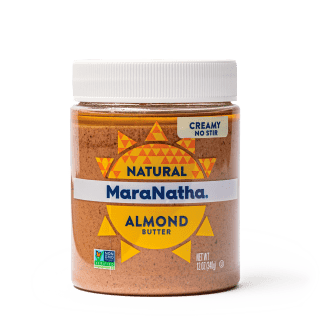
If you want an almond butter that doesn’t require any stirring before eating, we have winners in both creamy and crunchy: MaraNatha No Stir Creamy Almond Butter and MaraNatha No Stir Crunchy Almond Butter. Both of these products were made with unblanched roasted almonds and contained sugar, palm oil, and salt. This gave them a boost of flavor without being overly sweet, and we enjoyed that they had a uniform texture without feeling overly processed.
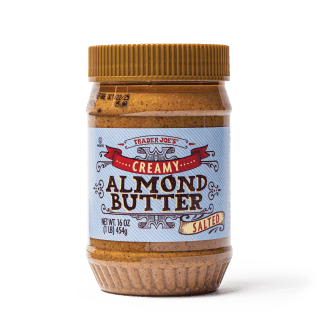
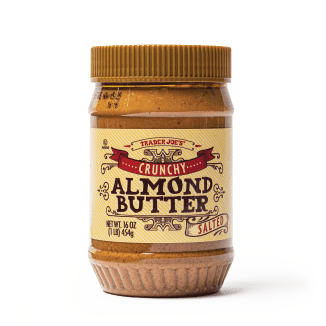
For fans of oil-free almond butter that does require stirring, our winners are Trader Joe’s Salted Creamy Almond Butter and Trader Joe’s Salted Crunchy Almond Butter. Their ingredients were just roasted almonds and salt. Tasters gave them high marks for their balanced salty, toasted almond flavor and enjoyed the coarse texture.
- Taste plain
- Samples were randomized and assigned three-digit codes to prevent bias
- Nutritional information was standardized for a 2-tablespoon serving
- Pleasant, nutty-sweet almond flavor
- Contains salt
 Buy at Target
 Buy at Costco