
America's Test Kitchen LogoCook's Country LogoCook's Illustrated Logo

Reviews You Can Trust.
See Why.

All About Vegan Cheese

We explored the burgeoning world of vegan cheese, specifically vegan shredded mozzarella and cheddar, to find out just what’s in these mysterious shreds.

Headshot of Grace KellyHeadshot of Camila Chaparro
By Grace Kelly & Camila Chaparro

Published on June 23, 2022

What You Need To Know

The history of vegan cheese arguably starts with the production of fermented tofu in China and Japan. The method used to make fermented tofu—the coagulating and fermenting and aging of soy milk—is similar to the process used to make vegan cheese. 

Some of the first plant-based cheeses that replicated Western-style milk-based varieties were made by Chinese food scientist Li Yu-ying, who brought his knowledge of tofu and soybean biology to France in the early 1900s. There, he made plant-based versions of many classic dairy cheeses, including Gruyère, Roquefort, and Camembert, and hosted extravagant meals showcasing soy cheese, vegetarian ham, soy preserves, and even soy bread. 

Around the same time, vegan cheese was also popular in the United States among Seventh-day Adventists, many of whom follow a plant-based diet. But it wasn’t until the 1980s that vegan cheese became more widely available across the country.

Vegan Cheese Today

Since then, great strides have been made in plant-based food technology, and vegan cheese is no exception: According to Grand View Research, the vegan cheese market is expected to grow 12.6 percent by 2030. At the grocery store, you can find vegan versions of many cheeses, including Parmesan, cream cheese, shredded cheddar and mozzarella, and Swiss (to top your plant-based burger, naturally). In some stores, you’ll also find artisanal cheese-plate vegan cheeses.

More artisanal, cheese plate–style vegan cheese brands have emerged recently, including rinded Bries; blue cheeses; and creamy, spreadable versions similar to a farmer's cheese. In our review of these products, we found a few intriguing options. We also found out how the new vegan Boursin cheese stacks up to the original

Shredded cheese is the most popular form, according to data from IRI, a Chicago-based data analytics and market research company. Between February 2021 and February 2022, vegan shreds sales generated $56.4 million and vegan slices came in second at $53.2 million, followed by vegan cream cheese at $27.4 million and all other kinds at $3.6 million.

With growing consumer interest in plant-based products and an expanding vegan cheese arena, we wanted to learn more, including what’s in vegan cheese, how it’s made, what different options taste like, and how to cook with them for maximum deliciousness. After researching the market, we decided to limit our lineup to the most popular form, shredded cheese. We cooked and ate our way through a variety of vegan shredded mozzarellas and cheddars, finding a bunch of great (and some not-so-great) products along the way.

A vegan cheddar gets its day in the sun in a recipe for a grilled cheese sandwich with caramelized onion and apple, developed for our book Vegan for Everyone.

Why Is Dairy-Based Cheese Hard to Replicate?

Structurally speaking, dairy cheese is fat, water, and protein. Even with simple ingredients, it’s quite miraculous: It’s both solid and melty. Plus, it has a unique umami, fatty-but-tangy flavor that changes depending on how it’s aged and fermented. Animal milk contains a unique, naturally occurring protein called casein that helps give cheese its stretch. Simply put, casein holds the other components of cheese (mainly fat and water) together, so when the cheese melts, it won’t split. Younger cheeses, such as mozzarella, often have a looser casein construction, meaning that they melt well and get a strong, oozy cheese pull. 

Then there’s taste. While there’s a great diversity of flavors in the cheese world, most are tangy. One source of dairy cheese’s tang is the bacteria added during the cheese-making process. The bacteria convert the natural sugars in milk to lactic acid, which gives cheese its tangy taste. 

Both stretchy melting and cheesy tang are difficult to replicate, but vegan cheesemakers have a few tricks up their sleeves.

Anatomy of Vegan Cheese

Vegan cheeses are made with a variety of ingredients that attempt to replicate the taste and texture of milk-based cheese, but decoding the label can be tricky. Here, we break it down.

How Vegan Cheese Gets Its Stretch

Because there is no plant-based equivalent of casein, manufacturers turn to other ingredients, namely starch, to replicate the meltability and texture of dairy cheese. Starch helps vegan cheese melt smoothly without splitting. Three common kinds are potato, tapioca, and cornstarch. You’ll also sometimes find other ingredients such as xanthan gum and konjac (a gum derived from a starchy tuber) in vegan cheese, both of which help keep ingredients emulsified and lend more strength and stretch to the cheese. 

Fat is another component that helps vegan cheese melt well. Coconut oil was the dominant fat in most of the cheeses we liked, likely due to its rich flavor, firm texture when cool, and unctuousness when melted. Some brands also use liquid oils, such as canola or safflower, which likely aid in melting.

We were impressed that some of the vegan cheeses (right) were melty and gooey enough to do a delicious-looking cheese pull in the same way that dairy cheeses (left) do. 

How Does Vegan Cheese Get Its Flavor?

Dairy cheese gets flavor from fermentation, aging, and its main ingredient: milk. Conversely, many of the vegan cheeses we tasted don’t use a plant-based milk, such as soy or oat, as a base, and their ingredient lists don’t reveal much about how they achieve their cheesy flavor. One manufacturer told us their mozzarella flavor comes from “a fermented base of sugar, salt, starch, vegan cultured dairy flavors, and buttery mozzarella flavors.” While “flavor” or “flavorings” on a product label is a broad term, food scientist David Julian McClements explained that the flavor of a specific vegan cheese is often “produced from plant-based ingredients by controlled chemical reactions, heating, or fermentation.” Some vegan cheeses also turn to protein (usually derived from legumes or nuts) to add flavor and heft, while also enabling them to brown when cooked. However, this comes at a cost: Of the cheeses we tasted, those that contained plant protein were often more prone to being slightly stiffer and chewy when melted.

Cooking with Vegan Cheese

Given the challenges manufacturers face when replicating dairy cheese, we weren’t sure what to expect with their vegan offerings. We compared six different shredded vegan cheddars and mozzarellas from five different brands, tasting them raw and cooked in grilled cheese sandwiches, quesadillas, and béchamel sauce. We also baked them all in an oven on a rimmed baking sheet, covered and uncovered, to see how the shreds melted. 

Some of the cheeses kept their shredded shape when melted (right). This was more prevalent in products that contained a base protein, such as legumes, and not so much in those that relied mainly on starch and fat for substance.

When melted, most of the vegan shreds closely replicated the classic stretchy texture of melted cow’s-milk cheddar and mozzarella. However, some held their shredded shape when melted. This result was generally more prevalent in products that contained a base protein, such as legumes, and not so much in products that mainly relied on starch and fat for substance. 

Flavorwise, some of our favorite shreds were mild and tasted like a generic boxed mac and cheese or Velveeta. In fact, the cheddar and mozzarella were basically interchangeable, so you can just buy one and use it in multiple applications. In contrast, our least favorite cheeses had off-tasting and “sour” flavors, perhaps due to an unsuccessful attempt at replicating the tang of dairy cheese. 

The vegan mozzarellas and cheddars we tried tasted essentially the same; the color was the only difference. Here's one of the vegan mozzarellas in our recipe for Philly-Style Broccoli Rabe, Portobello, and Cheese Sandwiches.

How to Cook with Vegan Cheese

After cooking extensively with a variety of shredded vegan cheeses, here is our advice for getting the best results from vegan cheese.

read more

Overall, our favorite cheeses got somewhat close to replicating the melty stretch and mild but tangy taste of dairy cheese, and our top four cheeses (two cheddars and two mozzarellas) were versatile and had a mild, cheesy taste.
FAQs

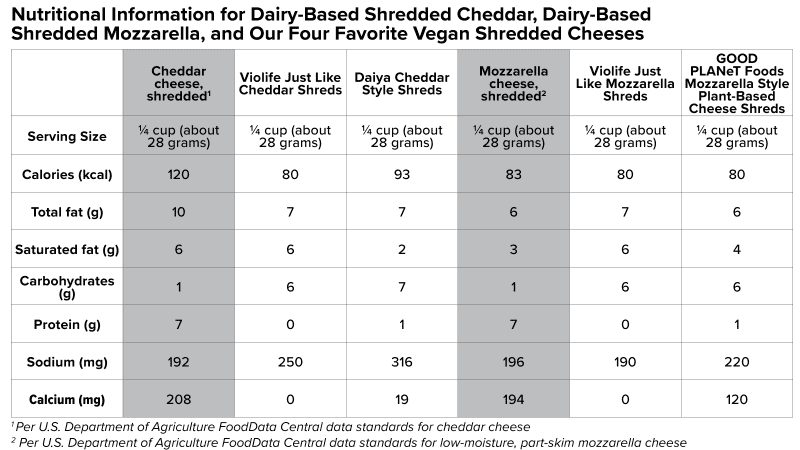
Vegan and dairy cheese shreds are fairly similar in terms of calories per serving as well as total fat (see the chart below). Where vegan and dairy cheese shreds tend to differ nutritionally is in the amount of protein, carbohydrates, calcium, and sodium they contain. Some vegan cheese shreds contain protein and others do not. In most cases, vegan cheeses do not contain calcium or vitamin B12 unless it has been added as a fortificant (Violife adds vitamin B12 to their products; GOOD PLANeT adds calcium). The vegan cheese shreds we examined also tended to be higher in sodium, though there is significant variation by brand. As with any food, if intake of any of these nutrients is of concern to your health, be sure to read nutrition labels carefully.

In general, vegan cheese has a long shelf life (from about four to about six months) when stored unopened in the refrigerator, which prevents the fats from going rancid and mold from forming. Manufacturers generally advise against freezing because it affects the cheese’s texture when melted; the same is true for dairy cheese. Once the bag is opened, manufacturers recommend consuming the cheese within one week.

Yes. There is an ever-growing variety of plant-based cheeses on the market, including types designed more for a cheese plate than a grilled cheese. For more information, check out our reviews of cheese-plate vegan cheese and dairy-free Boursin cheese.

If you have food allergies, you are likely already reading nutrition labels closely. We advise continuing the practice when purchasing plant-based cheeses since some brands are nut- or soy-based. All of the shreds we tested contained coconut oil but no nut- or soy-based ingredients.

We’ve found that certain ingredients can help add cheesy flavors—think miso, nutritional yeast, and mushrooms for a blast of umami, or a hit of vinegar or mustard for a fermented, cheese-like tang.

Everything We Tested

Recommended - Cheddar

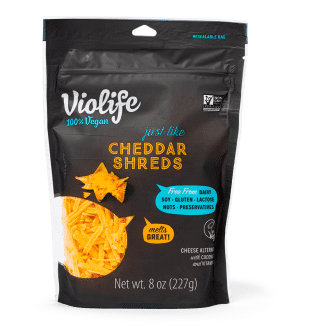
Violife Just Like Cheddar Shreds

We liked these shreds for their “gooey, smooth, well-melted” texture in a quesadilla and “slightly nutty” flavor that some thought was “reminiscent of American cheese.”

Ingredients: Filtered Water, Coconut Oil, Food Starch-Modified (Potato & Corn), Corn Starch, Salt (Sea Salt), Cheddar Flavor (Vegan Sources), Olive Extract, Paprika Extract & Beta Carotene (Color), Vitamin B12, Powdered Cellulose Added to Prevent Caking

Price at Time of Testing: $5.49 for 8-oz bag ($0.69 per oz)

We liked these shreds for their “gooey, smooth, well-melted” texture in a quesadilla and “slightly nutty” flavor that some thought was “reminiscent of American cheese.”

Ingredients: Filtered Water, Coconut Oil, Food Starch-Modified (Potato & Corn), Corn Starch, Salt (Sea Salt), Cheddar Flavor (Vegan Sources), Olive Extract, Paprika Extract & Beta Carotene (Color), Vitamin B12, Powdered Cellulose Added to Prevent Caking

Price at Time of Testing: $5.49 for 8-oz bag ($0.69 per oz)

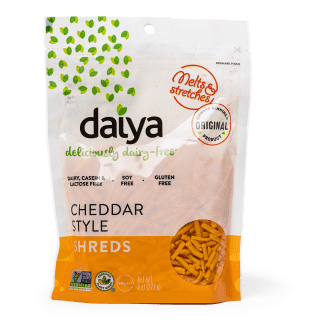
Daiya Cheddar Style Shreds

Tasters noted this cheese’s more “assertive” “cheesy” flavor that had a touch of “sourness.” Melted, the shreds were “firm” and “chewy” and had “more of a pull than an ooze,” likely from the use of pea protein.

Ingredients: Filtered Water, Tapioca Starch, Expeller Pressed: Canola and/or Safflower Oil, Coconut Oil, Inactive Yeast, Pea Protein, Vegan Natural Flavors, Salt, Xanthan Gum, Lactic Acid (Vegan), Yeast Extract, Titanium Dioxide Color, Annatto Color

Price at Time of Testing: $5.49 for 8-oz bag ($0.69 per oz)

Tasters noted this cheese’s more “assertive” “cheesy” flavor that had a touch of “sourness.” Melted, the shreds were “firm” and “chewy” and had “more of a pull than an ooze,” likely from the use of pea protein.

Ingredients: Filtered Water, Tapioca Starch, Expeller Pressed: Canola and/or Safflower Oil, Coconut Oil, Inactive Yeast, Pea Protein, Vegan Natural Flavors, Salt, Xanthan Gum, Lactic Acid (Vegan), Yeast Extract, Titanium Dioxide Color, Annatto Color

Price at Time of Testing: $5.49 for 8-oz bag ($0.69 per oz)

Recommended - Mozzarella

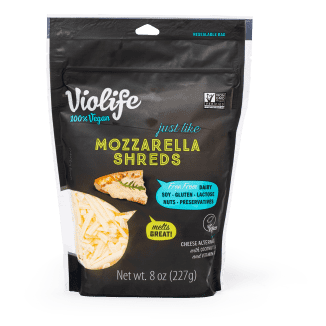
Violife Just Like Mozzarella Shreds

Some tasters noted complex, almost aged flavors akin to “blue cheese” or “washed-rind goat cheese” with “a little funk.” They also noted a “supercreamy” melted texture that was “gooey in a good way.”

Ingredients: Filtered Water, Coconut Oil, Food Starch-Modified (Potato & Corn), Corn Starch, Salt (Sea Salt), Mozzarella Flavor (Vegan Sources), Olive Extract, Beta Carotene (Color), Vitamin B12, Powdered Cellulose Added to Prevent Caking.

Price at Time of Testing: $5.99 for 8-oz bag ($0.75 per oz)

Some tasters noted complex, almost aged flavors akin to “blue cheese” or “washed-rind goat cheese” with “a little funk.” They also noted a “supercreamy” melted texture that was “gooey in a good way.”

Ingredients: Filtered Water, Coconut Oil, Food Starch-Modified (Potato & Corn), Corn Starch, Salt (Sea Salt), Mozzarella Flavor (Vegan Sources), Olive Extract, Beta Carotene (Color), Vitamin B12, Powdered Cellulose Added to Prevent Caking.

Price at Time of Testing: $5.99 for 8-oz bag ($0.75 per oz)

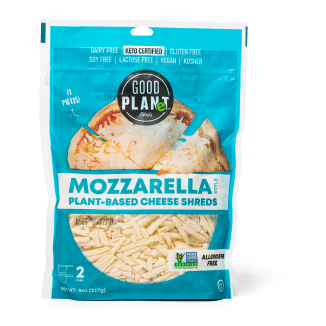
GOOD PLANeT Foods Mozzarella Style Plant-Based Cheese Shreds

We liked this cheese’s “mild, cream-like” flavor, which was “saltier, with more acidity” than other samples. When melted, this cheese had a “creamy, smooth,” and “almost chewy” texture.

Ingredients: Filtered Water, Coconut Oil, Food Starch (Potato And Tapioca), Sunflower Oil, Natural Flavors (Vegan Sources), Chickpea Protein, Calcium Citrate, Sea Salt, Konjac, Xanthan Gum, Annatto and Turmeric Extracts (Color), Powdered Cellulose Added to Prevent Caking

Price at Time of Testing: $5.99 for 8-oz bag ($0.75 per oz)

We liked this cheese’s “mild, cream-like” flavor, which was “saltier, with more acidity” than other samples. When melted, this cheese had a “creamy, smooth,” and “almost chewy” texture.

Ingredients: Filtered Water, Coconut Oil, Food Starch (Potato And Tapioca), Sunflower Oil, Natural Flavors (Vegan Sources), Chickpea Protein, Calcium Citrate, Sea Salt, Konjac, Xanthan Gum, Annatto and Turmeric Extracts (Color), Powdered Cellulose Added to Prevent Caking

Price at Time of Testing: $5.99 for 8-oz bag ($0.75 per oz)

Reviews You Can Trust

The mission of America’s Test Kitchen Reviews is to find the best equipment and ingredients for the home cook through rigorous, hands-on testing. Have a question or suggestion? Send us an email at atkreviews@americastestkitchen.com. We appreciate your feedback!

The Expert

Author: Camila Chaparro

Camila Chaparro

Senior Editor, Books

Camila is a senior editor on ATK's books team. She's cooked in restaurants and taught recreational cooking classes.

Camila Chaparro is a senior editor on ATK's books team. An avid home cook for years, she traded in a PhD and a career in international nutrition research to pursue cooking professionally. After graduating from the Cambridge School of Culinary Arts, she worked in Boston-area restaurants and taught recreational cooking classes before landing at ATK. Her favorite thing about working on the books team (other than her amazing colleagues) is getting to delve into a new topic every few months and get her hands dirty in the kitchen.

*All products reviewed by America’s Test Kitchen are independently chosen, researched, and reviewed by our editors. We buy products for testing at retail locations and do not accept unsolicited samples for testing. We list suggested sources for recommended products as a convenience to our readers but do not endorse specific retailers. When you choose to purchase our editorial recommendations from the links we provide, we may earn an affiliate commission. Prices are subject to change.

Reviews You Can Trust.
See Why.

This is a members' feature.
America's Test Kitchen LogoCook's Country LogoCook's Illustrated Logo