America's Test Kitchen LogoCook's Country LogoCook's Illustrated Logo

Reviews You Can Trust.
See Why.

A Guide to Yogurt Around the World

Yogurt is a prized dairy product in countries spanning from South Asia to North America. We set out to learn more about how it’s made and used around the globe.

Headshot of Sarah Sandler
By Sarah Sandler

Published on February 1, 2024

What You Need To Know

Similar to other fermented foods such as vinegar or fish sauce, yogurt likely came about as a happy accident. The prevailing theory is that when fresh milk was being stored or transported, often in animal skins, wild bacteria transformed it into the thicker, tart substance we now recognize as yogurt. While yogurt’s exact origin remains unclear, we know the food dates back to at least 6000 BCE thanks to mentions of its health properties in Indian Ayurvedic texts. The word “yogurt” may have originated from the Turkish word yoğurmak,” which means to “thicken or curdle.” 

Prior to the mid-20th century, yogurt was made at home in some immigrant communities, but it was a rarity on American supermarket shelves. In 1904, Russian microbiologist Ilya Mechnikov (or Elie Metchnikoff) of the Pasteur Institute in Paris shared a theory that “lactic acid bacteria in the gut could help prolong life by combating toxic bacteria,” writes Janet Fletcher in her book Yogurt (2015). This inspired Isaac Carasso, a Greek entrepreneur living in Spain, to make and sell yogurt. His son, Daniel, eventually took over the business, and when he immigrated to the United States in 1941, he brought his business with him, eventually calling it Dannon. Dannon is now one of the largest yogurt manufacturers in the world.

Today, the variety of yogurt available in American supermarkets is awe-inspiring. Between thickness, fat level, flavor, milk type, and more, there are many factors to consider—and nearly every country in which yogurt is a staple has its own distinct take.
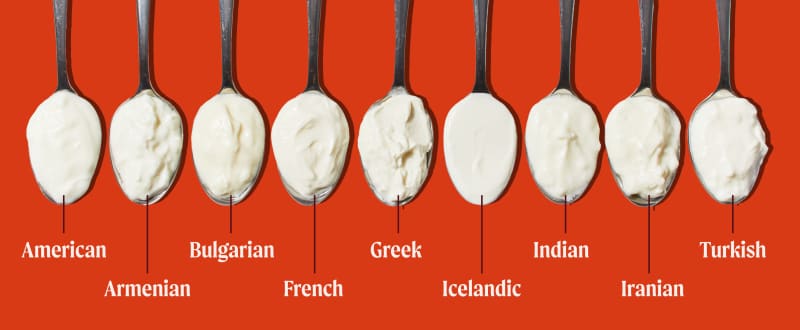
While all of the yogurts we tasted are whole-milk, plain varieties with nearly identical ingredient lists, they varied widely in texture, flavor, and appearance, even within the same country’s style.

To learn more about this cherished cultured dairy product, we tasted 18 options from nine countries (the widest range we could find in the Boston area) in the most basic style: plain whole milk. The yogurts’ flavors ran the gamut from incredibly acidic to mildly tart, and their textures ranged from thin and pourable to thick and luscious. We interviewed chefs, cookbook authors, and yogurt makers to learn everything we could about this fascinating food.

Yogurt Around the World

In most regions outside of the United States, yogurt is used as an ingredient in savory dishes or added as a condiment to any meal throughout the day.

At Sofreh, a Persian restaurant in Brooklyn, New York, chef/owner and author of Sofreh (2023) Nasim Alikhani said it was initially difficult to get her American customers to see yogurt as anything other than a sweet breakfast component. “At home, we always set the table with a bowl of yogurt,” Alikhani said. After attempting to get guests to dip into a side dish of homemade yogurt, Alikhani eventually began adding generous dollops to dishes, coaxing diners to recognize how yogurt can augment many meals, such as a steaming bowl of fragrant lamb meatballs.

In Bulgarian cuisine, yogurt is used in soups, sauces, and savory drinks. It’s an ingredient in tarator, a cold yogurt-cucumber soup, and snezhanka, a salad of yogurt, cucumbers, walnuts, and dill.

While yogurt is sometimes thought of as a sweet breakfast component, it also shines as a garnish, such as on braised eggplant or as an ingredient in a savory soup like tanabour.

In Armenian cuisine, yogurt is used as a condiment and in dishes such as the yogurt-barley soup tanabour, where it contributes tartness and silkiness.

Yogurt is also a star in Greece, of course. It’s used in the iconic tzatziki and as a garnish on grilled meats and vegetables. At breakfast, it’s often enjoyed drizzled with honey. 

In Iceland, skyr is sometimes made with rennet and categorized as cheese. The American brands of skyr we tried were more similar to yogurt, made with only milk and active cultures. Skyr can be eaten with fruit for breakfast or used to make sauces or marinate meat.

In çılbır, rich, creamy yogurt provides a cooling contrast to a runny poached egg and spicy melted butter.

In Turkish cuisine, yogurt is the main attraction in çılbır, a dish in which a bed of yogurt is garnished with delicate runny poached eggs and finished with a drizzle of pul biber–spiked melted butter. Yogurt is also mixed with water, salt, and sometimes mint in a beverage called “ayran.”

Indian yogurt (also called “dahi”) “is considered cooling,” said Kaumudi Marathé, author of The Essential Marathi Cookbook (2009) and senior books editor at America’s Test Kitchen. Dahi is essential to raita, the yogurt-vegetable side dish. “We also use yogurt to make marinades for meat, as well as some sauces,” such as kadhi (a yogurt sauce thickened with chickpea flour), said Marathé.

How Yogurt Is Made

No matter where it’s made or enjoyed, all plain yogurt starts with the same ingredients: milk and/or cream and bacterial cultures. Commercial yogurt makers are required to pasteurize the milk to kill bad bacteria. This means heating the milk to specific temperatures for certain amounts of time. The milk is then cooled, since temperatures that are too high can kill the good bacteria necessary to create yogurt. The milk is warmed again to around 115 degrees Fahrenheit, and a culture, or bacteria, is introduced to convert the milk to yogurt, impacting both the flavor and texture.

With homemade yogurt, the starter culture is often a small portion of already-made yogurt (store-bought or homemade). Larger producers use manufactured cultures in powder form. In the United States, for a product to be defined as yogurt by the Food and Drug Administration, the cultures used must include Streptococcus thermophilus and Lactobacillus bulgaricus. Other species of cultures can be added but are secondary in importance. 

Article

Ask Paul: What Is the Difference Between Yogurt and Kefir?

Is there really a difference between two different styles of fermented milk? And what about water kefir?

Learn More

Next, the milk-culture mixture is kept at a warm temperature for anywhere from a few hours to a few days. At The White Moustache in the Red Hook neighborhood of Brooklyn, New York, they even wrap their vats of yogurt in mylar blankets to keep them warm, said Homa Dashtaki, owner of The White Moustache and author of Yogurt & Whey (2023). During this time, the bacteria convert lactose (the sugar naturally present in milk) to lactic acid, making the yogurt tart and thickening it by coagulating some of the proteins. 

Some large yogurt producers also add dry milk solids for extra thickness and creaminess. Because these products are technically milk without any other ingredients added, they don’t have to be listed differently on labels, but sometimes they appear as “milk protein concentrate” or “nonfat milk solids.” These are similar powdered substances, but milk protein concentrates are higher in protein and lower in lactose than nonfat milk solids. 

At this point, many styles of plain yogurt are packaged and ready to eat, while others are strained to make them thicker.

At home, we always set the table with a bowl of yogurt.

—Nasim Alikhani, owner of Sofreh, a Persian restaurant in Brooklyn, New York, chef/owner and author of Sofreh (2023)

A Look at Texture

In our tasting, we found that whether a yogurt was strained or unstrained was a key differentiator when it came to texture. Greek yogurt and Icelandic skyr are strained before packaging, removing the liquid-y whey (you can learn more about whey, a solution of noncasein dairy proteins in water, in our FAQ below). This makes them much thicker. Traditionally, straining was done with cheesecloth and gravity over a long period of time. Now, larger yogurt producers can spin out the whey using a centrifuge or drain it using a special filter. When yogurt is strained, the milk solids are concentrated and protein levels increase. We tasted a Greek yogurt with 16 grams of protein per serving and an Icelandic yogurt that had 18 grams—the most in our lineup and more than double that of the unstrained varieties. 

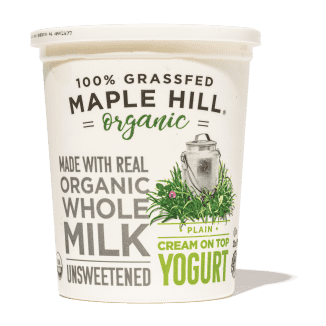
The other yogurts we tasted were unstrained and therefore more loose and liquid-y. The American whole-milk plain yogurt from Maple Hill, for example, had a very runny, pourable consistency. Bulgarian yogurts were also notably thin. 

Depending on whether it is strained, yogurt can be liquidy (left) or thick and luscious (right).

Sometimes yogurt producers add pectin for additional thickening, giving body to the yogurt without any straining. The Armenian-style yogurt we tasted from Karoun had a medium-thick texture, and the Turkish-style yogurt from Merve was thick and velvety. Both listed pectin in their ingredients.

The Flavor Landscape

The yogurts we tasted ranged from mild and milky, like Indian dahi, to notably tangy and sharp, like one Iranian product. 

Some manufacturers develop yogurts to be quite tart, choosing cultures that will result in higher acidity levels. In our lineup, the Bulgarian yogurts were the most acidic, with pH levels of less than 4 (the lower the pH, the higher the acidity). Given the high acidity of these yogurts and their low sugar content (the lowest in our lineup), it was no surprise that our tasters found the Bulgarian yogurts to be by far the most tart.

We tested the pH of each yogurt, and unsurprisingly, the Bulgarian yogurts that our tasters found had the most tart flavor were also the most acidic.

Other varieties, such as Indian, French, and American, tended to be sweeter. One of the Indian yogurts had the most sugar per serving in our lineup, due to its use of nonfat milk solids, which are high in lactose.

Although none of the yogurts we tasted contained added sugar, some had naturally higher sugar contents due to the milk’s lactose. Thicker strained varieties, such as Greek yogurt (right), also had much higher protein content.

Richness was another area where the yogurts varied. We focused on whole-milk yogurts (as opposed to low-fat or nonfat), selecting those from 3 to 5 percent fat where possible. Some products contained cream in addition to milk. The whole-milk Greek yogurt from Fage and French-style yogurt from La Fermière had some of the highest fat contents in our lineup—9 and 15 grams of fat per serving, respectively. Tasters noticed they were especially “decadent” and “rich.”

Which Yogurt Is Right for You?

Supermarkets stock a surprising variety of yogurts these days, but if you have South Asian or Middle Eastern specialty markets in your area, we encourage you to explore the products they carry. Some stores may even make their own exquisite yogurts. We tried one from Sophia’s Greek Pantry in Belmont, Massachusetts, that one taster called a “life-changingly perfect yogurt.” 

We encourage you to dive in and try something new. We listed everything we tasted below, alphabetically by country. Sweet or tangy? Creamy or drizzly? The world of yogurt awaits.

  • Taste 18 samples plain
  • Nutritional information was obtained from the labels and is based on a 170-gram serving
FAQs

Most yogurts have a relatively far-out use-by or sell-by date stamped on the package. Once opened, the yogurt is usually good for another week or two. If there is any visible mold, a change in color, or a peculiar odor, it’s time to toss it. If you see some separated whey, that’s totally normal. Just stir the yogurt until it’s fully incorporated and enjoy.

Most tubs of yogurt have a plastic lid with a foil liner underneath. Before the container is opened, the liner helps maintain quality and prevent leaking. Check out our article to learn more about why the foil should be fully removed after opening. Some products also have a paper round under the foil and on top of the yogurt; that, too, can be thrown out after opening. 

While yogurt and kefir are both fermented milk products, they are made differently. Kefir is fermented with kefir grains, which are “clumps of lactic acid bacteria and yeasts held together in a polysaccharide matrix.” Learn more about the difference in our explainer.

There are two types of whey: acid whey, which contains lactic acid, and sweet whey, which contains lactose. Acid whey is the tart liquid by-product of making strained yogurt or acid-coagulated cheese such as mozzarella. Sweet whey is the liquid that is drained off when making non-acid-coagulated cheese. To make whey protein powder, sweet whey is pasteurized and the protein is concentrated and isolated. Learn more about whey and how it can be used in the kitchen in our article.

Everything We Tested

American

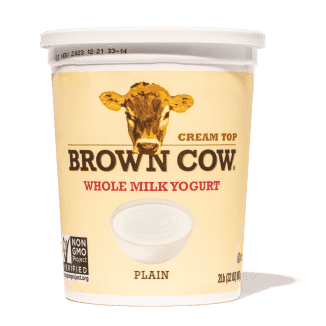
Brown Cow Cream Top Plain Yogurt

This yogurt is made without homogenizing the milk (an optional processing step that keeps the fat and milk from separating), so the cream forms a layer and rises to the top during fermentation. Tasters found the flavor of this “loose” and “thin” yogurt to be “mild” and “creamy,” with just a “slight tang.”

Fat Percentage: 4.7%

Fat: 8 g

Sugar: 8 g

Protein: 6 g

pH: 4.54

Ingredients: Cultured pasteurized whole milk, pectin; 5 live active cultures: S. thermophilus, L. bulgaricus, L. acidophilus, Bifidus, L. paracasei

Price at Time of Testing: $5.79 for 32 oz ($0.18 per oz)

This yogurt is made without homogenizing the milk (an optional processing step that keeps the fat and milk from separating), so the cream forms a layer and rises to the top during fermentation. Tasters found the flavor of this “loose” and “thin” yogurt to be “mild” and “creamy,” with just a “slight tang.”

Fat Percentage: 4.7%

Fat: 8 g

Sugar: 8 g

Protein: 6 g

pH: 4.54

Ingredients: Cultured pasteurized whole milk, pectin; 5 live active cultures: S. thermophilus, L. bulgaricus, L. acidophilus, Bifidus, L. paracasei

Price at Time of Testing: $5.79 for 32 oz ($0.18 per oz)

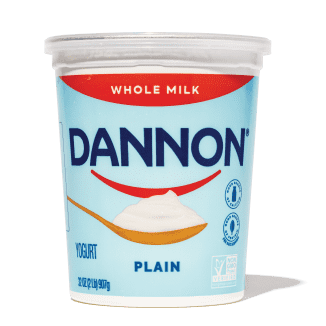
Dannon Whole Milk Plain Yogurt

One taster remarked, “this one is very much like the yogurt I ate when I was a kid.” It was “very mild,” with “a touch of tartness.” It was “creamy,” “smooth,” and “on the thicker side.”

Fat Percentage: 3.5%

Fat: 6 g

Sugar: 7 g

Protein: 6 g

pH: 4.63

Ingredients: Cultured grade A milk; live and active yogurt cultures: S. thermophilus, L. bulgaricus, L. acidophilus

Price at Time of Testing: $5.69 for 32 oz ($0.18 per oz)

One taster remarked, “this one is very much like the yogurt I ate when I was a kid.” It was “very mild,” with “a touch of tartness.” It was “creamy,” “smooth,” and “on the thicker side.”

Fat Percentage: 3.5%

Fat: 6 g

Sugar: 7 g

Protein: 6 g

pH: 4.63

Ingredients: Cultured grade A milk; live and active yogurt cultures: S. thermophilus, L. bulgaricus, L. acidophilus

Price at Time of Testing: $5.69 for 32 oz ($0.18 per oz)

Maple Hill Plain Cream on Top Whole Milk Yogurt

This yogurt, made with organic grass-fed milk, had a “pleasant tang” but with additional flavors that were “funky,” like “goat cheese,” with a “grassy aftertaste.” It was very loose, thin, and “runny.”

Fat Percentage: 4.1%

Fat: 7 g

Sugar: 8 g

Protein: 5 g

pH: 4.11

Ingredients: Organic whole milk, live and active cultures

Price at Time of Testing: $7.39 for 32 oz ($0.23 per oz)

This yogurt, made with organic grass-fed milk, had a “pleasant tang” but with additional flavors that were “funky,” like “goat cheese,” with a “grassy aftertaste.” It was very loose, thin, and “runny.”

Fat Percentage: 4.1%

Fat: 7 g

Sugar: 8 g

Protein: 5 g

pH: 4.11

Ingredients: Organic whole milk, live and active cultures

Price at Time of Testing: $7.39 for 32 oz ($0.23 per oz)

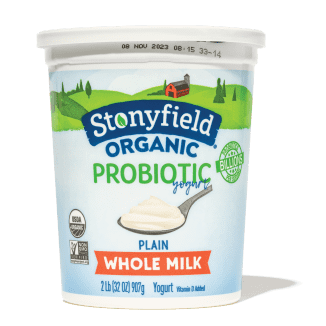
Stonyfield Organic Plain Whole Milk Yogurt

Tasters found this yogurt to be “just tangy enough,” with flavors that leaned more “milky,” “mild,” and “pretty subtle.” Its texture was “velvety,” “creamy,” and more on the “thick” side.

Fat Percentage: 4.1%

Fat: 7 g

Sugar: 6 g

Protein: 6 g

pH: 4.58

Ingredients: Cultured pasteurized organic whole milk, pectin, vitamin D3; 6 live active cultures: S. thermophilus, L. bulgaricus, Bifidobacterium BB-12, L. acidophilus, L. paracasei, L. rhamnosus

Price at Time of Testing: $5.79 for 32 oz ($0.18 per oz)

Tasters found this yogurt to be “just tangy enough,” with flavors that leaned more “milky,” “mild,” and “pretty subtle.” Its texture was “velvety,” “creamy,” and more on the “thick” side.

Fat Percentage: 4.1%

Fat: 7 g

Sugar: 6 g

Protein: 6 g

pH: 4.58

Ingredients: Cultured pasteurized organic whole milk, pectin, vitamin D3; 6 live active cultures: S. thermophilus, L. bulgaricus, Bifidobacterium BB-12, L. acidophilus, L. paracasei, L. rhamnosus

Price at Time of Testing: $5.79 for 32 oz ($0.18 per oz)

Armenian

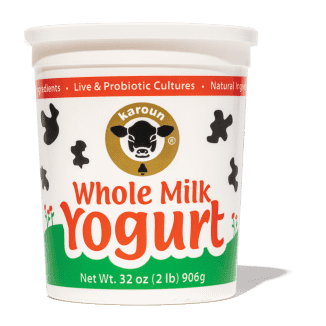
Karoun Whole Milk Yogurt

This yogurt had a “subtle sweetness,” was “bright and tart,” and tasted “tangy but not overwhelming.” It was “thick” but “not quite smooth” and “a little bit grainy.”

Fat Percentage: 4.7%

Fat: 8 g

Sugar: 7 g

Protein: 6 g

pH: 4.32

Ingredients: Cultured pasteurized grade A whole milk and cream, condensed skim milk, pectin; contains 6 live active probiotic cultures: S. thermophilus, L. bulgaricus, L. lactis, L. casei, L. acidophilus, Bifidobacterium

Price at Time of Testing: $5.99 for 32 oz ($0.19 per oz)

This yogurt had a “subtle sweetness,” was “bright and tart,” and tasted “tangy but not overwhelming.” It was “thick” but “not quite smooth” and “a little bit grainy.”

Fat Percentage: 4.7%

Fat: 8 g

Sugar: 7 g

Protein: 6 g

pH: 4.32

Ingredients: Cultured pasteurized grade A whole milk and cream, condensed skim milk, pectin; contains 6 live active probiotic cultures: S. thermophilus, L. bulgaricus, L. lactis, L. casei, L. acidophilus, Bifidobacterium

Price at Time of Testing: $5.99 for 32 oz ($0.19 per oz)

Bulgarian

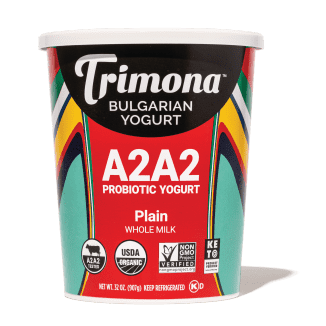
Trimona Foods Bulgarian Plain Yogurt

This Bulgarian yogurt was “lively,” with a “mouth-puckering tartness.” It was thinner and pourable, as well as pleasantly “smooth and creamy.”

Fat Percentage: 3.5%

Fat: 6 g

Sugar: 6 g

Protein: 6 g

pH: 3.79

Ingredients: Pasteurized organic whole milk; live and active yogurt cultures: L. bulgaricus, S. thermophilus, L. acidophilus, Bifidobacterium, L. paracasei, L. rhamnosus

Price at Time of Testing: $11.99 for 64 oz ($0.18 per oz)

This Bulgarian yogurt was “lively,” with a “mouth-puckering tartness.” It was thinner and pourable, as well as pleasantly “smooth and creamy.”

Fat Percentage: 3.5%

Fat: 6 g

Sugar: 6 g

Protein: 6 g

pH: 3.79

Ingredients: Pasteurized organic whole milk; live and active yogurt cultures: L. bulgaricus, S. thermophilus, L. acidophilus, Bifidobacterium, L. paracasei, L. rhamnosus

Price at Time of Testing: $11.99 for 64 oz ($0.18 per oz)

White Mountain Organic Whole Milk Bulgarian Yogurt

This yogurt was a “lightning rod of tartness,” one taster wrote. Its texture was “very smooth” and on the thin side.

Fat Percentage: 3.2%

Fat: 5.5 g

Sugar: 3.5 g

Protein: 5.5 g

pH: 3.9

Ingredients: Organic grade A pasteurized whole milk; live cultures: L. acidophilus, L. bulgaricus, S. thermophilus, B. bifidum

Price at Time of Testing: $11.59 for 32 oz ($0.36 per oz)

This yogurt was a “lightning rod of tartness,” one taster wrote. Its texture was “very smooth” and on the thin side.

Fat Percentage: 3.2%

Fat: 5.5 g

Sugar: 3.5 g

Protein: 5.5 g

pH: 3.9

Ingredients: Organic grade A pasteurized whole milk; live cultures: L. acidophilus, L. bulgaricus, S. thermophilus, B. bifidum

Price at Time of Testing: $11.59 for 32 oz ($0.36 per oz)

French

La Fermière Plain Whole Milk Yogurt

This yogurt was “very light and mild” and “pleasantly sweet.” The texture was smooth and “silky and creamy,” thanks to its exceptionally high fat level of more than 8 percent. It reminded tasters of a “less tart sour cream."

Fat Percentage: 8.8%

Fat: 15 g

Sugar: 7.5 g

Protein: 5.3 g

pH: 4.22

Ingredients: Grade A pasteurized whole milk, Grade A pasteurized cream; live active cultures: S. thermophilus, L. bulgaricus

Price at Time of Testing: $2.99 for 5.6 oz ($0.53 per oz)

This yogurt was “very light and mild” and “pleasantly sweet.” The texture was smooth and “silky and creamy,” thanks to its exceptionally high fat level of more than 8 percent. It reminded tasters of a “less tart sour cream."

Fat Percentage: 8.8%

Fat: 15 g

Sugar: 7.5 g

Protein: 5.3 g

pH: 4.22

Ingredients: Grade A pasteurized whole milk, Grade A pasteurized cream; live active cultures: S. thermophilus, L. bulgaricus

Price at Time of Testing: $2.99 for 5.6 oz ($0.53 per oz)

Greek

Chobani Whole Milk Plain Greek Yogurt

With a “strong, milky flavor,” this yogurt was “more sweet than sour.” It had a “smooth, pillowy texture” that was “silky and rich.”

Fat Percentage: 5%

Fat: 9 g

Sugar: 6 g

Protein: 15 g

pH: 4.65

Ingredients: Cultured milk; 6 live and active cultures: S. thermophilus, L. bulgaricus, L. acidophilus, Bifidus, L. casei, L. rhamnosus

Price at Time of Testing: $8.49 for 32 oz ($0.27 per oz)

With a “strong, milky flavor,” this yogurt was “more sweet than sour.” It had a “smooth, pillowy texture” that was “silky and rich.”

Fat Percentage: 5%

Fat: 9 g

Sugar: 6 g

Protein: 15 g

pH: 4.65

Ingredients: Cultured milk; 6 live and active cultures: S. thermophilus, L. bulgaricus, L. acidophilus, Bifidus, L. casei, L. rhamnosus

Price at Time of Testing: $8.49 for 32 oz ($0.27 per oz)

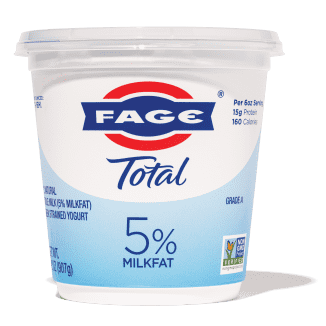
Fage Total 5% Greek Yogurt

“Could eat it straight up,” one taster said. This yogurt was “mildly tart,” “rich,” and “relatively mellow.” Its texture was very thick, “luscious,” and almost “whipped.”

Fat Percentage: 5%

Fat: 9 g

Sugar: 5 g

Protein: 15 g

pH: 4.54

Ingredients: Grade A pasteurized skimmed milk and cream; live active yogurt cultures: L. bulgaricus, S. thermophilus, L. acidophilus, Bifidus, L. casei

Price at Time of Testing: $6.99 for 32 oz ($0.22 per oz)

“Could eat it straight up,” one taster said. This yogurt was “mildly tart,” “rich,” and “relatively mellow.” Its texture was very thick, “luscious,” and almost “whipped.”

Fat Percentage: 5%

Fat: 9 g

Sugar: 5 g

Protein: 15 g

pH: 4.54

Ingredients: Grade A pasteurized skimmed milk and cream; live active yogurt cultures: L. bulgaricus, S. thermophilus, L. acidophilus, Bifidus, L. casei

Price at Time of Testing: $6.99 for 32 oz ($0.22 per oz)

Green Mountain Creamery Greek Yogurt

One taster described this yogurt as “very approachable,” thanks to its mild tartness and “supersmooth” texture. Multiple tasters found it to be “light in both taste and texture” and “almost fluffy.”

Fat Percentage: 5%

Fat: 9 g

Sugar: 4 g

Protein: 14 g

pH: 4.43

Ingredients: Cultured pasteurized nonfat milk, cream; live active cultures: S. thermophilus, L. bulgaricus, L. acidophilus, Bifidus, L. paracasei

Price at Time of Testing: $6.29 for 32 oz ($0.20 per oz)

One taster described this yogurt as “very approachable,” thanks to its mild tartness and “supersmooth” texture. Multiple tasters found it to be “light in both taste and texture” and “almost fluffy.”

Fat Percentage: 5%

Fat: 9 g

Sugar: 4 g

Protein: 14 g

pH: 4.43

Ingredients: Cultured pasteurized nonfat milk, cream; live active cultures: S. thermophilus, L. bulgaricus, L. acidophilus, Bifidus, L. paracasei

Price at Time of Testing: $6.29 for 32 oz ($0.20 per oz)

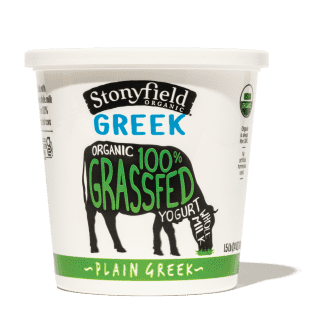
Stonyfield Organic Plain Grassfed Greek Yogurt

This was the one of the only products that specified using grass-fed milk, and tasters could tell, remarking on its “goat-y,” “funky,” “grassy” qualities, “like chèvre in yogurt form.” It was “thick,” “glossy,” and “silky.”

Fat Percentage: 3.5%

Fat: 6 g

Sugar: 5 g

Protein: 16 g

pH: 4.38

Ingredients: Cultured pasteurized grassfed organic whole milk; 6 live and active cultures: S. thermophilus, L. bulgaricus, L. acidophilus, Bifidus, L. paracasei, L. rhamnosus

Price at Time of Testing: $9.49 for 24 oz ($0.40 per oz)

This was the one of the only products that specified using grass-fed milk, and tasters could tell, remarking on its “goat-y,” “funky,” “grassy” qualities, “like chèvre in yogurt form.” It was “thick,” “glossy,” and “silky.”

Fat Percentage: 3.5%

Fat: 6 g

Sugar: 5 g

Protein: 16 g

pH: 4.38

Ingredients: Cultured pasteurized grassfed organic whole milk; 6 live and active cultures: S. thermophilus, L. bulgaricus, L. acidophilus, Bifidus, L. paracasei, L. rhamnosus

Price at Time of Testing: $9.49 for 24 oz ($0.40 per oz)

Icelandic

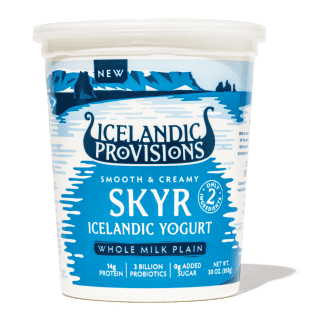
Icelandic Provisions Whole Milk Plain Skyr

One excited taster found this skyr to be “fluffy, creamy, tangy, AND smooth.” It had an “appealing tartness that doesn’t overshadow the milkiness” and was “thick but not stodgy” and “superlush.”

Fat Percentage: 3.5%

Fat: 6 g

Sugar: 6 g

Protein: 14 g

pH: 4.48

Ingredients: Whole milk skyr (pasteurized milk, live and active cultures)

Price at Time of Testing: $7.69 for 30 oz ($0.26 per oz)

One excited taster found this skyr to be “fluffy, creamy, tangy, AND smooth.” It had an “appealing tartness that doesn’t overshadow the milkiness” and was “thick but not stodgy” and “superlush.”

Fat Percentage: 3.5%

Fat: 6 g

Sugar: 6 g

Protein: 14 g

pH: 4.48

Ingredients: Whole milk skyr (pasteurized milk, live and active cultures)

Price at Time of Testing: $7.69 for 30 oz ($0.26 per oz)

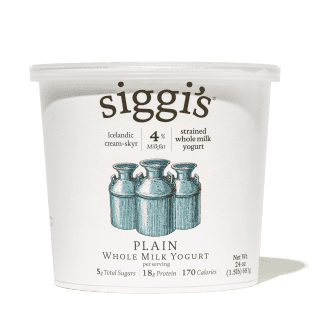
Siggi's Plain Whole Milk 4% Skyr

This skyr had a “great balanced tanginess.” It was “superthick,” “creamy,” and “buttery.”

Fat Percentage: 4.1%

Fat: 7 g

Sugar: 5 g

Protein: 18 g

pH: 4.32

Ingredients: Cultured pasteurized whole milk, pasteurized cream; live active cultures: S. thermophilus, L. bulgaricus, Bifidobacterium, L. acidophilus, L. paracasei

Price at Time of Testing: $6.39 for 24 oz ($0.27 per oz)

This skyr had a “great balanced tanginess.” It was “superthick,” “creamy,” and “buttery.”

Fat Percentage: 4.1%

Fat: 7 g

Sugar: 5 g

Protein: 18 g

pH: 4.32

Ingredients: Cultured pasteurized whole milk, pasteurized cream; live active cultures: S. thermophilus, L. bulgaricus, Bifidobacterium, L. acidophilus, L. paracasei

Price at Time of Testing: $6.39 for 24 oz ($0.27 per oz)

Indian

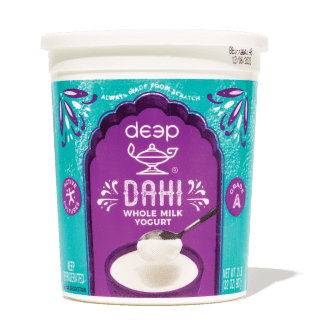
Deep Foods Dahi Whole Milk Yogurt

Tasters found this yogurt to be “perfectly balanced”—“a little sweet” with a “light tartness.” It was “fluffy,” on the thick side, and “a little bit grainy.”

Fat Percentage: 2.9%

Fat: 5 g

Sugar: 8 g

Protein: 7 g

pH: 4.35

Ingredients: Grade A pasteurized cultured whole milk and skim milk, milk protein concentrate

Price at Time of Testing: $3.99 for 32 oz ($0.12 per oz)

Tasters found this yogurt to be “perfectly balanced”—“a little sweet” with a “light tartness.” It was “fluffy,” on the thick side, and “a little bit grainy.”

Fat Percentage: 2.9%

Fat: 5 g

Sugar: 8 g

Protein: 7 g

pH: 4.35

Ingredients: Grade A pasteurized cultured whole milk and skim milk, milk protein concentrate

Price at Time of Testing: $3.99 for 32 oz ($0.12 per oz)

Desi Natural Dahi Whole Milk Yogurt

This “mellow” yogurt had “an appealing fattiness and richness to it.” It had “just a hint of tartness,” with a texture that was “satisfying,” “creamy,” and “supersmooth.”

Fat Percentage: 2.9%

Fat: 5 g

Sugar: 10 g

Protein: 7 g

pH: 4.61

Ingredients: Cultured pasteurized grade A milk and nonfat milk solids; contains active yogurt cultures including L. bulgaricus, S. thermophilus, Bifidobacterium (BB-12), L. acidophilus, and L. casei

Price at Time of Testing: $3.99 for 32 oz ($0.12 per oz)

This “mellow” yogurt had “an appealing fattiness and richness to it.” It had “just a hint of tartness,” with a texture that was “satisfying,” “creamy,” and “supersmooth.”

Fat Percentage: 2.9%

Fat: 5 g

Sugar: 10 g

Protein: 7 g

pH: 4.61

Ingredients: Cultured pasteurized grade A milk and nonfat milk solids; contains active yogurt cultures including L. bulgaricus, S. thermophilus, Bifidobacterium (BB-12), L. acidophilus, and L. casei

Price at Time of Testing: $3.99 for 32 oz ($0.12 per oz)

Iranian

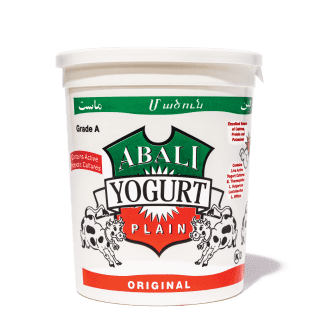
Abali Original Plain Yogurt

Made by an Iranian Armenian family, this yogurt had a very thick, smooth texture that was almost “gelatinous.” It was notably tart, with a pronounced rich, milky flavor.

Fat Percentage: 3.9%

Fat: 6.7 g

Sugar: 15.7 g

Protein: 11.2 g

pH: 4.14

Ingredients: Cultured grade A pasteurized milk, nonfat milk, cream, tapioca and pectin; active cultures: S. thermophilus, L. bulgaricus, Lactobacillus

Price at Time of Testing: $6.99 for 32 oz ($0.29 per oz)

Made by an Iranian Armenian family, this yogurt had a very thick, smooth texture that was almost “gelatinous.” It was notably tart, with a pronounced rich, milky flavor.

Fat Percentage: 3.9%

Fat: 6.7 g

Sugar: 15.7 g

Protein: 11.2 g

pH: 4.14

Ingredients: Cultured grade A pasteurized milk, nonfat milk, cream, tapioca and pectin; active cultures: S. thermophilus, L. bulgaricus, Lactobacillus

Price at Time of Testing: $6.99 for 32 oz ($0.29 per oz)

Turkish

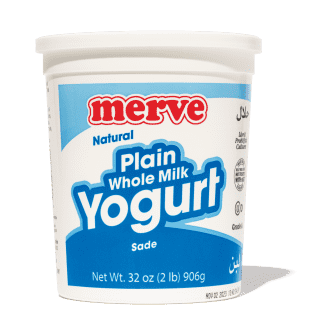
Merve Plain Whole Milk Yogurt

This yogurt was “pretty tangy” and “a little cheesy,” with a richness that reminded us of cream cheese. Its texture was “thick,” “velvety,” and “slightly grainy.”

Fat Percentage: 4.7%

Fat: 8 g

Sugar: 7 g

Protein: 6 g

pH: 4.23

Ingredients: Cultured pasteurized grade A milk and cream, skim milk, pectin

Price at Time of Testing: $4.99 for 32 oz ($0.16 per ounce)

This yogurt was “pretty tangy” and “a little cheesy,” with a richness that reminded us of cream cheese. Its texture was “thick,” “velvety,” and “slightly grainy.”

Fat Percentage: 4.7%

Fat: 8 g

Sugar: 7 g

Protein: 6 g

pH: 4.23

Ingredients: Cultured pasteurized grade A milk and cream, skim milk, pectin

Price at Time of Testing: $4.99 for 32 oz ($0.16 per ounce)

Reviews You Can Trust

The mission of America’s Test Kitchen Reviews is to find the best equipment and ingredients for the home cook through rigorous, hands-on testing. Have a question or suggestion? Send us an email at atkreviews@americastestkitchen.com. We appreciate your feedback!

The Expert

Author: Sarah Sandler

Sarah Sandler

Associate Editor, ATK Reviews

Sarah is an associate editor for ATK Reviews who is deeply passionate about anchovies and sourdough bread.

Sarah Sandler is an associate editor for ATK Reviews. Before joining ATK, she was an intern for Saveur and Chef Daniel Boulud, and spent a summer baking at Levain Bakery. She is deeply passionate about anchovies (both eaten plain and in/on other foods), she bakes sourdough bread weekly, and she always carries a travel-size tin of Maldon salt.

*All products reviewed by America’s Test Kitchen are independently chosen, researched, and reviewed by our editors. We buy products for testing at retail locations and do not accept unsolicited samples for testing. We list suggested sources for recommended products as a convenience to our readers but do not endorse specific retailers. When you choose to purchase our editorial recommendations from the links we provide, we may earn an affiliate commission. Prices are subject to change.

Reviews You Can Trust.
See Why.

This is a members' feature.
America's Test Kitchen LogoCook's Country LogoCook's Illustrated Logo