
 Buy at Tovala
Smart ovens promise to make cooking easier and more foolproof. We tested several, and while we liked features of each, we found two smart ovens that stood out. Both were easy to use and worked like highly enhanced countertop toaster ovens, with a variety of clever abilities that we found hard to give up when testing was done.
We highly recommend the June Smart Oven (3rd Generation). We tested and liked the “previous generation” model—and this new model improves on an already great oven. Using artificial intelligence, it can recognize both fresh foods and many brand-name packaged foods, initiate cooking programs, and guide you through its library of recipes. Its display and controls could not be simpler, whether you’re relying on its smart functions or using it like a regular oven. It can toast, broil, bake, roast, air-fry, dehydrate, and slow-cook, and it also offers accessories for grilling and baking pizza. Every recipe we prepared came out perfectly.
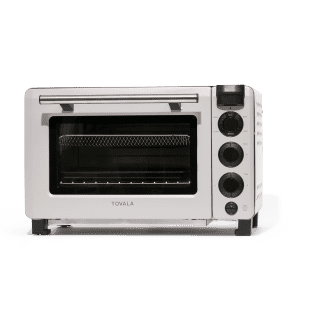
We also recommend the Tovala Smart Oven, which can automatically switch between baking and broiling as it cooks and will notify you when your food is done. It can air fry too. (Though it no longer uses steam to cook, another new model, the Tovala Smart Oven Pro, keeps steam and adds air frying.)

Over the past few years, smart countertop ovens have been arriving with a splash. This appliance category still has only a handful of players and remains a bit amorphous, since each company promises that its oven can accomplish a range of cooking tasks with very different technologies. All smart ovens claim to produce expertly cooked food with hands-off convenience, so you can kick your old toaster oven to the curb—and maybe your standard oven, your microwave, and a few other appliances, too.


The June Oven's built-in food temperature probe inserted in a rack of ribs (left), ensures they will be perfectly cooked (right), whether you follow the oven's programmed recipe or set your own desired temperature.
What Makes These Ovens “Smart”?
Typically, smart ovens have apps that let you control cooking, peruse a library of built-in recipes, and purchase accessories; some also allow you to order meal kits. The ovens use sophisticated software in a variety of ways, whether to identify foods you put in them or run cooking programs that incorporate traditional and innovative cooking technologies, alone or in combination, to optimize results.

We struggled with the spidery typeface and confusing layout of the Anova Precision Oven’s app (far left). June’s app (second from left) provides easy-to-follow videos and photos of each stage of its recipes and the equipment you need, guiding cooks step by step. The June app also relays images from its internal oven camera (center), so we could check on the progress of grilled chicken breasts. Brava’s app shows recipes with photos and instructions for how to lay out food on its trays for cooking (second from right). Tovala’s app (far right) guided us step by step through a recipe for Whole Roasted Cauliflower with Lemon Tahini Sauce.
While you can operate them exactly like a standard oven, smart ovens offer many more functions. They also guide you step by step as you prepare recipes: They monitor and adjust cooking time and temperature (some via built-in temperature probes), offer helpful videos and tips, transmit images or graphs of your cooking progress on their apps or oven displays, and scan packaged retail foods or the company’s own meal kits for one-step preparation. Some offer access to a community of users who share recipes and tips. All the ovens periodically update software and add features, just like your phone or laptop does. Most also link to Siri, Alexa, or Google Assistant, so you can operate them by voice.

Time-lapse videos are fun, but the oven's built-in camera also lets you check on food from a distance.
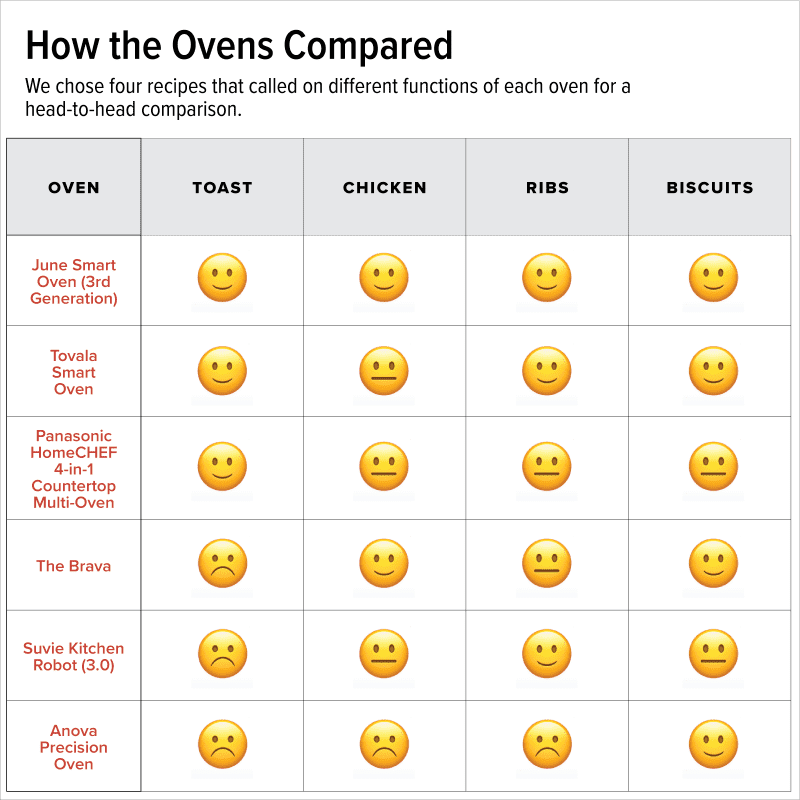
During testing, not every oven lived up to its promises. Some of the programming didn’t quite work. For instance, even after we’d entered the exact weight of our whole chicken in ounces, as requested, one oven roasted it until the exterior leg and wing meat was as hard as plastic. Another took 8 minutes (and went through three separate cooking stages) to toast a slice of bread and still failed. It also took 3 hours to roast a small (4-pound) chicken. A third suddenly and unpredictably burned toast after previously completing a successful toasting session. To earn its place in our kitchen, we expected each smart oven to cook competently in every mode—and hopefully with less effort or time than conventional appliances.

1. We followed the June Oven's recipe program for whole roasted chicken with vegetables, using the temperature probe to track doneness. 2. We placed a single whole egg on the shelf in the June and it recognized and hardboiled it right in the shell.3. We used the air-fry program on the Panasonic oven to make crispy brussels sprouts.4. Because you can't peek at the extremely bright and powerful light that cooks food in the Brava oven, its display includes live video of the interior.
What to Look For
- Simple, Intuitive Controls: Whether you’re using an app or the display on the oven, the controls should be easy to operate and clearly tell you what’s happening in the oven.
- Food-Temperature Probe: Ovens with attached food-temperature probes make checking and worrying about doneness a thing of the past. Our favorite models adjusted heat accordingly, shut off when food was done, and let us know when the food was ready.
- Convection Capability: In small ovens, it’s common to find hot spots, but our favorite smart ovens overcame this with convection capability—using fans to circulate heat—combined with well-controlled, responsive heating elements that gave us remarkably uniform, predictably excellent cooking results.
- Compact Profile: Your countertop oven shouldn’t dominate the kitchen and eat up all the counter space.


Toast from three ovens: at left, the Anova took multiple steps and 8 minutes to produce wan, pale toast. In center, the Panasonic oven's toast was a little uneven, but acceptable. At right, June made perfect golden toast, every time.
- Makes Good Toast: It seems simple, but since this oven will replace your toaster or toaster oven, it had better be able to make crisp, evenly golden toast without any fuss.
- Easy to Clean: We preferred models that were easy to maintain, featuring an interior and accessories that easily washed clean of splatters, a removable crumb tray, and an exterior finish that resisted smearing and stayed neat.
- Sturdy Pans and Accessories: We preferred pans with polytetrafluoroethylene-free nonstick or enamel coating that cleaned up quickly and pans and racks with sturdy construction that didn’t warp or bend under heavy food.


With Tovala, you can use its app to order meal kits that cook in minutes when you scan a QR code on the recipe card. It was easy to choose and order meals, which were fresh and tasted good, and cost about $12 per meal. Two of the meals we tried included salmon (center), and roasted chicken breast over salad greens (right).
Nice to Have
- Large, Clear Window: We were surprised by how much we appreciated being able to check on food without opening the door.
- Meal Kit Option: We’re not huge fans of meal kits, but it’s a nice perk when you don’t feel like cooking.

The Brava oven can cook different foods in up to three distinct temperature zones on its cooking tray. Here, we prepared butternut squash and green beans. The downside? Food has to be cut and laid out carefully to cook properly in this oven, following the diagram on its display (at the top of the photo).
What to Avoid
- Confusing Controls: Anyone should be able to walk up to the device and get it going.
- Excessively Complicated Preparation: One model demanded that you prep and lay out food in a very particular way or else it would not work. Another required gallons of distilled water. It also had confusing multistep programs for even the simplest foods; these took much longer than conventional cooking and produced mediocre results.
- Scary Technology: It was alarming to read that one oven could cause eye damage if you opened it while it was cooking. We don’t want to have to police guests and children while making dinner.
Other Considerations

- Steam Options: Two ovens in our lineup can add steam, usually in combination with conventional baking and roasting. Steam adds moisture and transmits heat to food faster than the dry hot air of regular ovens. In theory, this preserves the moisture in foods, speeds up cooking, and helps batters and doughs rise taller; since their exteriors remain soft and moist much longer, they won’t set into a firm outer crust that limits height. It’s helpful to revive leftovers, too. In practice, we didn’t necessarily notice a big improvement in foods’ flavor or texture when steam was involved, with the exception of a tall, moist chocolate cake and slightly taller biscuits.
- Test the performance, ease of use, cleanup, and durability of each oven while preparing a range of foods using both the manufacturer’s recipes and our own
- Make whole roast chicken, biscuits, barbecued ribs, and toast using the same recipe or method for oven-to-oven comparison
- Test the accuracy of the temperature settings
- Test the extra capabilities of each oven by preparing additional recipes, including meal kits, if any
 Buy at Amazon