

Countertop steam ovens resemble toaster ovens but differ in a key way: They inject steam into the oven cavity during cooking. Steam speeds up the cooking process and is especially useful when baking, preparing large cuts of meat, or steaming vegetables or fish. We recommend the Anova Precision Oven as the best countertop steam oven as it offers customization and precision for enthusiasts who want to dial in the perfect settings for a recipe.
Traditional ovens use dry, hot air and radiant heat to cook food. By adding steam—which transfers heat more effectively than dry air—you can speed up the process and cook more evenly. Advanced steam ovens also allow for more precision and customization of not only the oven temperature but also how much steam you’re adding and when. German company Rational pioneered the concept in 1973 and it was then widely adopted by commercial kitchens. These ovens can steam, convection bake, or do a combination of the two, which is why they’re sometimes referred to as “combi ovens.” Interest in both countertop and traditional steam ovens is growing in America, according to Steve Sheinkopf, CEO of the Boston-area kitchen-appliance chain Yale Appliance.
The Different Ways Steam Ovens Use Steam
Countertop steam ovens have an external water tank located either under the cooking chamber or on the side. The regular steam function is similar to steaming on the stovetop, where food is fully immersed in hot, wet air in a sealed space at 212 degrees—great for poaching delicate proteins and vegetables.
Then there’s the “steam-bake” function, which injects steam into the oven during the baking process. It’s especially helpful for breadmaking. The initial release of steam softens the exterior of the dough, which allows the interior to expand more, creating a taller loaf. In a traditional oven, dry air will harden the exterior, so the interior can’t push the crust up as much. Steam ovens can also help with proofing dough, as you can calibrate the warmth and humidity for the optimal environment for yeast development.


We found salmon cooked in the steam ovens to be more evenly cooked and tender than the one steamed in the Dutch oven. We were also impressed with the shokupan baked in steam ovens.
The basic models we tested offer “steam” and “steam-bake” functions, the latter programmed to inject a set amount of steam. With a more advanced model, we could adjust the humidity level when steaming and steam baking in increments of 5 percent. The percentage of water vapor held by the air (the “dew point”) in the cooking chamber can reach 100 percent. The higher the percentage, the faster food cooks.
In addition, this model offers another feature: a “sous vide” mode that allows for sous vide cooking without plastic bags or a water bath. It keeps the oven at the consistent, precise, and low temperatures required for sous vide, typically 130 to 160 degrees. An advantage of this mode: After sous vide cooking you can broil the food right in the oven to sear it, eliminating the need to dirty another pan searing on the stovetop, as is often done after cooking in traditional sous vide machines.
After weeks of testing, our verdict: Steam ovens are promising but require tweaking to make the most of their advanced features and customizability. You may get a thrill out of a fork-tender steamed fish or a loaf of tall, crusty bread, but be prepared for some trial and error until recipes specifically designed for steam ovens become more common.
Another factor to consider: Steam ovens are just one option in the world of countertop ovens, a confusing and often overlapping field. We originally tested an earlier version of the Anova Steam Oven featured here as part of our review of smart ovens; in those tests, it was outperformed by June Smart Oven (3rd Generation). The Best Buy from that story, the Tovala, also uses steam but doesn’t offer the full range of steam-baking capabilities as the models we included in this review. If you want a more traditional toaster oven without these bells and whistles, we’ve tested many and can recommend several. If you think a steam oven might be right for you, read on to see what we learned.
What to Look for
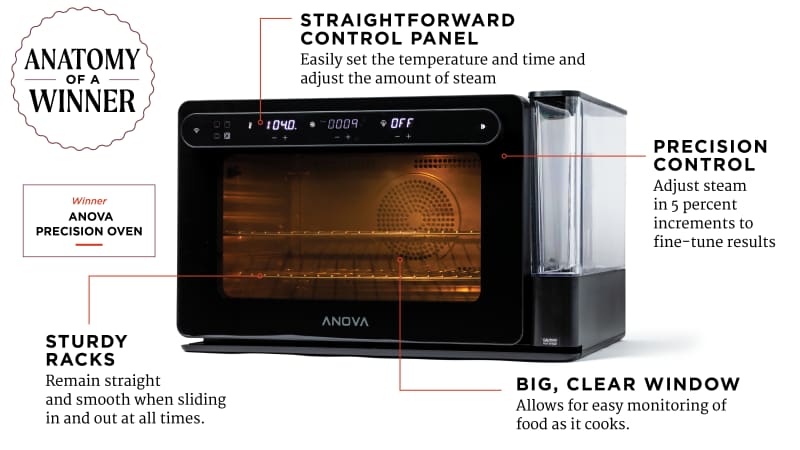
- Steam Control: Our winning model allowed us to adjust the amount of steam in 5 percent increments—slightly less precise than a commercial combi oven, which allows for 1 percent precision, but at a fraction of the cost. With this model, you can also opt to periodically add steam or turn it off completely. We liked the options this extra capability allowed for. Other models in our lineup are permanently set to 10 percent steam on steam-bake mode.


We made several recipes using the Anova app and were impressed with the results. The Basque cheesecake (left) was darkly caramelized with an ultracreamy interior. The Toast 2.0 recipe produced the most evenly golden brown we’ve ever seen, and it wasn’t dried out in the middle.
- A Big, Clear Window: A large, clear window with bright light allowed us to monitor food as it cooked. Some models had a small window with a large frame, which obstructed the view.
- Sturdy Racks with Multiple Positions: We preferred racks that slid in and out smoothly at all times. In some cases, the racks bent a bit, causing them to get stuck. Good racks remained straight. We also preferred having more rack positions (our winner had five, other models had three or four) that allowed us to place food lower or higher in the oven, as we could make more use of its space.
- Temperature Accuracy: We used temperature probes to check accuracy of the temperature settings, and some ovens were more accurate than others at holding the desired temperature.
- Useful Guidance: As we were new to steam technology, we appreciated cooking instructions and recommendations that helped shorten the learning curve. Our winning model offered professionally developed recipes that worked.
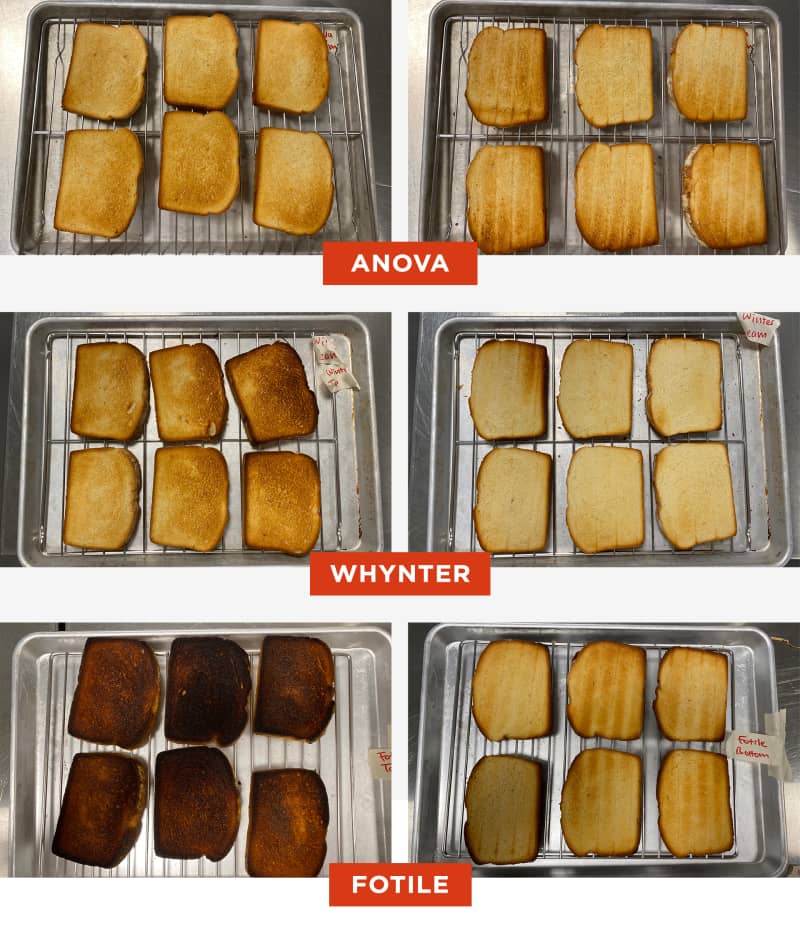
- A Machine that Functions Well as a Regular Toaster Oven Too: As these countertop steam ovens are bulky, we want them to replace a toaster oven. Our winning model worked well as a toaster oven, making especially even, golden brown toast.
Nice to Have:
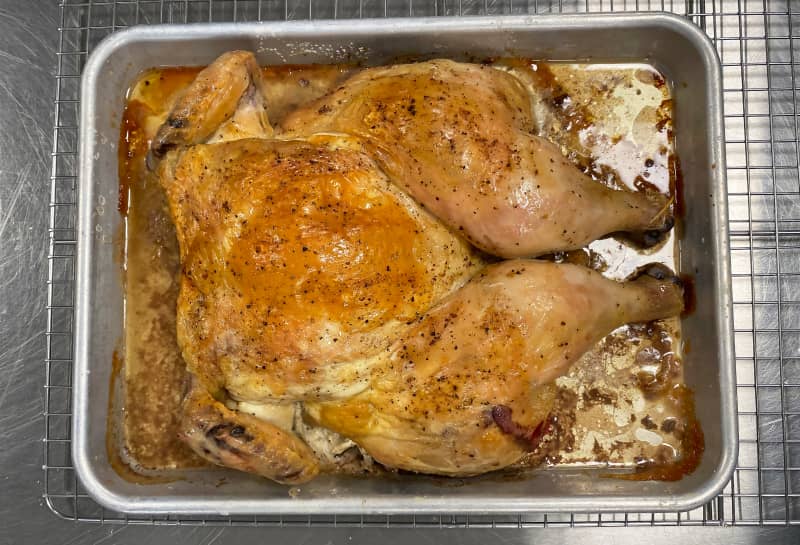
- Sous Vide Mode: One model offers a sous vide mode, which consistently holds food at a low temperature (typically 130 degrees to 160 degrees). This mode forgoes the water bath, plastic bag, and immersion circulator that a traditional sous vide setup requires, making the cooking process much easier. It took about 2 hours to cook a 4-pound whole chicken, which we then browned using the oven’s broiler mode. This chicken we prepared was extra-tender and juicy, on par with what we expect of sous vide cooking.
What to Avoid
- Confusing Control Panels: The buttons and settings on every model required a little getting used to but some were easier to figure out. One had menu presets displayed in graphic icons that we could only understand after studying the user manual.


Some ovens failed to produce evenly baked cookies, with noticeable dark spots around the edges of the tray.
- Hot Spots and Uneven Cooking: In smaller countertop ovens—especially those with convection settings—we expect food to cook and brown evenly. However, some models clearly had hot spots. They baked cookies unevenly, with the rear side becoming more brown than the front. Some also toasted bread unevenly. The most common toast mishap was the underside being underdone compared to the top.
- Hard-to-Clean Designs: Condensation pooled on the floor of the cooking chamber in one model after cooking, with no way to drain it. It was a nuisance to soak up the remaining water.
Minor Flaws
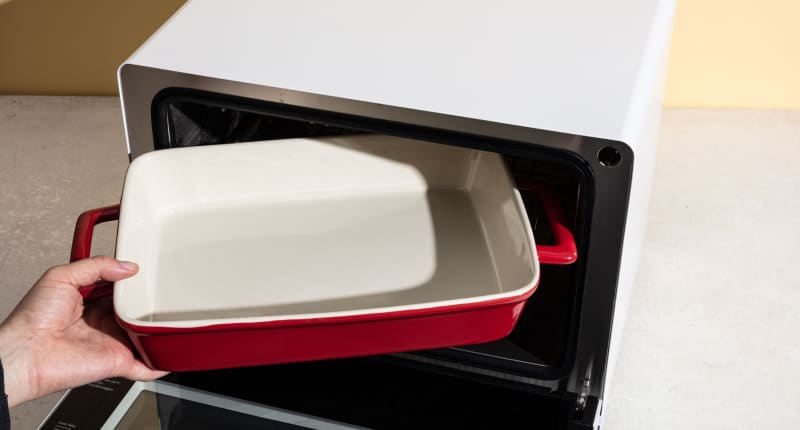
- Small Cooking Capacity: Some models couldn’t accommodate 13 by 9-inch baking dishes. Considering these ovens are meant to stay on the countertop and be used in addition to a wall oven, we deemed the small capacity to be a minor flaw.
- Unreliable Smart Features: The Anova Precision Oven boasts smart features such as Bluetooth connectivity, which allows remote monitoring, and its app offers a selection of recipes. However, we consistently had trouble connecting our oven to the mobile app and resorted to manually setting the cook time and temperature. Given the promise of the app, we hope the reliability of these smart features improves. The recipes provided by Anova were generally better than the one-size-fits-all presets offered by the other two models. On the worst model, the “roasted chicken” and “cookies” settings produced dry, rubbery chicken and pale, underbaked cookies, respectively.
The Tests
- Set to 350 degrees and track temperature over 2-hour period
- Toast slices of white sandwich bread
- Melt cheese on white sandwich bread under broiler
- Bake cookies
- Steam salmon fillets; compare to fillets steamed on the stovetop
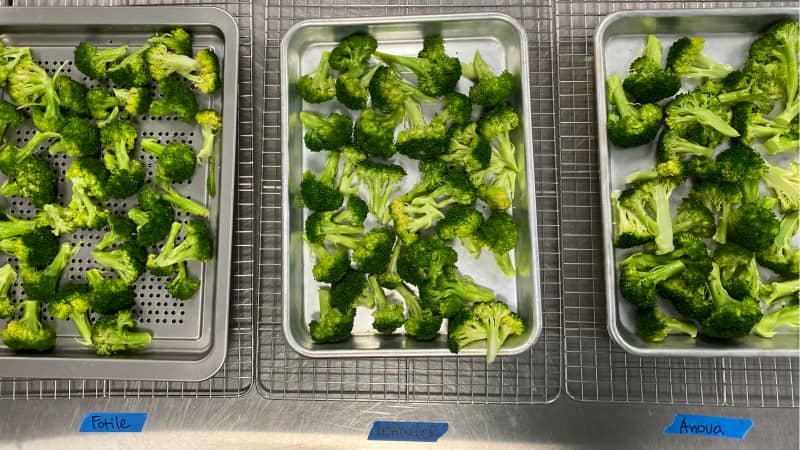
- Steam broccoli; compare to broccoli steamed on the stovetop
- Proof loaf of shokupan using proof setting, when applicable
- Bake loaf of shokupan; compare to loaf baked in traditional oven with radiant heat
- Roast 4-pound whole chicken
- Winner only: Steam whole white fish
- Winner only: Bake Basque cheesecake
- Evaluate app connectivity and function, when applicable
- Hand-wash accessories after each test
How We Rated
- Performance: We considered how evenly the steam ovens cooked foods and how efficiently and quickly they injected steam to cook foods with desired results.
- Ease of Use: We evaluated the intuitiveness of the controls and how easy the settings (including smart features such as Bluetooth) and options were to navigate.
- Capacity: We assessed the size of the cooking chamber and considered how many positions there were for the oven racks.
- Cleanup: We considered how easy the ovens’ accessories and cooking chambers were to clean.
 Buy at Amazon