America's Test Kitchen LogoCook's Country LogoCook's Illustrated LogoAmerica's Test Kitchen LogoCook's Country LogoCook's Illustrated Logo

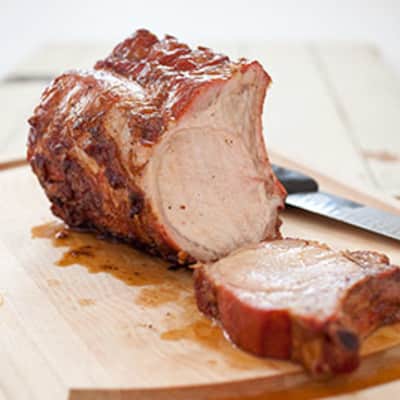
Charcoal-Grill-Roasted Bone-In Pork Rib Roast

By America's Test Kitchen

Published on December 5, 2012

Time

2 hours, plus 6 hours salting, 2 hours soaking, and 30 minutes resting

Yield

Serves 6 to 8
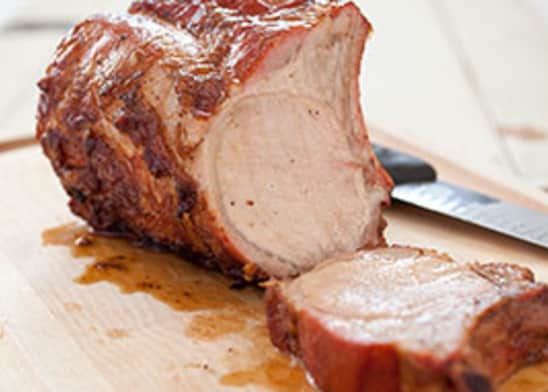
Charcoal-Grill-Roasted Bone-In Pork Rib Roast

Ingredients

4 pound center-cut rib or blade-end bone-in pork roast (1 roast), tip of chine bone removed (see note)4 teaspoons kosher salt 1 (3-inch) wood chunk 1 ½ teaspoons ground black pepper

Before You Begin

If you buy a blade-end roast (sometimes called a “rib-end”), tie it into a uniform shape with kitchen twine at 1-inch intervals; this step is unnecessary with a center-cut roast. For easier carving, ask the butcher to remove the tip of the chine bone and to cut the remainder of the chine bone between the ribs. For instructions on carving the roast, see step-by-step below. We like to serve this with our Orange Salsa with Cuban Flavors.

Instructions

  1. Pat roast dry with paper towels. If necessary, trim thick spots of surface fat layer to about ¼-inch thickness. Using sharp knife, cut slits in surface fat layer, spaced 1 inch apart, in crosshatch pattern, being careful not to cut into meat. Sprinkle roast evenly with salt. Wrap with plastic wrap and refrigerate for at least 6 hours, up to 24 hours.
  2. One to 2 hours before grilling, submerge wood chunk in bowl of water to soak.
  3. Open bottom grill vents fully. Light large chimney starter filled with charcoal (6 quarts, about 100 briquettes) and allow to burn until coals are fully ignited and partially covered with thin layer of ash, about 20 minutes. Empty coals into grill to cover one-third of grill with coals steeply banked against side of grill. Place wood chunk on top of coals, position cooking grate, cover, and heat until grate is hot and wood is smoking, about 5 minutes. Scrape grate clean with grill brush.
  4. Sprinkle roast evenly with pepper. Place roast on grate with meat near, but not over, coals and bones facing away from coals. Open top vents halfway and cover grill, positioning vents over meat. (Initial grill temperature should be about 425 degrees.) Grill roast until instant-read thermometer inserted into thickest part of meat registers 140 degrees, 1¼ to 1½ hours.
  5. Transfer roast to carving board, tent loosely with foil, and let rest for 30 minutes (internal temperature should rise to about 150 degrees). Carve into thick slices by cutting between ribs. Serve.

Charcoal-Grill-Roasted Bone-In Pork Rib Roast

Headshot of America's Test Kitchen
By America's Test Kitchen
Save

Time

2 hours, plus 6 hours salting, 2 hours soaking, and 30 minutes resting

Yield

Serves 6 to 8

Ingredients

4 pound center-cut rib or blade-end bone-in pork roast (1 roast), tip of chine bone removed (see note)
4 teaspoons kosher salt
1 (3-inch) wood chunk
1 ½ teaspoons ground black pepper

Test Kitchen Techniques

Ingredients

4 pound center-cut rib or blade-end bone-in pork roast (1 roast), tip of chine bone removed (see note)
4 teaspoons kosher salt
1 (3-inch) wood chunk
1 ½ teaspoons ground black pepper

Test Kitchen Techniques

Ingredients

4 pound center-cut rib or blade-end bone-in pork roast (1 roast), tip of chine bone removed (see note)
4 teaspoons kosher salt
1 (3-inch) wood chunk
1 ½ teaspoons ground black pepper

Test Kitchen Techniques

Why This Recipe Works

We chose the loin’s center-cut roast for our bone-in pork rib roast recipe for its great ease of preparation: Because the meat is a single muscle attached along one side to the bones, there was no need to tie the roast for a tidy presentation. Salting the meat extracted much of the pork roast’s liquid, which ensured that our pork roast recipe would produce a deeply browned, crisp crust. Grilling the pork, covered, on the cooler side of a modified two-level fire allowed the meat to cook through slowly by indirect heat without risk of burning the exterior.

Before You Begin

If you buy a blade-end roast (sometimes called a “rib-end”), tie it into a uniform shape with kitchen twine at 1-inch intervals; this step is unnecessary with a center-cut roast. For easier carving, ask the butcher to remove the tip of the chine bone and to cut the remainder of the chine bone between the ribs. For instructions on carving the roast, see step-by-step below. We like to serve this with our Orange Salsa with Cuban Flavors.

Instructions

  1. Pat roast dry with paper towels. If necessary, trim thick spots of surface fat layer to about ¼-inch thickness. Using sharp knife, cut slits in surface fat layer, spaced 1 inch apart, in crosshatch pattern, being careful not to cut into meat. Sprinkle roast evenly with salt. Wrap with plastic wrap and refrigerate for at least 6 hours, up to 24 hours.
  2. One to 2 hours before grilling, submerge wood chunk in bowl of water to soak.
  3. Open bottom grill vents fully. Light large chimney starter filled with charcoal (6 quarts, about 100 briquettes) and allow to burn until coals are fully ignited and partially covered with thin layer of ash, about 20 minutes. Empty coals into grill to cover one-third of grill with coals steeply banked against side of grill. Place wood chunk on top of coals, position cooking grate, cover, and heat until grate is hot and wood is smoking, about 5 minutes. Scrape grate clean with grill brush.
  4. Sprinkle roast evenly with pepper. Place roast on grate with meat near, but not over, coals and bones facing away from coals. Open top vents halfway and cover grill, positioning vents over meat. (Initial grill temperature should be about 425 degrees.) Grill roast until instant-read thermometer inserted into thickest part of meat registers 140 degrees, 1¼ to 1½ hours.
  5. Transfer roast to carving board, tent loosely with foil, and let rest for 30 minutes (internal temperature should rise to about 150 degrees). Carve into thick slices by cutting between ribs. Serve.

Gift This Recipe

Enjoyed this dish? Let others know by sharing it as a gift recipe.

This is a members' feature.