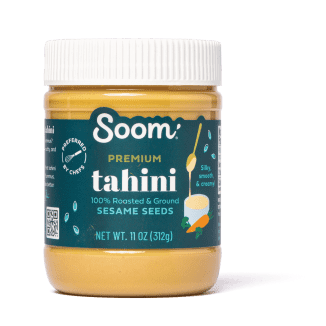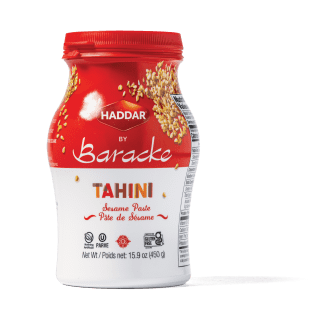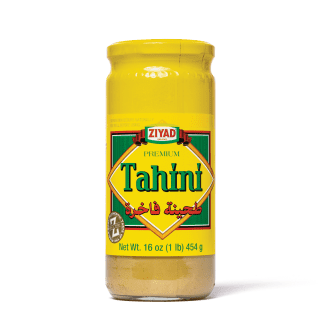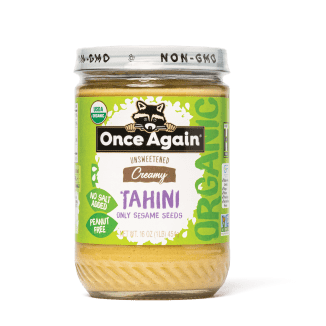
Tahini, a paste made from sesame seeds, contributes a nutty richness to a wide range of Middle Eastern and Mediterranean dishes. We love the velvety texture and subtle sesame flavor it adds to hummus, baba ghanoush, or fatteh. A finishing drizzle of creamy tahini is a common garnish for crispy falafel, grilled meats, or salads. Tahini’s uses aren’t limited to savory foods either. Its earthy, buttery flavor also makes it a popular addition to sweets like cakes, brownies, or ice cream. “It’s the absolute golden stuff, very often there in the foreground, background, or alongside a dish,” write Sami Tamimi and Tara Wigley in Falastin: A Cookbook (2020). We tried nine brands of tahini plain and in hummus to see if what you buy really makes a difference.


How Is Tahini Made?
Sesame seeds are an ancient crop, with sesame production dating back to 1600 BCE in Mesopotamia, the ancient region located between the Tigris and Euphrates rivers in what is now Iraq, as well as parts of Syria, Turkey, and Iran. Today, the seeds are grown in warmer climates all over the world. Those in the tahinis we tasted came from India, Mexico, Nicaragua, Peru, the United States, Ethiopia, Sudan, and more.

Humera sesame seeds (Humera refers to both the variety and the region in which they’re grown in Ethiopia) are especially prized and widely regarded as a top-tier product for their aroma and sweet flavor. In his book A Middle Eastern Pantry (2023), Lior Lev Sercarz writes, “The seeds have an oil content noticeably higher than other sesame seeds, making them ideal for tahini.” We found that most tahini producers don’t list the variety of the seeds on the packaging. While some brands share where the seeds are grown, we saw only one brand, Soom, get into specifics on their website and note that they use Ethiopian White Humera seeds.
Although tahini is sometimes made with unhulled white sesame seeds (often called whole seed tahini), typically, the seeds are either soaked in salted water or run through a centrifuge to remove their hulls. They are then roasted to boost their flavor and aroma.
Next, the seeds are ground into a paste. Traditionally, this was done using basalt rock grindstones, similar to those used to make stone-ground flour. In fact, “tahini” is derived from the Arabic word “tahana,” which means “to grind.” Today, most large commercial producers use automated machines made from metal. Depending on the final ratio of sesame oil to seed fiber, as well as the fineness of the grind, the final texture may vary from super-runny and smooth to stiff and coarse; this spectrum was evident in the tahinis we tasted. Very occasionally, tahini is seasoned with salt. Finally, some manufacturers might pasteurize (heat gently) the tahini to kill bacteria.
Black Tahini, Red Tahini, and Majiang
You may occasionally encounter black tahini in specialty markets. Sometimes, this refers to products made with black sesame seeds instead of white sesame seeds. But, especially in Middle Eastern countries such as Palestine, black tahini refers to a special blend of the requisite white sesame seeds and qizha, a pungent black paste made from nigella seeds (sometimes called black cumin seeds). This mixture, which itself is also sometimes called qizha, hails from the city of Nablus and has an herbaceous quality that is especially popular in desserts. Red tahini, a variety commonly made in Gaza, gains an extra layer of intensity from deeply roasted sesame. You may come across black tahini at specialty markets, but it is difficult to find red tahini in the United States.

Majiang, a Chinese sesame paste, contains the same ingredient as tahini—just sesame seeds—but the products are made differently and are not interchangeable. Tahini is typically made with hulled, roasted seeds, and majiang is made with darkly roasted unhulled sesame seeds, which give it a deep nutty-toasty flavor and dark color.

It’s the absolute golden stuff, very often there in the foreground, background, or alongside a dish.
—Sami Tamimi and Tara Wigley, Falastin: A Cookbook (2020)

Which Tahini Should I Buy?
As soon as we started opening up jars of tahini, we noticed that many were incredibly creamy and pourable, and some were thick, like peanut butter. Their flavors ranged from fairly mild and neutral to deeply toasted or even pleasantly bitter. Tahini is made of nothing but sesame seeds (and sometimes salt), and many of the products that we tasted were quite similar to each other. Differences in flavor and texture were most apparent when we tried the tahinis plain. Tasters were especially enthusiastic about Mighty Sesame Co. Organic Tahini, Krinos Tahini, and Soom Premium Tahini. All three of these tahinis had supremely smooth textures, pronounced nuttiness, and minimal bitterness (likely because they contain lightly roasted sesame seeds) and would shine when used as a condiment or in a simple sauce. But when we used each of the nine tahinis to make hummus, the differences were much less pronounced. Nearly all of the hummuses were creamy and thick, with minor variations in the boldness of the sesame flavor. Some tasters preferred tahini flavor front and center, while others liked it as a supporting player.

Depending on what’s available in supermarkets and specialty markets in your area, you may be able to choose between only one or two options. But here’s the good news: There was something to enjoy about every tahini we tasted. Odds are the tahini sold near you will be creamy and robust and will work well as a condiment or as an ingredient in a more elaborate dish. We didn’t choose an overall favorite; instead, we arranged the products below by approximate bitterness, from the mildest to the most intense, so that you can explore the options based on your preferences.
- Taste plain
- Taste in hummus with pita
- Nutritional information is for a 2-tablespoon serving
- Samples were randomized and assigned three-digit codes to prevent bias

 Buy at Amazon
 Buy at Walmart